In today’s visually driven digital marketplace, captivating product imagery is no longer a luxury but a necessity for converting browsers into buyers. Mastering AI image generation for ecommerce offers an unprecedented advantage, empowering businesses to create stunning, high-fidelity visuals for every listing without the traditional costs and logistical hurdles of physical photoshoots.
This innovative approach leverages advanced algorithms to virtually stage products in diverse, compelling environments—from luxurious interiors to minimalist backdrops, or even abstract conceptual settings—all through precise prompt engineering. By harnessing the power of generative AI, brands can rapidly iterate on visual concepts, test market appeal with unique, photorealistic renderings. ultimately craft dynamic visual narratives that significantly elevate product discovery and engagement, staying ahead in a competitive landscape.
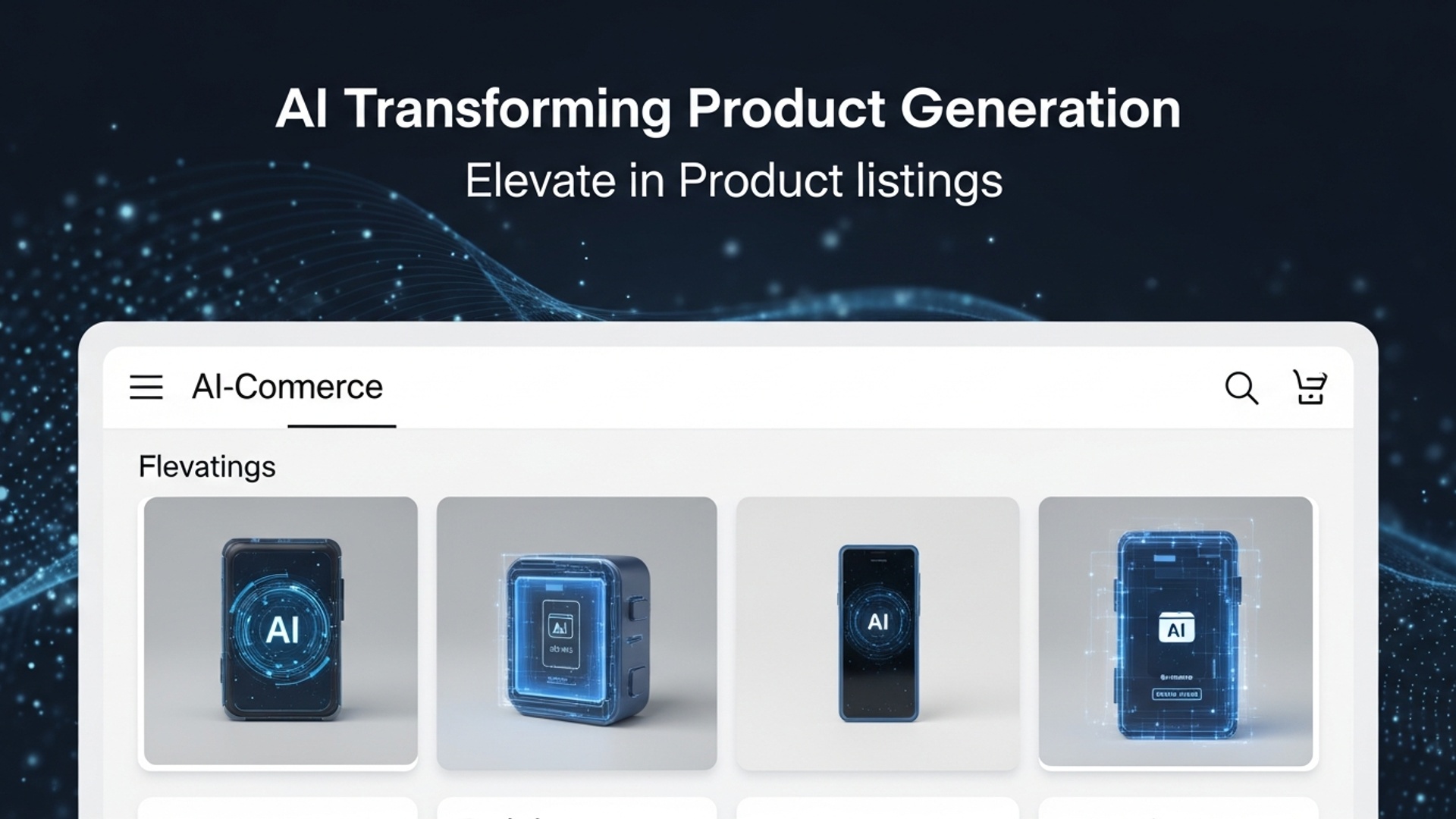
The Transformative Power of AI for Ecommerce Visuals
In the competitive world of online retail, captivating visuals are no longer optional. Instead, they are essential drivers of customer perception and conversion. Because shoppers cannot physically interact with products, high-quality imagery directly influences trust and purchasing decisions. Traditionally, producing professional product photography required expensive studios, models, and extensive editing. However, the rise of ai image generation for ecommerce has fundamentally changed that equation.
By leveraging advanced deep learning models such as generative adversarial networks and diffusion models, AI can generate highly realistic images from text prompts or reference visuals. Consequently, merchants can place products in diverse environments, experiment with lighting variations, or create lifestyle scenes without arranging physical shoots. As a result, businesses reduce operational costs while expanding creative flexibility.
Core Technologies Behind AI Image Generation
To fully utilize this technology, understanding its foundation is critical.
Generative Models
Modern diffusion models such as Stable Diffusion, DALL-E 3, and Midjourney generate images by refining random noise into coherent visuals based on prompt instructions. Because they are trained on vast image datasets, they can replicate highly realistic styles and compositions.
Prompt Engineering
The quality of output depends heavily on the clarity of your instructions. Therefore, prompt engineering becomes a core skill. Detailed prompts produce precise results, while vague prompts yield inconsistent imagery.
In-Painting and Out-Painting
In-painting allows you to modify specific areas within an image. For example, you can remove imperfections or replace elements without reshooting the entire scene.
Conversely, out-painting expands beyond the original frame. This is particularly useful for adjusting aspect ratios or creating wider compositions for ads and banners.
Upscaling
AI upscaling enhances resolution while preserving detail. Because ecommerce platforms require crisp visuals, this feature ensures generated assets maintain professional quality.
Advanced Control Tools
For more precise adjustments, tools such as ControlNet allow pose guidance, depth control, or edge mapping. Consequently, brands can maintain consistent product angles and model positioning across campaigns.
Together, these technologies create a powerful visual production system.
Practical Ecommerce Applications
AI image generation is not theoretical. Rather, it solves real ecommerce challenges.
Virtual Staging and Lifestyle Imagery
Instead of renting studios or hiring models, brands can digitally stage products in realistic environments.
Example prompt:
Because environments are generated digitally, multiple lifestyle variations can be created instantly.
Background Removal and Replacement
AI tools automate background cleanup, ensuring consistent product presentation across listings. For smaller brands, this dramatically improves visual cohesion without manual editing.
Product Variations
If a product exists in multiple colors or materials, AI can generate each version realistically.
Example:
Simply changing “black leather” to “tan suede” creates a new variation instantly.
Inclusive Model Generation
AI can produce diverse digital models representing various demographics. As a result, brands expand representation without logistical constraints.
Market Localization
Additionally, visuals can be adapted to different regions by adjusting props, backgrounds, or stylistic elements to match cultural preferences.
Crafting Effective Prompts
Because prompt quality determines image quality, structured input is essential.
Key Prompt Elements
-
Product Description – Be specific about materials, color, and design.
-
Style and Mood – Define aesthetic direction.
-
Lighting – Specify type and intensity.
-
Background – Describe environment clearly.
-
Camera Angle – Indicate perspective.
-
Negative Prompts – Exclude unwanted artifacts.
Refined example:
Iterative refinement improves results significantly.
Tools and Implementation Best Practices
Selecting the right tools ensures consistency and scalability.
| Tool Category | Ecommerce Use | Benefit |
|---|---|---|
| Creative AI Platforms | Lifestyle and conceptual visuals | Broad stylistic flexibility |
| Ecommerce-Focused AI | Product automation | Bulk processing efficiency |
| AI-Enhanced Editors | Refinement and upscaling | Precise control |
Workflow Integration
AI can support:
-
Product concept visualization
-
Pre-launch campaigns
-
Seasonal refreshes
-
Catalog consistency
However, human oversight remains essential. Always review outputs for realism, brand alignment, and accuracy.
Ethical Considerations
While AI offers efficiency, responsible usage is crucial.
-
Maintain transparency when necessary.
-
Avoid misleading product representation.
-
Monitor for bias in generated models.
-
Understand intellectual property terms.
Ultimately, AI should enhance authenticity, not compromise it.
Challenges and Future Outlook
Although powerful, AI image generation requires practice.
Common challenges include:
-
Prompt learning curve
-
Occasional visual artifacts
-
Maintaining brand consistency
-
Managing expectations
Nevertheless, the future promises:
-
Hyper-personalized visuals
-
AI-generated 3D assets
-
Automated A/B visual testing
-
AI-assisted product design
As tools mature, integration will become even more seamless.
Conclusion
AI image generation is transforming ecommerce visual strategy. Rather than relying solely on costly photo shoots, brands can now create scalable, high-quality imagery on demand. Because visual perception drives purchase decisions, this shift directly impacts revenue potential.
In my experience, the key to success lies in experimentation. Start with one product, refine prompts carefully, and test multiple visual variations. Small adjustments in lighting or context can dramatically alter perceived value.
Above all, treat AI as a strategic creative partner. When guided thoughtfully, it empowers ecommerce brands to produce distinctive visuals, improve efficiency, and stand out in an increasingly saturated digital marketplace.
For further insights into evolving AI visual trends, consider exploring resources like The AI Visualist.
More Articles
Boost Your Ecommerce Sales With AI-Powered Social Media Creatives
Why AI-Generated Visuals for eCommerce Boost Conversions
Create Compelling Product Descriptions Using AI for E-commerce
Boost Your Sales Creating Perfect Product Titles Using AI Generator Tools
Why eCommerce Automation Tools Are Essential for Growth

FAQs
What’s AI image generation all about for my products?
It’s using artificial intelligence to create new, high-quality images for your products without needing a traditional photoshoot. Think backgrounds, lifestyle shots, or even product variations, all generated digitally to save you time and money.
Why should I bother with AI for product photos?
It dramatically cuts down on the time and cost associated with traditional photography. You can quickly generate diverse visuals, test different styles. make your product listings truly stand out, which often translates to increased engagement and sales.
Is it hard to learn how to do this effectively?
While there’s a learning curve with any new technology, many AI image generators are becoming increasingly user-friendly. There are tons of tutorials and communities out there to help you get started and master the techniques for amazing results.
Can AI really make images that look real and professional?
Absolutely! Modern AI tools are incredibly sophisticated. With the right prompts and a bit of technique, you can generate images that are virtually indistinguishable from. sometimes even superior to, real photographs. They can look incredibly professional and polished.
What kind of images can I create with AI for my store?
You can create a vast range of visuals: lifestyle shots showing your product in use, different background settings, variations of your product (like new colors or textures), or even conceptual images to highlight specific features or benefits. The creative possibilities are huge.
Will this completely replace my need for a human photographer?
Not necessarily. AI is a powerful tool that complements human creativity. It can handle many repetitive or expensive tasks, freeing up photographers for more complex, artistic, or unique projects that still benefit from a human touch. It’s more about enhancing your workflow and expanding your capabilities.
How can AI images help my product listings perform better?
By providing a wider variety of engaging, high-quality visuals, you can better showcase your product from different angles and in various contexts. This can capture more attention, reduce bounce rates, build trust with potential customers. ultimately boost your conversion rates.