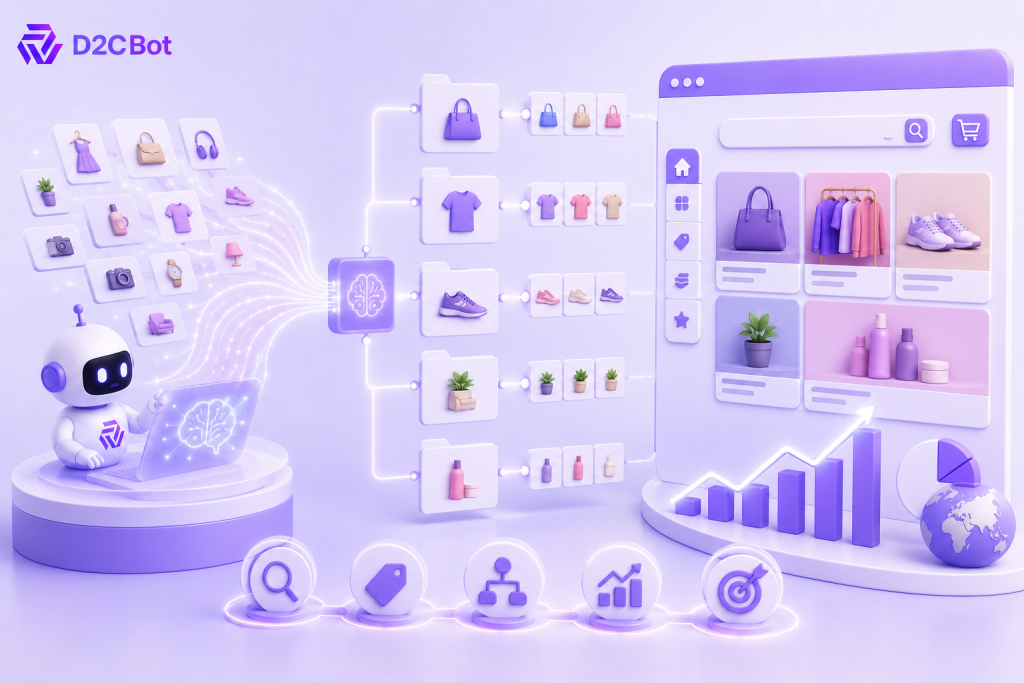
Building a high-ranking online store requires optimizing more than just individual product detail pages. In e-commerce architecture, product listing pages (PLPs) and collection categories serve as the critical bridge between general search queries and specific SKU conversions. However, writing rich, engaging copy across hundreds of collection pages is an overwhelming operational challenge. Deploying a dedicated ai category description generator solves this bottleneck by turning structured catalog attributes into search-optimized collection copy. By leveraging intelligent content automation, digital merchants can enhance their shopify category descriptions, improve organic search engine visibility, and guide store visitors toward purchase decisions without spending endless hours on manual copywriting.
What Is an AI Category Description Generator?
An ai category description generator is an e-commerce automation tool that leverages natural language processing (NLP) to write engaging, search-optimized copy for collection pages, category footers, and product listing pages. Unlike basic text generation software, a specialized category description generator analyzes structured catalog data, target keywords, customer search intent, and brand voice guidelines to create contextual category overviews.
Modern e-commerce tools evaluate the underlying SKUs within a collection—such as materials, price ranges, sizing options, and primary use cases—to generate clear introductions and informative footers. These outputs provide essential context for search engine crawlers while giving prospective shoppers the exact information required to browse confidently.
Why Category Descriptions Matter for Ecommerce SEO
Category pages represent some of the most valuable organic real estate on any online storefront. Search engines rely on text content to understand the thematic relevance of a collection and rank it for broad, high-volume transactional keywords.
+--------------------------------------------------------------------------+
|                  CATEGORY PAGE CONVERSION & SEO ARCHITECTURE             |
|                                                                          |
|  [ Broad Search Query ] --> [ Category Page / PLP Header Copy ]           |
|                                         |                                |
|                                         v                                |
|  [ Internal Sub-Category Links ] <-- [ AI SEO Content & Category Footer ]|
+--------------------------------------------------------------------------+
Integrating comprehensive ecommerce category descriptions across your collection pages yields multiple search and user experience advantages:
- Ranks for High-Intent Commercial Keywords: Category pages target broader search terms (e.g., “men’s leather boots”) that attract shoppers in active discovery phases.
- Establishes Clear Topical Authority: Adding descriptive text helps search engine bots crawl and understand the semantic relationships between grouped products.
- Drives Internal Page Rank Distribution: Category copy provides natural opportunities to place internal links to top-selling SKUs, sub-collections, and buying guides.
- Reduces Store Bounce Rates: Informative introductory text sets expectations, clarifies product specifications, and guides shoppers toward relevant sub-categories.
How AI Generates SEO-Friendly Category Descriptions
Automated systems convert raw inventory tags and search data into publishable collection copy through a structured multi-step process:
+-------------------+     +---------------------+     +--------------------+
| Catalog Feed Data | --> | AI Context Engine   | --> | Structured Drafts  |
| (SKUs & Tags)     |     | Keyword & Intent    |     | (Headers & Footers)|
+-------------------+     +---------------------+     +--------------------+
                                                                |
                                                                v
                                                       +--------------------+
                                                       | Storefront Sync    |
                                                       | Direct PLP Edit    |
                                                       +--------------------+
Step 1: Data Ingestion and Attribute Mapping
The platform ingests catalog data, isolating primary category tags, brand names, material specifications, price tiers, and featured sub-collections.
Step 2: Intent Analysis and Keyword Integration
The system incorporates primary search queries, secondary LSI terms, and long-tail variants to optimize the output for category page seo without over-optimizing.
Step 3: Structured Content Synthesis
Generative algorithms craft two distinct content blocks: a brief, punchy introductory header above the product grid and a comprehensive, keyword-rich informational guide at the bottom of the page.
Step 4: Quality Check and Platform Publishing
Automated safety rules check for brand tone consistency, formatting compliance, and internal link placements before syncing copy directly to your store platform.
Benefits of an AI Category Description Generator for Shopify & Ecommerce Stores
Utilizing an ai category description generator transforms how e-commerce merchandising and marketing teams manage storefront content across expansive catalogs.
- Massive Operational Efficiency: Generate high-converting copy for hundreds of store collections in minutes rather than spending months on manual drafting.
- Consistent Brand Voice: Enforce uniform style guides, formatting standards, and brand tone across every category page automatically.
- Scalable SEO Optimization: Ensure every collection page features target keywords, structured sub-headings, and relevant metadata designed for ai seo content performance.
- Enhanced Mobile Navigation: Short, scannable header summaries prevent product grids from being pushed below the fold on mobile screens.
Manual vs AI Category Descriptions
Comparing traditional manual copy creation against automated AI category workflows highlights why high-growth digital brands adopt software automation.
| Operational Metric | Manual Category Writing | AI Category Description Generator |
| Production Speed | 45–60 minutes per category page | Seconds per collection page |
| Catalog Scalability | Low; bottlenecked by human bandwidth | Unlimited; easily processes thousands of collections |
| SEO Consistency | Variable keyword placement and structure | Standardized headings, keywords, and internal links |
| Brand Voice Control | Inconsistent across multiple copywriters | Uniform brand rules enforced automatically |
| Update Capability | Slow, line-by-line manual refreshes | Instant batch updates across seasonal lines |
| Internal Link Integration | Often forgotten or implemented randomly | Structured, contextual internal link insertion |
Best Practices for Writing High-Converting Category Descriptions
To maximize search visibility and store conversions, follow these strategic guidelines when publishing collection copy:
- Split Content Strategically: Keep top-of-page introductory text under 50 words to avoid pushing product grids out of view, placing detailed buying guides below the grid.
- Incorporate Contextual Internal Links: Link to sub-collections, complementary categories, and top-performing product pages to pass equity and guide buyers.
- Align Copy With Search Intent: Answer common shopper queries regarding fit, material care, warranty options, and shipping terms directly within the copy.
- Use Structured Formatting: Break up long text blocks using H2 and H3 sub-headings, concise bullet points, and bold key terms.
Category Page Optimization Checklist
Follow this 6-point checklist for every published collection page:
- Place a 2-sentence summary above the product grid to capture immediate buyer interest.
- Position a detailed 200–300 word informational guide below the product grid for search engines.
- Include primary and secondary keywords naturally without keyword stuffing.
- Add 2–3 contextual internal links to related sub-categories or buying guides.
- Verify mobile responsiveness to ensure text blocks collapse cleanly on small screens.
- Include clear call-to-action phrases encouraging visitors to filter and browse SKUs.
Common Category Description Mistakes
Improper execution when writing collection copy can harm search engine rankings and disrupt the user experience across your store:
- Pushing Product Grids Down: Placing long walls of text at the top of category pages forces shoppers to scroll endlessly to see products, hurting mobile conversion rates.
- Duplicate Content Across Sub-Categories: Reusing identical introductory paragraphs across related sub-collections confuses search engine crawlers and dilutes ranking authority.
- Over-Optimizing With Keyword Stuffing: Forcing repetitive search phrases into sentences creates awkward reading experiences and triggers search engine penalties.
- Ignoring Internal Link Architecture: Failing to connect related ecommerce category descriptions through contextual links misses major organic ranking opportunities.
How AI Helps Manage Large Product Catalogs
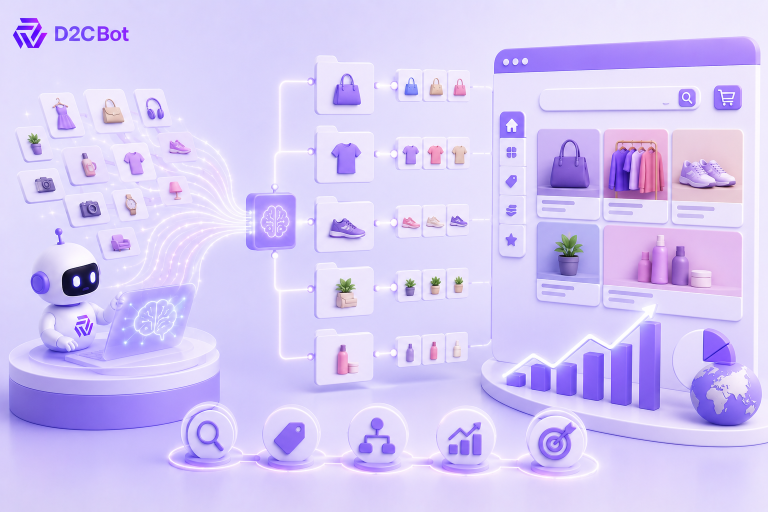
Managing extensive product catalogs with thousands of SKUs across nested category hierarchies creates massive operational complexity. As e-commerce brands expand into new product lines, maintaining unique, search-optimized copy across every collection, sub-category, and promotional landing page manually becomes impossible.
AI automation solves catalog sprawl by programmatically mapping nested taxonomy structures. When creating shopify category descriptions, the system reads parent and child collection relationships automatically. It generates unique top-level collection overviews while crafting highly specific sub-category copy that highlights distinct attributes like color variants, style types, or usage scenarios. This programmatic approach eliminates duplicate text risks, ensures comprehensive search engine indexing, and allows merchandising teams to launch massive seasonal catalog updates effortlessly.
Real Category Description Example (Before vs After)
Reviewing a real-world transformation demonstrates how structured AI content improves storefront presentation and search optimization.
Before (Unoptimized, Generic Category Copy)
Men’s Leather Boots
Welcome to our men’s leather boot collection. We have many styles of boots available including work boots, casual boots, and dress boots. Check out our selection below and buy the best boots for your needs today with free shipping on all orders.
After (AI-Optimized, High-Converting Category Copy)
Men’s Premium Leather Boots: Handcrafted Durability & Style
Explore our curated collection of men’s leather boots, engineered for all-day comfort, rugged durability, and timeless style. Whether you need weather-resistant work boots for heavy duty tasks, versatile Chelsea boots for daily wear, or refined lace-up dress boots for evening events, our lineup features full-grain leather construction and supportive Goodyear welt soles.
Unsure which style fits your daily routine? Browse our sub-categories for waterproof work boots or read our comprehensive leather boot care guide to maintain your footwear for years to come.
How D2CBot Helps Generate Category Descriptions at Scale
Managing high-volume storefront content across expanding catalog hierarchies requires specialized e-commerce operations software. D2CBot offers a comprehensive automation platform designed specifically to streamline catalog management, content optimization, and storefront administration for online brands.
Instead of managing disconnected tools for product copy, SEO auditing, and store updates, D2CBot provides an integrated environment powered by an ai category description generator. The platform enables merchants to import store taxonomies, apply custom brand guidelines, and generate search-ready category copy, product descriptions, and blog content in bulk. By connecting catalog feeds with intelligent workflow automation, D2CBot helps growing e-commerce teams eliminate content backlogs, enhance search rankings, and scale store operations effortlessly.
Conclusion
Scaling a high-performing e-commerce storefront requires optimizing every level of your site architecture, especially high-intent category pages. Relying on blank collection templates or unoptimized text walls limits organic visibility and creates purchasing friction for prospective buyers. Utilizing a dedicated ai category description generator enables direct-to-consumer brands to transform raw inventory hierarchies into search-optimized, high-converting collection pages in seconds. By combining intelligent AI automation with strategic internal linking and brief human oversight, e-commerce operators can boost search engine rankings, improve store navigation, and drive sustainable revenue growth.
More Articles
- https://d2cbot.com/blog/e-commerce-automation/top-10-things-to-fix-before-scaling-ecommerce-ads-in-a-new-market/
- https://d2cbot.com/blog/e-commerce-tools/essential-ecommerce-tools-the-complete-guide-to-scaling-online-stores/
- https://d2cbot.com/blog/seo-tips/shopify-app-sprawl-problem/
- https://d2cbot.com/blog/ai-automation/top-7-post-purchase-automations/
Frequently Asked Questions
An AI category description generator is software that analyzes store catalog data, keywords, and brand guidelines to automatically create search-optimized copy for e-commerce category and collection pages.
Place a short 1–2 sentence introduction above the product grid to introduce the collection, and position longer, detailed SEO descriptions below the grid to avoid pushing products down.
Yes. Category descriptions provide search engine crawlers with essential context, helping collection pages rank for broad, high-volume transactional keywords that drive targeted organic traffic.
Yes. AI tools integrate directly with Shopify to analyze collection tags, generate custom descriptions, and publish optimized copy directly to store templates via API or CSV workflows.