In today’s digital marketplace, product visuals play a major role in buying decisions. Customers expect high-quality images that clearly show what they are purchasing. If your visuals feel outdated or generic, conversions suffer.
This is where AI image generation for ecommerce becomes a powerful advantage.
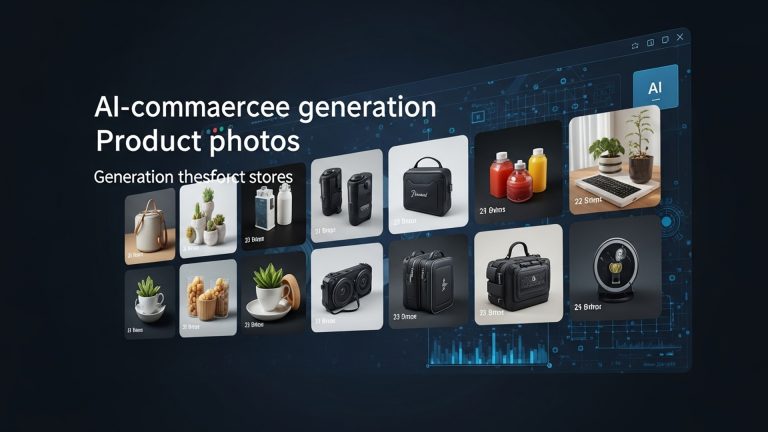
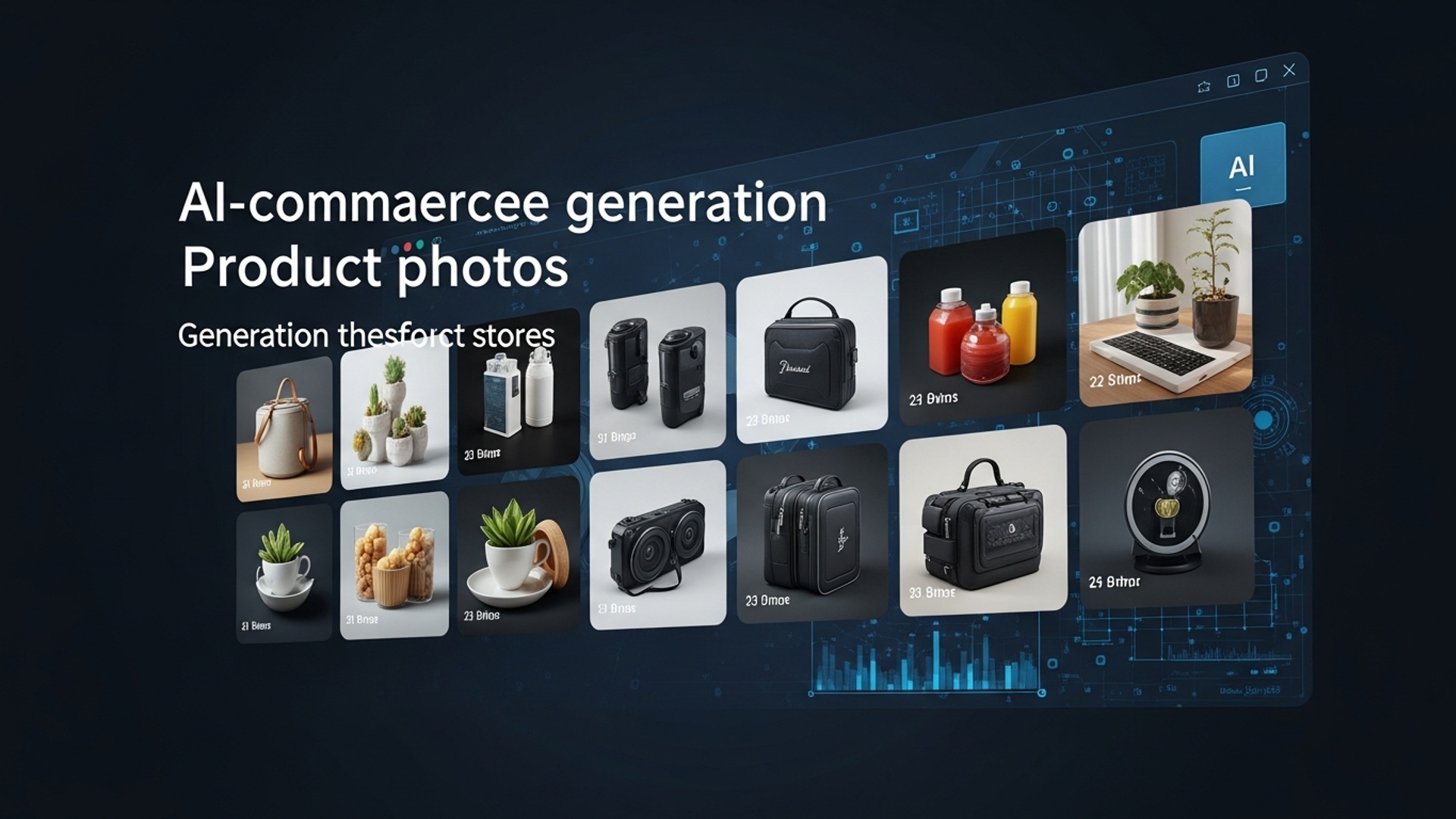
AI image generation uses artificial intelligence models such as diffusion models and generative adversarial networks to create new product images from text prompts, existing photos, or both. For ecommerce brands, this means creating professional, photorealistic visuals without the cost, time, and logistics of traditional photoshoots.
These models are trained on massive image datasets. They learn how lighting, textures, angles, and compositions work together. When prompted, they generate new images that match your requirements. This allows ecommerce businesses to go far beyond basic white-background product shots and move into lifestyle imagery, diverse model representation, and creative scenes generated entirely by algorithms.
The Core Benefits of AI-Powered Product Images
AI image generation offers clear advantages that directly impact revenue, efficiency, and scalability.
Lower Costs and Faster Production
Traditional product photography is expensive. You pay for photographers, studios, models, props, travel, and editing. AI eliminates most of these costs.
With AI tools, you can generate hundreds of product images in minutes. This significantly reduces production costs and speeds up product launches.
Scalable Visual Content
If you sell products with multiple colors, sizes, or styles, photography becomes a bottleneck. AI allows you to generate visuals for every variation without additional effort.
You can easily create region-specific or lifestyle-based images at scale, keeping your catalog visually rich without slowing down operations.
Customization and Personalization
AI makes visual personalization practical.
You can show the same product in different environments for different campaigns or audiences. A sofa can appear in a modern apartment for one ad and a cozy living room for another. This level of customization improves relevance and engagement.
Consistent Brand Aesthetics
Maintaining visual consistency across thousands of images is difficult with manual photography. AI tools can be trained on your brand style, ensuring consistent lighting, tone, and composition across all visuals.
This strengthens brand recognition and builds trust with customers.
Fewer Product Returns
Clear and accurate visuals help customers understand what they are buying. Showing products from multiple angles and in real-life contexts reduces mismatched expectations and can lower return rates.
Practical Use Cases for AI Image Generation in Ecommerce
AI image generation is already solving common ecommerce challenges across product presentation and marketing.
Virtual Photoshoots and Scene Creation
Instead of physical photoshoots, AI can place products into realistic environments.
A handbag can appear on a Paris street. Running shoes can be shown on a mountain trail. Kitchen appliances can be displayed in modern homes. All without leaving your desk.
Example prompt:
“A sleek black leather wallet on a rustic wooden desk with a laptop and coffee cup, soft morning light coming through a window.”
Background Removal and Replacement
AI tools can cleanly isolate products and replace backgrounds with new generated scenes. This is useful for maintaining consistent product pages or adapting visuals for different campaigns.
Product Mockups and Variations
AI can generate realistic mockups for apparel, accessories, and digital products. It can also visualize new colors or styles before manufacturing, allowing faster feedback and pre-orders.
A/B Testing Visuals
You can quickly generate multiple image versions and test which ones convert better. Different lighting, angles, models, or backgrounds can be tested without additional production costs.
Personalized Product Displays
AI can adapt product images to user preferences. A customer may see clothing on models that reflect their body type or furniture shown in room styles they previously browsed.
How to Implement AI Image Generation in Ecommerce
To use AI effectively, you need a clear and structured approach.
Step 1: Define Your Visual Goals
Identify where AI will have the most impact. This could be reducing photography costs, increasing image variety, or personalizing visuals for marketing campaigns.
Step 2: Choose the Right Tools
AI image tools fall into two main categories:
General-purpose AI tools
Examples include Midjourney, DALL-E 3, and Stable Diffusion. These offer creative flexibility but require prompt refinement.
Ecommerce-focused AI tools
These are built specifically for product images, background generation, and virtual models, making them easier to integrate into ecommerce workflows.
Choose tools based on output quality, ease of use, integration options, and pricing.
Step 3: Learn Prompt Engineering
Good prompts lead to good images. Be specific about product details, lighting, style, and environment. Test different variations and refine based on results.
Step 4: Integrate With Your Store
Use tools that integrate with platforms like Shopify, WooCommerce, or Magento. This simplifies uploading and managing images at scale.
Step 5: Apply Quality Control
AI is powerful, but it is not perfect. Review every image for accuracy, realism, and brand consistency. Treat AI as an assistant, not a replacement for human judgment.
AI Image Generation vs Traditional Product Photography
AI does not replace photography completely. Each has strengths.
| Feature | AI Image Generation | Traditional Photography |
|---|---|---|
| Cost | Low | High |
| Speed | Minutes to hours | Days to weeks |
| Scalability | Very high | Limited |
| Creative flexibility | High | Moderate |
| Real-world authenticity | Improving | Excellent |
| Best use | Variations, lifestyle scenes, testing | Hero images, fine textures |
Most ecommerce brands benefit from a hybrid approach. Use professional photos for hero shots and AI for variations, campaigns, and experimentation.
The Future of Ecommerce Visuals
AI image generation is advancing quickly. Key trends include:
Improved Photorealism
AI visuals will become nearly indistinguishable from real photography.
3D and AI Integration
Brands will combine 3D models with AI to generate images from any angle or environment instantly.
Interactive Shopping Experiences
AI will power AR previews, virtual styling, and real-time product visualization.
Ethical and Inclusive AI
Expect stronger focus on bias reduction and diverse representation in AI-generated visuals.
Conclusion
AI image generation changes how ecommerce brands create and scale product visuals. What once required large budgets and long timelines can now be done quickly and affordably.
My recommendation is to start with your biggest visual challenges. Maybe you need diverse lifestyle shots or seasonal imagery without reshooting products. AI handles these tasks exceptionally well.
By using AI images strategically, you improve engagement, speed up launches, and future-proof your visual content. In today’s competitive ecommerce landscape, adopting AI-powered product visuals is no longer optional. It is a smart, scalable advantage.
More Articles
Create Engaging Marketing Visuals Using AI Tools for Better Campaigns
How AI Image Generation Boosts Your Ecommerce Store Sales Effectively
Revolutionize Your Online Store with Ecommerce Visual Content AI Today
Boost Your Sales with AI Powered Product Page Optimization Strategies
Master AI Image Creation for Stunning Visuals Every Time

FAQs
What’s this AI image generation all about for my online store?
It’s using artificial intelligence to create new, unique images of your products without needing a traditional photoshoot. Think virtual studios, models. creative scenes, all generated by a computer based on your input.
How does using AI for product photos save me money?
Big time! You cut down on costs for photographers, models, studio rentals, props. travel. Instead of paying for a whole photoshoot setup, you’re often paying a fraction for AI to generate a vast array of high-quality images.
Can I get lots of different photo styles and backgrounds without endless photoshoots?
Absolutely! AI allows you to instantly place your product in countless scenarios – a luxurious living room, a minimalist studio, an outdoor adventure, or even a futuristic setting. You get incredible variety and context without ever moving your physical product.
Is it complicated to use AI tools for someone who’s not tech-savvy?
Not at all, many platforms are designed with simplicity in mind. You typically upload your product photo, describe the scene you want. the AI does the heavy lifting. It’s becoming very user-friendly, often just requiring a few clicks or text prompts.
What types of images can AI generate for my products?
You can create everything from clean, white-background shots to engaging lifestyle images showing your product in use, seasonal campaign visuals, different angles. even variations with different colors or textures. The possibilities are pretty vast and constantly expanding.
Will my product look authentic or obviously fake in AI-generated images?
AI technology has advanced incredibly. Modern AI can produce highly realistic and natural-looking images, making it very difficult to distinguish them from real photos. The key is often starting with a good base product image and providing clear, descriptive instructions.
How fast can I get new product photos using AI?
Lightning fast! What used to take days or weeks for scheduling, shooting. editing can now be done in minutes or hours. You can generate multiple image variations and concepts in a single session, significantly speeding up your content creation pipeline.