Quick Summary
- Bulk AI product image generation for Shopify solves the same scaling problem as bulk copy: a growing catalog outpaces what a manual photoshoot schedule can support.
- D2C Bot generates listing-ready product visuals directly tied to a product’s actual attributes, without booking a studio or a photographer.
- Image quality has a measurable effect on conversion, so skipping this step to save time costs real sales.
- Bulk generation works best for a specific set of use cases, not as a full replacement for every product photo a brand will ever need.
Why Product Images Are as Important as Product Copy
Shoppers cannot touch or try a product before buying it online, so images carry a huge share of the buying decision.
Nine out of ten online shoppers consider high-quality product photos one of the most important purchasing factors, according to product photography research compiled by GrabOn. A store that nails its written copy but ships thin or inconsistent product images is still leaving conversions on the table.
Bulk AI product image generation for Shopify addresses the same core problem bulk copy generation solves: a catalog growing faster than a small team can manually produce content for, in this case visuals instead of text.
What D2C Bot’s Image Generator Actually Produces
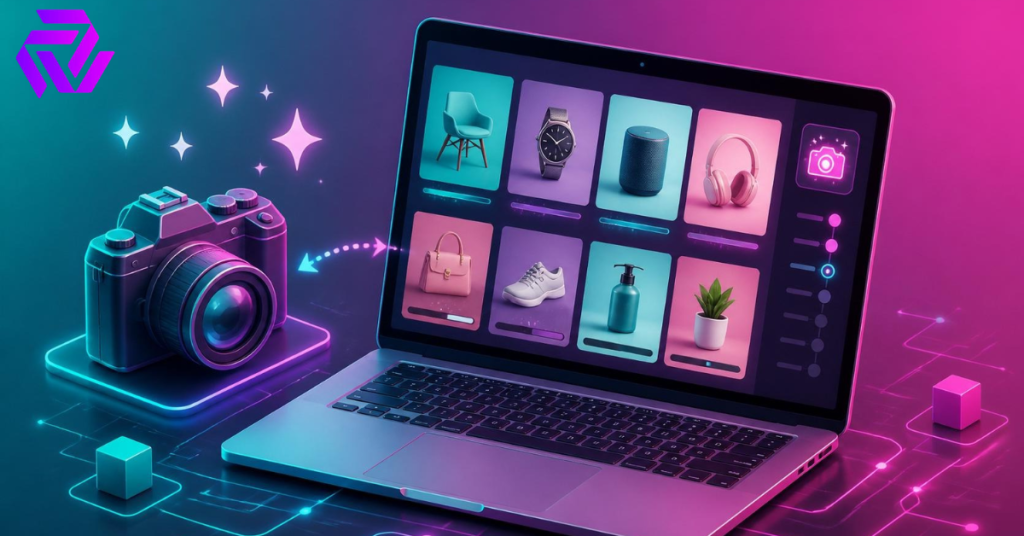
D2C Bot’s AI product image generator for stunning visuals without photoshoots creates listing-ready images based on a product’s real attributes and category, so the output matches what the item actually is rather than a generic stock-style render. This works especially well for filling gaps in a catalog: a lifestyle-style shot for a listing that only has a plain product photo, or a clean background variant for a marketplace feed with specific image requirements.
This is not meant to replace every photo a brand will ever need, especially hero shots for flagship products where a real photoshoot still adds irreplaceable value. It solves the volume problem: filling in secondary images, variants, and long-tail SKUs that would otherwise sit with thin or missing visuals indefinitely.
Manual Photography vs. Bulk AI Generation
A traditional product photoshoot involves booking a studio or photographer, shipping or bringing in physical samples, shooting each item from multiple angles, then editing and formatting every image for the store. For a small batch of hero products, this process is worth the investment. For a catalog of two hundred SKUs, that same process becomes a multi-week project with a real budget line behind it.
D2C Bot generates a batch of images directly from product data already sitting in the Shopify catalog, without needing physical samples shipped anywhere or a shoot scheduled weeks in advance. The store’s role shifts to reviewing and selecting the best output per product rather than coordinating a full production.
| Step | Traditional Photoshoot | D2C Bot |
|---|---|---|
| Cost for 100 SKUs | Thousands of dollars | Flat subscription |
| Time to complete | Weeks, including scheduling | Same-day batch generation |
| Physical samples needed | Yes, shipped to photographer | No |
| Consistency across catalog | Depends on shoot conditions | Consistent style per batch |
When Bulk Image Generation Makes the Most Sense
A few situations make this workflow especially valuable. A store adding dozens of new SKUs for a seasonal launch often cannot get every item photographed professionally before the launch date, especially for lower-priority variants like additional colorways. Bulk generation fills those gaps so the full collection launches with complete visuals rather than some products live with images and others waiting.
A brand consolidating a catalog from a marketplace listing, where images were formatted for a different platform’s requirements, is another common case. Reformatting or regenerating images to fit the Shopify storefront’s style takes far less time through bulk generation than reshooting or manually editing every image one at a time.
Comparing Product Image Tools for Shopify
| Tool | Native Shopify Integration | Bulk Batch Generation | Uses Real Product Data | Free Trial |
|---|---|---|---|---|
| D2C Bot | Yes | Yes | Yes | Yes |
| Traditional photography services | No | No, one shoot at a time | N/A, physical samples required | N/A |
| Generic AI image generators | No | Manual, one prompt at a time | No, requires manual description | Varies |
| Stock photo libraries | No | Searchable, not generated | No, generic stock imagery | Varies |
Stock photo libraries solve a completely different problem. They offer generic imagery that was never specific to your product in the first place, which undercuts trust once a shopper notices the mismatch. D2C Bot generates images tied to the actual product, not a stand-in.
What to Check Before Publishing Generated Images
A quick review before publishing catches most issues. Check that colors, proportions, and key details match the real product accurately, since an image that misrepresents the item leads to returns and complaints, the exact outcome quality photography is supposed to prevent.
Also confirm the generated image fits your store’s overall visual style, so a batch of new images does not look jarringly different from your existing catalog photos.
This review step takes far less time than producing the images from scratch would have, but it still matters. Accuracy is the entire point of a strong product image, and a beautiful but misleading photo does more harm than a plain but honest one.
Matching Image Style to Product Category
Different product categories need different image treatments to look convincing and to actually help conversion. Apparel benefits from images that show fabric texture and drape, since fit and material feel drive most sizing hesitation. Home goods often need context, a lamp shown in a room setting reads far more useful than the same lamp floating on a plain white background.
Electronics and accessories tend to need close, detailed shots that show ports, buttons, and small design elements clearly, since shoppers in this category often compare specific features against competitors before buying. D2C Bot adjusts its generation approach based on the product category it reads from your catalog, so a clothing item and a kitchen gadget do not get the same generic treatment applied to both.
Keeping a Consistent Visual Brand Across a Growing Catalog
A catalog that mixes professionally shot hero images with AI-generated fill-in images risks looking inconsistent if the two styles clash. The fix is straightforward: define your brand’s visual style, lighting, background color, angle conventions, before generating images at scale, then apply that same style consistently across both new and existing products.
D2C Bot can match generated images to an existing visual style once that reference point is set, so new SKUs added mid-season look like they belong in the same catalog as the products that launched with a full photoshoot months earlier. This consistency matters more than most stores expect, since a visually disjointed catalog undercuts the same trust that good individual images are meant to build.
Conclusion
Product images carry as much weight in a buying decision as the written copy on the page, and a catalog growing faster than a photography schedule can keep up leaves real conversions on the table.
Bulk AI product image generation for Shopify closes that gap for secondary images, variants, and long-tail SKUs, without the cost or timeline of a full traditional photoshoot for every item. D2C Bot builds these visuals directly from your product data, ready to review and publish.
Install D2C Bot from the Shopify App Store for a free trial and fill the image gaps in your catalog before your next launch.
More Articles / Resources
- AI product image generator for stunning visuals without photoshoots
- How AI image generation transforms ecommerce product marketing
- How to boost ecommerce sales with an AI product images tool
- AI product description generator for high-converting copy
FAQs
Can bulk AI product image generation fully replace a professional photoshoot?
Not entirely. It works best for secondary images, variants, and long-tail SKUs, while flagship hero shots often still benefit from a real photoshoot’s added quality and control.
How accurate are AI-generated product images to the real item?
D2C Bot generates images from the product’s actual attributes, but a quick review before publishing still matters, checking that colors, proportions, and details match the real product.
How many product images can D2C Bot generate at once?
D2C Bot processes image generation in batches sized to your catalog, so a launch involving dozens or hundreds of SKUs gets images in one generation run rather than one at a time.
Does using AI-generated images hurt trust with shoppers?
Not if the images accurately represent the product. The risk comes from inaccurate or misleading imagery, not from the generation method itself.