AI-powered visual content for eCommerce allows brands to generate high-quality images quickly. Businesses using AI-powered visual content for eCommerce see improved engagement and higher purchase intent. It requires exceptional visual storytelling. Leveraging ecommerce visual content AI represents a paradigm shift, empowering brands to not only generate stunning, on-brand imagery but also to strategically optimize it for maximum conversion impact.
Recent advancements in generative AI, from sophisticated prompt engineering for product variations to dynamic background generation and hyper-personalized campaign visuals, transform how businesses engage their audience.
This powerful integration of AI image generation allows for rapid A/B testing of diverse visual assets, ensuring every impression drives sales by presenting precisely what resonates with individual customer segments, ultimately boosting ROI and market responsiveness. 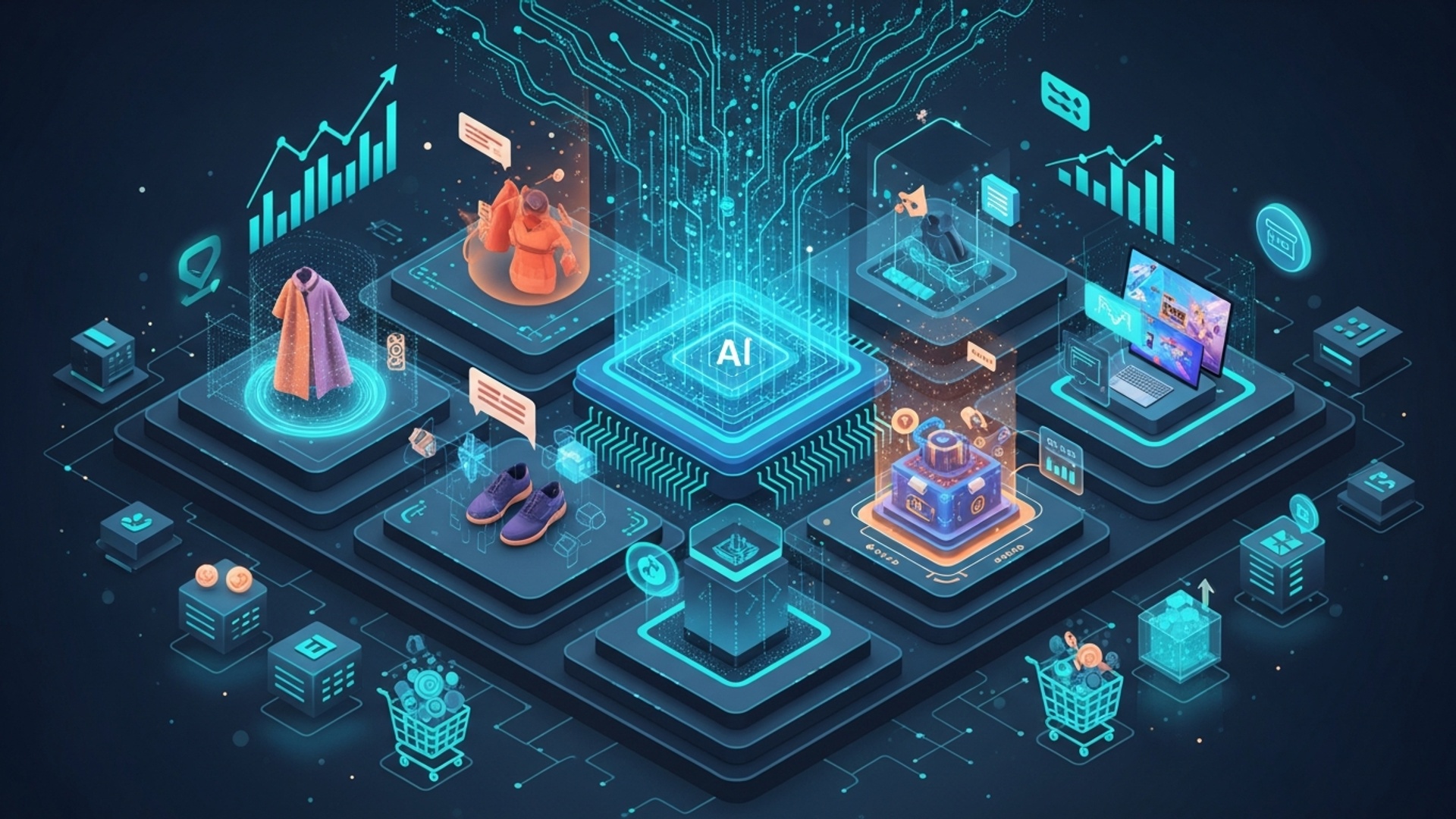
The Transformative Power of AI-Powered Visuals in Ecommerce
In today’s competitive digital marketplace, strong visual content is essential. Customers no longer rely only on product descriptions. Instead, they expect high-quality images that tell a story. As a result, brands must deliver visuals that capture attention instantly.
This is where ecommerce visual content AI changes the game. By using artificial intelligence to create and improve images, online stores can produce engaging visuals faster, cheaper, and at scale. More importantly, AI allows brands to personalize visual experiences, which directly improves conversion rates.
Rather than depending only on traditional photography, businesses can now generate product variations, lifestyle scenes, and even virtual models using AI image generation tools. Consequently, brands become more flexible and more responsive to market trends.
How AI Image Generation Works in Ecommerce
To understand its impact, it helps to know how AI image generation works.
AI systems analyze large image datasets. Then, they learn patterns related to lighting, color, shape, and style. After that, they generate new images based on prompts or input photos.
Several key technologies power this process:
Generative Adversarial Networks
These systems use two models that compete with each other. One creates images, while the other checks if they look real. Over time, this process improves image quality. As a result, the generated visuals become highly realistic.
Diffusion Models
Diffusion models start with visual noise and gradually turn it into detailed images. Because of this method, they produce sharp and creative visuals that are ideal for product scenes and campaign images.
Style Transfer
Style transfer applies the look of one image to another. For example, a product photo can adopt a specific artistic tone or seasonal theme. Therefore, brands can quickly adapt visuals for campaigns.
Image Enhancement
AI can improve resolution, sharpen details, and adjust colors automatically. Consequently, even older product photos can meet modern visual standards.
Together, these tools allow ecommerce businesses to create professional content without repeated photoshoots.
Why AI Visual Content Increases Conversion Rates
AI-powered visuals are not just convenient. They directly improve sales performance.
1. Personalized Product Experiences
First, AI allows brands to show customized visuals based on user behavior. For example, a customer browsing modern furniture might see products styled in minimalist interiors. Because of this personalization, engagement increases.
2. Better Product Visualization
Next, AI helps customers understand products more clearly. Virtual try-ons, 3D models, and realistic background placement reduce uncertainty. As a result, shoppers feel more confident when buying.
3. Faster Content Production
Traditional photoshoots take weeks. In contrast, AI generates variations in minutes. Therefore, brands can test more visuals and react quickly to trends.
4. Efficient A/B Testing
Since AI can create multiple versions of the same image, businesses can test different backgrounds, lighting styles, or layouts. Consequently, they discover which version performs best.
5. Lower Costs
Studio rentals, photographers, and models increase expenses. AI significantly reduces those costs. Because of this, even small brands can compete visually with large companies.
Traditional Visual Creation vs AI-Powered Creation
To better understand the shift, let’s compare both approaches.
| Aspect | Traditional Method | AI-Powered Method |
|---|---|---|
| Cost | High production costs | Lower tool subscription cost |
| Speed | Weeks to produce | Minutes or hours |
| Scalability | Limited by resources | Easily scalable |
| Personalization | Same image for all users | Dynamic image variations |
| Testing | Slow and expensive | Fast and affordable |
| Flexibility | Requires reshoots | Quick edits and regeneration |
Clearly, AI offers speed, scale, and flexibility that traditional workflows struggle to match.
How to Implement AI Visual Content in Your Store
Adopting AI does not require a full system overhaul. Instead, follow a structured process.
Step 1: Identify Content Gaps
Start by reviewing your current visuals. Do you need lifestyle images? More diverse models? Seasonal variations? Once you know the gaps, you can target improvements.
Step 2: Choose the Right Tools
Some tools focus on background removal. Others specialize in virtual try-ons or product scene generation. Therefore, select tools that match your needs and budget.
Step 3: Prepare High-Quality Inputs
AI works best with clear, well-lit product photos. So, ensure your base images are clean and consistent.
Step 4: Integrate into Your Workflow
A simple AI workflow might look like this:
-
Upload product image
-
Remove or replace background
-
Generate lifestyle variations
-
Enhance resolution
-
Publish and test
This process reduces production time significantly.
Step 5: Test and Optimize
After publishing, track metrics such as click-through rate, conversion rate, and engagement time. Then, refine visuals based on performance data.
Future Trends in AI Visual Content
AI in ecommerce continues to evolve. Looking ahead, several trends stand out.
Hyper-Realistic Virtual Models
AI-generated models will become even more natural. As a result, brands may reduce reliance on traditional model photography.
Interactive 3D Experiences
Soon, customers will explore products in interactive 3D spaces powered by AI. Therefore, online shopping will feel more immersive.
Predictive Visual Optimization
AI systems may soon predict which visual style converts best for each customer segment. Consequently, brands can automate visual decision-making.
Ethical Considerations
Despite its advantages, AI requires responsible use.
First, brands should consider transparency. Some customers value knowing when images are AI-generated.
Second, bias in training data must be monitored. AI systems should promote diversity and fairness.
Finally, copyright rules surrounding AI-generated images are still evolving. Therefore, businesses must stay informed about usage rights.
Conclusion
AI-powered visual content is transforming ecommerce. Instead of relying solely on traditional photography, brands can now generate scalable, personalized visuals quickly and affordably.
More importantly, AI allows businesses to test, refine, and optimize images based on real performance data. Because of this, every visual becomes a strategic asset rather than just decoration.
If you are starting with AI, begin small. Choose one product category and test AI-generated lifestyle images. Measure engagement. Then expand based on results.
By embracing ecommerce visual content AI thoughtfully, you are not just improving images. You are building a smarter, more agile, and more conversion-focused visual strategy for long-term growth.
For deeper insights into leveraging AI for impactful visuals, consider exploring resources like Master AI Image Generation for Ecommerce to Elevate Your Product Listings. Step into this future with confidence. watch your visual content transform from a cost center into a conversion powerhouse.
More Articles
Master AI Image Generation for Ecommerce to Elevate Your Product Listings
Boost Your Ecommerce Sales With AI-Powered Social Media Creatives
Create Compelling Product Descriptions Using AI for E-commerce
Practical Ways AI Enhances Your Daily Decisions And Improves Results
Why AI Social Media Creatives for eCommerce Boost Conversions

FAQs
What exactly is AI-powered visual content for e-commerce?
It’s about using artificial intelligence to create, optimize. personalize the images and videos you use on your online store. Think product photos, lifestyle shots, banners. even AR experiences – all enhanced or generated with AI to better engage shoppers and drive sales.
How does using AI visuals actually help me sell more stuff?
AI helps by making your product visuals more appealing and relevant to individual customers. It can generate variations, suggest the best performing images, personalize content based on user behavior. even create visuals that weren’t possible before, leading to higher click-through rates, longer time on page. ultimately, more conversions.
Is this technology only for massive online stores?
Not at all! While large enterprises definitely benefit, AI visual content tools are becoming increasingly accessible and affordable for businesses of all sizes, including small to medium-sized e-commerce shops looking to gain a competitive edge without a massive budget.
What kinds of visuals can AI create or improve for my products?
AI can do a lot! It can generate diverse lifestyle images from a single product shot, remove backgrounds, enhance image quality, create virtual try-on experiences, personalize banner ads, optimize video snippets for different platforms. even resize images automatically for various channels.
Will implementing this be a huge headache for my team?
Many AI visual content platforms are designed with user-friendliness in mind, often featuring intuitive interfaces and automation tools. The goal is to streamline your content creation process, not complicate it, freeing up your team’s time for more strategic tasks rather than manual image editing.
How fast can I expect to see better conversion rates?
While results can vary based on your existing setup and the specific AI tools you implement, many businesses report seeing improvements in engagement and conversion metrics within weeks or a few months of optimizing their visual content with AI. Consistent application often yields the best long-term results.
What if my current product photos aren’t very professional? Can AI still help?
Absolutely! AI is fantastic at enhancing existing images. It can upscale low-resolution photos, correct lighting and color, remove imperfections. even generate entirely new backgrounds or contexts, making less-than-perfect photos look much more polished and appealing to potential customers.