
In the increasingly sophisticated landscape of search engine algorithms, robust E-E-A-T optimization is now essential for establishing digital credibility and securing sustainable organic visibility. Modern SEO has moved far beyond surface-level content quality metrics. Today, success depends on understanding how Google evaluates Experience, Expertise, Authoritativeness, and Trustworthiness through a combination of entity recognition, author provenance, and user interaction signals.
This shift is especially critical in competitive and high-stakes verticals, where search engines must protect users from unreliable or unverified information. Content that fails to demonstrate clear trust signals may struggle to rank regardless of keyword targeting or technical optimization. What follows is a refined, practical framework for embedding E-E-A-T signals in ways that resonate with both algorithms and human evaluators.
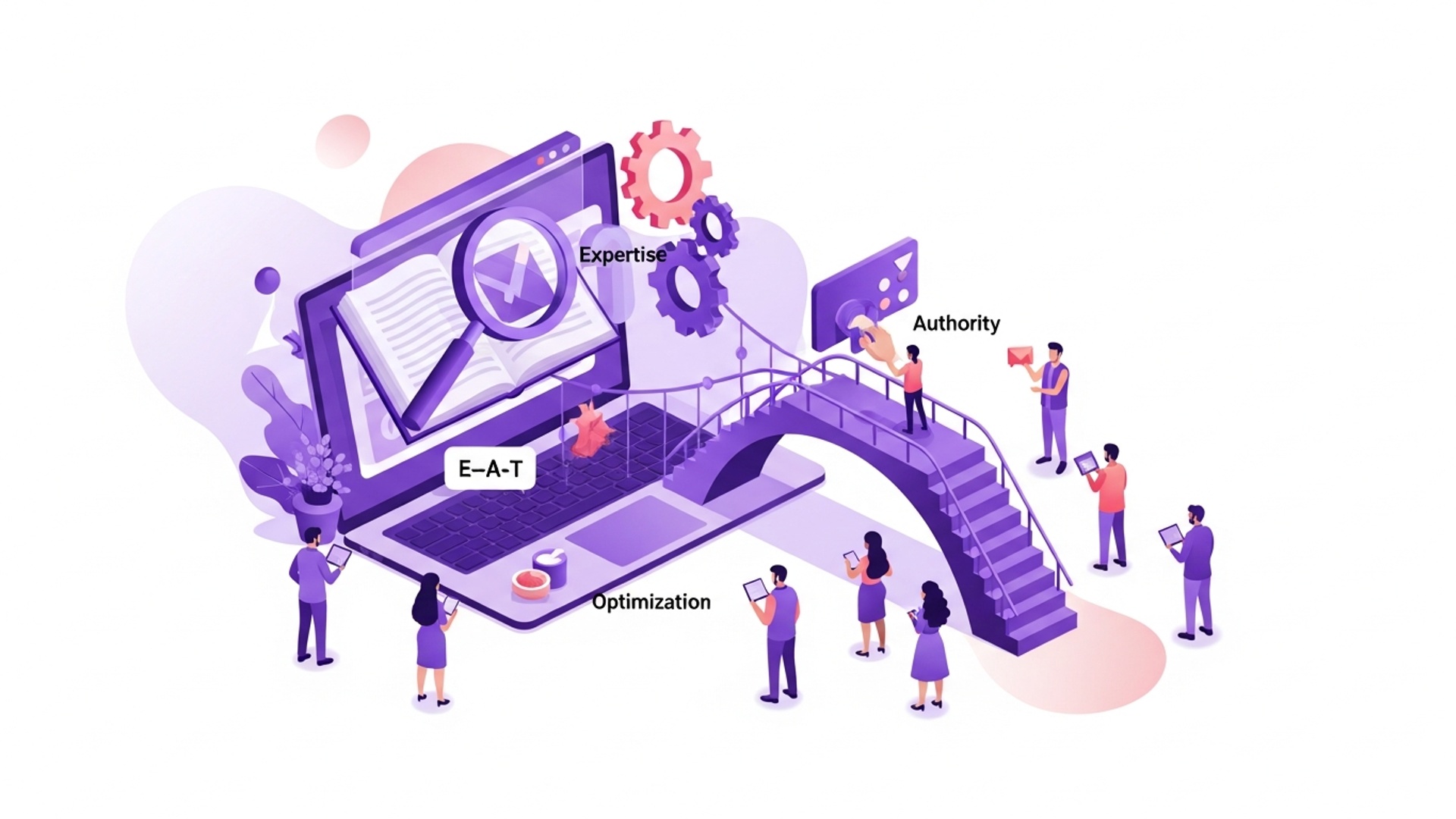
Why E-E-A-T Is a Strategic SEO Imperative
E-E-A-T is not a single ranking factor, but it heavily influences how Google’s systems assess overall content quality. Insights from the Quality Rater Guidelines are used to train and refine algorithms such as RankBrain, BERT, and MUM, shaping how trust and authority are algorithmically interpreted at scale.
Websites that consistently demonstrate strong E-E-A-T signals benefit from:
-
Greater ranking stability across core updates
-
Higher click-through rates due to perceived credibility
-
Improved engagement and lower bounce rates
-
Stronger performance in YMYL and competitive niches
In essence, E-E-A-T acts as a quality multiplier. When two pages satisfy the same search intent, the page that best demonstrates experience, expertise, and trust is more likely to dominate the SERPs.
Experience and Expertise: Turning Knowledge Into Proof
Demonstrating Experience
Experience refers to firsthand, practical involvement with a topic. This is particularly important for reviews, tutorials, case studies, and applied guidance. Algorithms increasingly favor content that reflects real-world use rather than theoretical summaries.
Effective signals of experience include:
-
Step-by-step walkthroughs grounded in real scenarios
-
Case studies with measurable outcomes
-
Screenshots, examples, or implementation details
-
Nuanced discussion of challenges, edge cases, and trade-offs
Experience is detected through semantic depth, specificity, and behavioral signals such as dwell time and engagement.
Establishing Expertise
Expertise focuses on subject mastery. It is reinforced through:
-
Deep topical coverage rather than surface-level explanations
-
Consistent publication within a defined niche
-
Clear author credentials and specialization
-
Original insights, frameworks, or research
Expertise compounds over time. Search engines associate authors and domains with topics through repeated, high-quality contributions, building long-term topical authority.
Building Authoritativeness Through Content Architecture and PR
Authoritativeness reflects external recognition. It is not claimed, but earned.
Key drivers include:
-
Topical authority through content hubs and internal linking
-
Editorial backlinks from reputable, relevant sources
-
Brand mentions, even without links
-
Citations in industry publications and research
A strong internal structure reinforces authority by signaling topical completeness, while digital PR and original research create external validation. Together, they form a feedback loop that strengthens algorithmic trust.
Trustworthiness: The Foundation of Digital Credibility
Trustworthiness underpins all other E-E-A-T components. Without it, expertise and authority lose impact.
Critical trust signals include:
-
HTTPS and secure infrastructure
-
Clear privacy policies, terms, and disclosures
-
Transparent ownership and contact information
-
Positive third-party reviews and reputation signals
-
Strong Core Web Vitals and stable user experience
Technical excellence and transparency reduce uncertainty for users and evaluators alike. Fast, stable, and secure websites are consistently perceived as more reliable.
Strengthening E-E-A-T With Structured Data
Structured data helps search engines clearly identify entities and relationships. While it does not create E-E-A-T on its own, it removes ambiguity and reinforces existing signals.
High-impact schema types include:
-
Person for authors and contributors
-
Organization for publishers and brands
-
Article to link content with verified authors
-
Review and AggregateRating for trust signals
-
FAQPage for expertise-driven content
When implemented correctly, structured data improves algorithmic understanding and can enhance SERP appearance through rich results.
Measuring and Auditing E-E-A-T Performance
Because E-E-A-T is holistic, measurement requires indirect indicators:
-
Engagement metrics such as time on page and scroll depth
-
Growth in branded queries and referral traffic
-
Backlink quality and authoritative citations
-
Conversion rates and user sentiment
-
Core Web Vitals and technical health
Audits should combine quantitative data with qualitative review, focusing on whether content genuinely demonstrates experience, expertise, and trust rather than merely signaling it.
Advanced Strategies for Long-Term E-E-A-T Dominance
To future-proof E-E-A-T performance:
-
Shift from keyword-centric SEO to entity-based optimization
-
Build comprehensive pillar content supported by expert subtopics
-
Use AI as a support tool, never a substitute for expert insight
-
Publish proprietary research and thought leadership assets
-
Actively manage reputation and public-facing credibility
These strategies create durable trust signals that persist across algorithm updates.
Conclusion
E-E-A-T optimization is not a checklist. It is an operational mindset that must permeate content creation, technical SEO, and brand strategy. Real authority is demonstrated through verifiable expertise, consistent experience, and transparent trust signals that withstand scrutiny from both algorithms and users.
The most resilient SEO strategies treat E-E-A-T as an ongoing commitment rather than a one-time optimization. When embedded deeply into workflows, it delivers compounding returns in visibility, engagement, and brand reputation. In an era where credibility defines competitiveness, E-E-A-T is no longer optional. It is foundational.
More Articles
Improve Your Business with AI-Driven Decision Making Strategies
Unlock SEO Success Using AI Content Generators for Better Results
Boost Your Website Traffic Free Using These Simple Strategies
Ecommerce Conversion Optimization with AI Tools
AI Product Description Generator vs Manual Writing

FAQs
What’s E-E-A-T and why should my website care about it?
E-E-A-T stands for Experience, Expertise, Authoritativeness. Trustworthiness. It’s Google’s way of evaluating the quality and credibility of your content and website. Sites that demonstrate strong E-E-A-T are often rewarded with better search rankings because they provide reliable, high-quality insights to users.
How can I really show off my ‘Experience’ on my website?
To showcase experience, share real-world examples! This could mean including personal anecdotes in your content, featuring case studies, showing before-and-after results, or even using user-generated content like reviews and testimonials that highlight practical use of your product or service.
What are some practical ways to prove my expertise and authority?
For expertise, make sure your authors have detailed bios outlining their qualifications, certifications, or relevant background. Cite credible sources. For authority, aim for mentions and links from reputable industry sites, feature any awards or recognitions. consistently produce well-researched, in-depth content that establishes you as a go-to source.
How do I make my website look more trustworthy to visitors and search engines?
Trustworthiness is built through transparency and security. Use HTTPS, display clear contact data, have a straightforward privacy policy, show customer reviews or testimonials. ensure all your details is accurate and up-to-date. Being honest about your processes and products also helps immensely.
Is E-E-A-T only for big, serious ‘Your Money Your Life’ (YMYL) websites?
While E-E-A-T is critically vital for YMYL sites (like health or finance), it benefits every website. Building trust and demonstrating credibility helps all types of sites, from hobby blogs to e-commerce stores, by improving user experience and potentially boosting search visibility.
My ‘About Us’ page is pretty basic. Can improving it help with E-E-A-T?
Absolutely! Your ‘About Us’ page is a prime spot to beef up your E-E-A-T. Share your company’s story, highlight team members’ qualifications, showcase your mission and values. provide clear contact details. It helps users connect with the human side of your business and reinforces credibility.
What’s the quickest way to start improving my E-E-A-T right now?
A great starting point is to audit your most vital content. Ensure every piece has a clear author with a robust bio, check facts for accuracy, add relevant internal and external links to authoritative sources. make sure your site is secure (HTTPS). Collecting and displaying genuine customer testimonials is also a quick win for trustworthiness.