
In the hyper-competitive world of online retail, captivating visual content is no longer a luxury but a necessity for driving sales. The challenge of consistently producing fresh, high-performing ai social media creatives ecommerce assets at scale is immense, often consuming valuable time and resources.
This is where generative AI revolutionizes the game, empowering brands to dynamically produce bespoke imagery that resonates deeply with target audiences.
Leveraging cutting-edge AI image generation tools allows e-commerce businesses to rapidly A/B test countless ad variations, personalize product visuals for diverse demographics. maintain a vibrant, engaging social presence without the traditional bottlenecks of photography or graphic design.
Unlock unparalleled efficiency and elevate your brand’s visual storytelling.
The Evolution of Ecommerce Visuals: Why AI is Indispensable
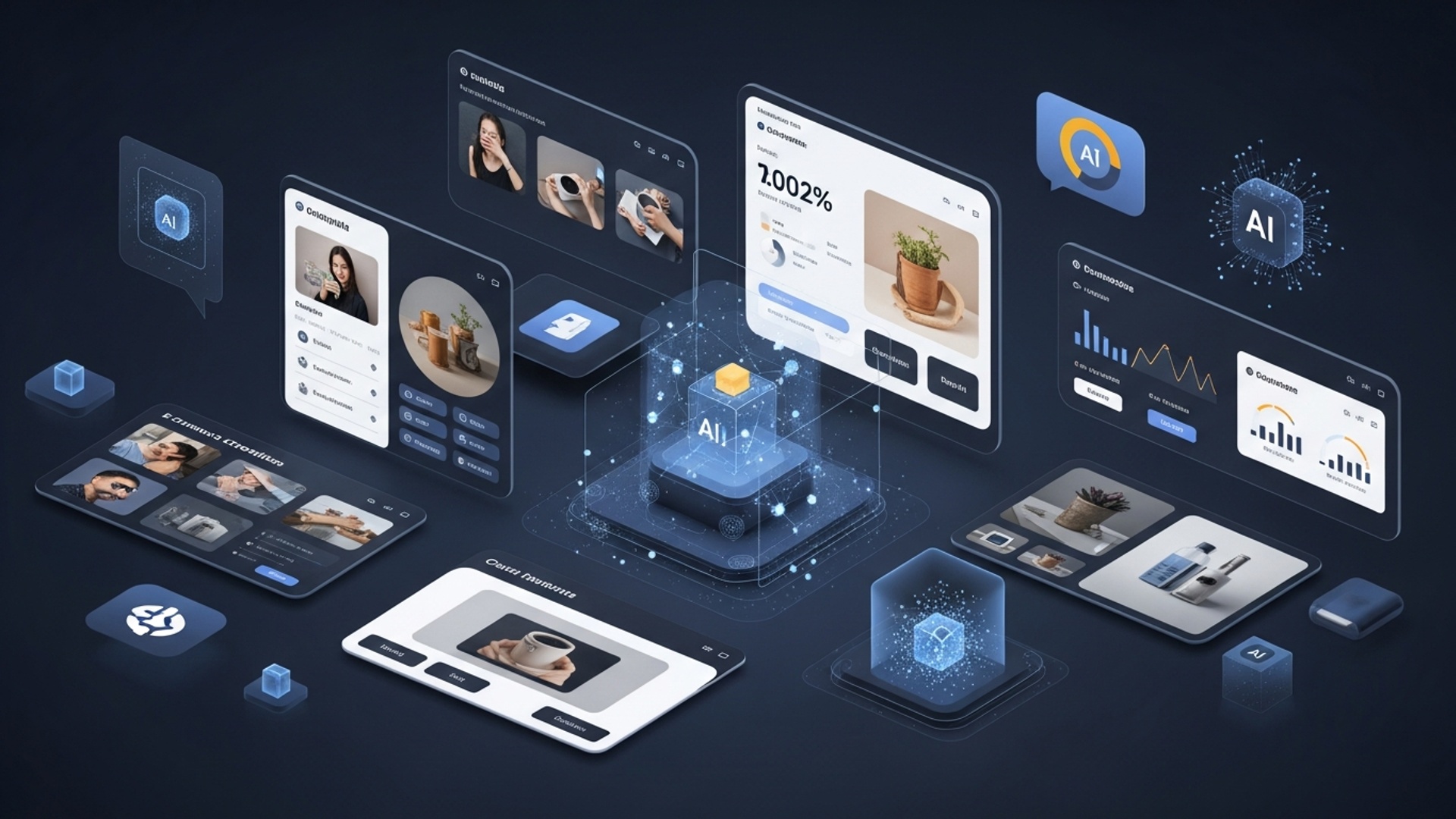
In the hyper-competitive world of online retail, captivating visual content is no longer optional. It is essential for driving engagement and sales. However, consistently producing high-performing AI social media creatives for ecommerce at scale presents a major challenge. Traditional production methods demand significant time, budget, and creative resources.
Generative AI changes this dynamic completely. By leveraging advanced AI image generation tools, ecommerce brands can produce bespoke visuals rapidly, test creative variations efficiently, and personalize content at scale. As a result, brands can maintain a vibrant social presence without the traditional bottlenecks of photography or graphic design.
The Evolution of Ecommerce Visuals
Why AI Has Become Essential
In today’s digital marketplace, attention is the most valuable currency. Social feeds move quickly, and brands must compete visually within seconds.
Traditionally, producing high-quality content required professional photoshoots, models, editing teams, and location planning. While effective, this approach lacks speed and scalability. In contrast, AI-powered image generation enables dynamic, data-driven content creation that aligns directly with audience preferences.
At its core, generative AI uses trained algorithms to produce new images from:
-
Text prompts
-
Existing images
-
Learned visual patterns
For ecommerce brands, this means transforming product descriptions or campaign concepts into scroll-stopping creative assets for platforms such as Instagram, Facebook, TikTok, and Pinterest.
Rather than relying on static production cycles, brands can now create highly adaptable content that evolves with performance insights.
Unlocking Creativity and Efficiency
Integrating AI image generation into ecommerce workflows provides both creative flexibility and operational efficiency.
1. Diverse Visual Asset Creation
AI allows brands to showcase products in varied environments without logistical complexity.
For example:
-
A backpack can appear on a mountain trail, in a city commute, or on a university campus.
-
A skincare product can be shown in multiple climates or cultural contexts.
-
A home decor item can be placed in minimalist, rustic, or modern interiors.
This flexibility enables targeted messaging across customer segments.
2. Speed and Scalability
What once required days can now be completed in minutes. Consequently, brands can:
-
Launch campaigns faster
-
React to trends immediately
-
Maintain continuous content output
-
Refresh creatives frequently
In fast-moving ecommerce environments, speed translates directly into opportunity.
3. Cost Reduction
Traditional production costs often include:
-
Studio rentals
-
Photography equipment
-
Creative teams
-
Editing software
-
Location expenses
AI significantly reduces these costs by automating content generation. As a result, smaller brands can compete more effectively with larger enterprises.
Personalization and A/B Testing at Scale
One of AI’s most powerful advantages lies in hyper-personalization and systematic experimentation.
Tailored Visual Content for Audience Segments
AI can generate different visuals for:
-
Age groups
-
Geographic locations
-
Cultural preferences
-
Lifestyle segments
For instance, a skincare brand may create imagery featuring diverse skin tones, seasonal settings, or localized backgrounds. This level of personalization improves relevance and click-through rates.
Rapid A/B Testing
Instead of manually designing multiple versions, marketers can prompt AI to create:
-
Color variations
-
Alternative backgrounds
-
Different models
-
Emotional tone shifts
-
Distinct calls to action
By testing variations systematically, brands can identify precisely which creative elements drive engagement.
Data-Driven Optimization
Beyond creation, AI can support performance analysis. When marketers combine creative variations with performance data, they create a feedback loop that continuously refines results.
This iterative model strengthens long-term ecommerce performance.
Implementing AI in Your Social Media Workflow
Although AI image generation may seem complex, implementation follows a clear structure.
Step 1: Master Prompt Engineering
Effective prompts determine output quality. Strong prompts typically include:
Product Details
Name, color, material, texture, unique features.
Context and Setting
Environment, background, use case.
Mood and Tone
Energetic, calm, luxurious, playful.
Lighting and Composition
Natural light, studio lighting, close-up, flat lay.
Action or Interaction
Product in motion, held by a model, placed on a surface.
Example of a refined prompt:
“A vibrant crimson cocktail dress, flowing silk fabric, elegant model walking through a dimly lit art gallery, soft spotlight, high fashion photography, atmospheric.”
Detailed prompts yield more precise outputs.
Step 2: Iterate and Refine
AI generation is rarely perfect on the first attempt. Therefore:
-
Generate multiple options
-
Adjust prompt language
-
Use editing tools such as in-painting
-
Refine visual elements
Iteration improves creative alignment.
Step 3: Integrate into Existing Systems
AI-generated images can integrate seamlessly with:
-
Social media scheduling platforms
-
Ecommerce CMS systems
-
Paid ad managers
-
Design software
This ensures smooth incorporation into broader marketing strategies.
Addressing Potential Challenges
While AI offers significant advantages, brands must manage key considerations.
Brand Consistency
Generic AI output can dilute identity. To prevent this:
-
Train AI models on existing brand visuals
-
Create structured AI style guides
-
Maintain defined color palettes and visual themes
Human Oversight
AI should augment creativity, not replace it. Human review remains essential to ensure:
-
Brand alignment
-
Cultural sensitivity
-
Quality standards
-
Messaging accuracy
Ethical Awareness
Marketers must evaluate outputs for unintended bias, stereotyping, or misrepresentation.
The Future of AI Image Generation in Ecommerce
The AI landscape continues to evolve rapidly.
Emerging trends include:
AI Video Generation
Short-form videos and animated ads generated from text prompts will expand creative formats.
Interactive Creatives
Future systems may allow users to customize elements within ads dynamically.
Hyper-Realistic Rendering
Models continue to improve realism and stylistic precision.
AI Trend Forecasting
AI systems increasingly analyze social trends to guide visual direction.
As these capabilities mature, ecommerce brands that adopt AI early will maintain a competitive advantage.
Conclusion
AI image generation is transforming ecommerce social media creatives by increasing speed, personalization, and scalability.
Instead of replacing human creativity, AI enhances it. By automating production and expanding experimentation, brands gain the freedom to focus on strategy, storytelling, and performance optimization.
When implemented thoughtfully, AI-powered creative workflows allow ecommerce businesses to:
-
Produce more content
-
Test more variations
-
Personalize more effectively
-
Reduce operational costs
-
Increase engagement and conversions
Ultimately, AI enables brands to move faster while maintaining creative impact in an increasingly crowded digital marketplace.
More Articles
How SaaS AI Image Generators Revolutionize Visual Content Creation
Boost Your Online Sales Create Stunning Product Images With An AI Tool
Create Stunning AI Product Images Instantly for Your Ecommerce Brand
Boost Your Ecommerce Sales Using AI Image Generation for Products
Generate Engaging Product Descriptions Easily with AI Tools for Your Business

FAQs
What’s the main idea behind using AI for e-commerce social media creatives?
It’s all about leveraging Artificial Intelligence to make your online store’s social media content much more impactful and engaging. This means creating visuals and copy that really grab attention and encourage people to interact with your brand.
How does AI actually help create better social media visuals and copy?
AI tools can examine massive amounts of data to figure out what your audience loves. They can then generate personalized images, suggest optimal color schemes, write compelling ad copy tailored for different segments, or even produce dynamic video snippets, all designed to perform better on various platforms.
What are the big benefits for my e-commerce business if I start using AI for these creatives?
You’ll likely see a significant boost in engagement rates, higher click-throughs. potentially increased sales. AI helps you save a lot of time on content creation, reduce costs, personalize customer experiences at scale. ensures your visuals are always fresh, on-trend. optimized for maximum performance.
Is it complicated to get started with AI creative tools for social media?
Not usually! Most AI creative platforms are designed with user-friendly interfaces, so you don’t need to be a tech expert. They often provide templates, guided workflows. easy-to-grasp options to help you quickly generate professional-looking content without a steep learning curve.
Can AI really comprehend and maintain my brand’s unique style and voice?
Absolutely! Advanced AI can learn from your existing brand assets, style guides. past successful campaigns. The more it’s used, the better it gets at replicating your brand’s specific aesthetic, tone. messaging, ensuring consistency across all your social media creatives.
Will using AI for creatives totally replace my human graphic designers or content creators?
Definitely not! Think of AI as a super-efficient assistant. It automates repetitive tasks, generates a ton of ideas. optimizes content, which frees up your human team to focus on higher-level strategy, creative direction. those unique artistic touches that only humans can provide. It’s about enhancing, not replacing, human creativity.
Which social media platforms get the most out of AI-generated creatives?
All major platforms can benefit! Whether it’s image-heavy Instagram and Pinterest, video-centric TikTok and YouTube, or text-and-link-focused Facebook and LinkedIn, AI can optimize content formats, copy. visuals to align with each specific platform’s best practices and audience engagement patterns for better results.