The escalating need for compelling visual content across digital platforms often clashes with traditional creative bottlenecks, demanding significant time and resources. This challenge finds a powerful solution in the saas ai image generator, a groundbreaking technology fundamentally reshaping how we approach visual asset creation.
By leveraging sophisticated generative AI models, these platforms — like Midjourney or the latest DALL-E iterations — enable users to transform simple text prompts into intricate, high-resolution imagery, from hyper-realistic product mockups to abstract artistic concepts, within seconds.
This capability not only democratizes access to professional-grade visuals but also empowers creators to rapidly iterate, personalize content at scale. explore imaginative possibilities previously unattainable, marking a pivotal shift in creative workflows and content strategy. 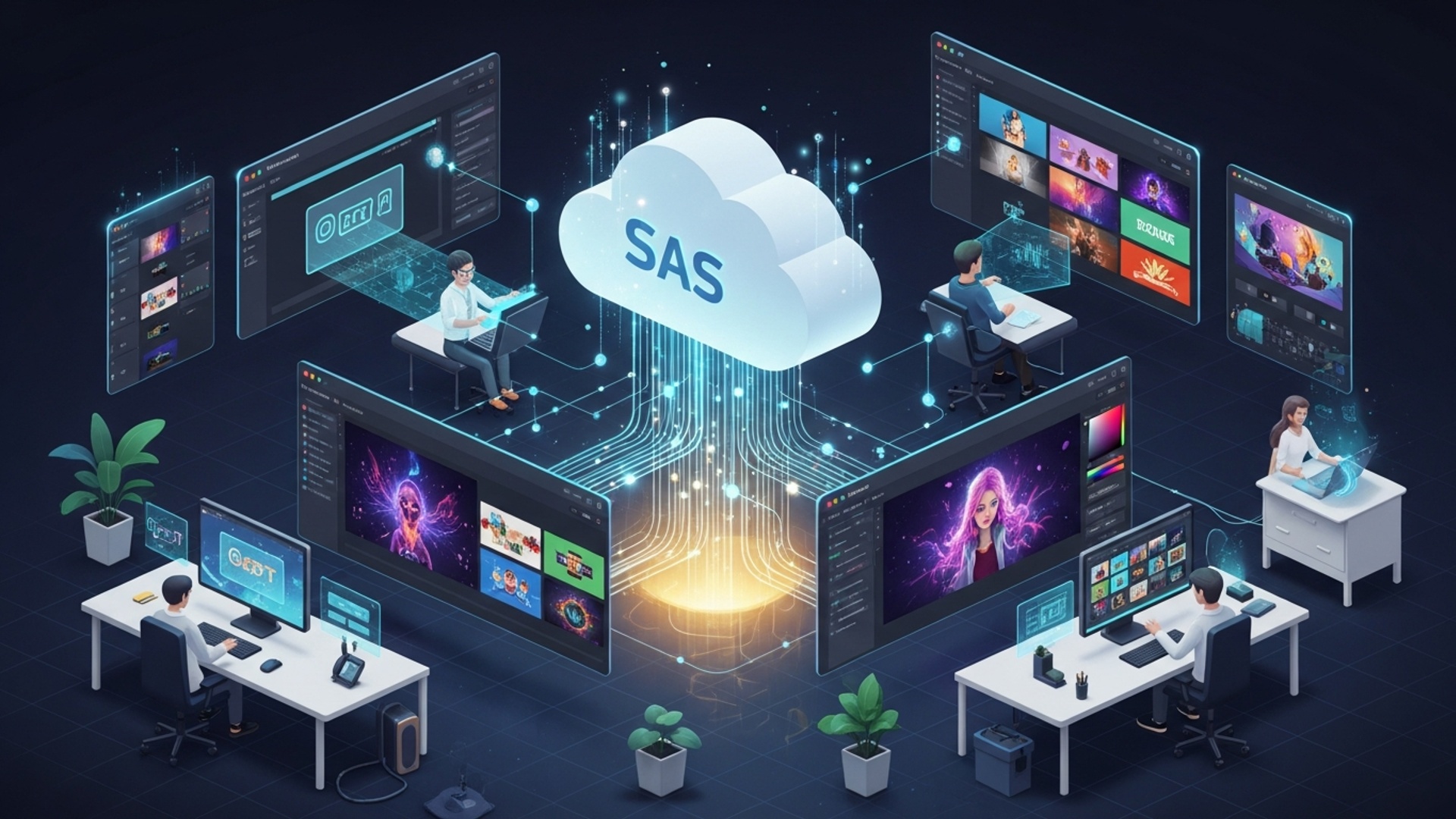
The Rise of SaaS AI Image Generators in Visual Content Creation
The landscape of visual content creation has undergone a profound transformation with the advent of the SaaS AI image generator. Historically, producing high-quality visuals required specialized skills in graphic design, photography, or illustration. It was time-consuming and often expensive.
Today, software-as-a-service platforms powered by artificial intelligence are democratizing this process. These tools leverage advanced algorithms to translate text prompts into unique visual assets. As a result, businesses, marketers, artists, and educators can access professional-grade imagery without traditional barriers.
This shift is not simply about efficiency. It represents a broader redefinition of creative workflows, enabling rapid prototyping, personalization, and scalable visual production.
Understanding the Core Mechanics of a SaaS AI Image Generator
At its core, a SaaS AI image generator relies on generative AI models trained on large datasets of images paired with text descriptions. Through this training process, the model learns patterns, styles, and semantic relationships between language and visuals.
When a user inputs a text prompt, the system interprets the language and generates a new image based on learned associations.
The most common architecture behind these systems is the diffusion model.
How Diffusion Models Work
Noise Introduction During Training
The model learns to gradually add noise to images until they become static. This helps it understand how image structures break down.
Noise Removal During Generation
When generating a new image, the system starts with random noise. It then iteratively removes that noise while being guided by the text prompt. Each step refines the output until it matches the description.
This process enables the generation of diverse visual outputs, including:
-
Photorealistic images
-
Abstract art
-
Vector graphics
-
Stylized illustrations
-
3D render concepts
The SaaS interface abstracts this complexity, allowing users to interact through simple prompts.
Key Benefits of AI-Powered Image Generation
Integrating a SaaS AI image generator into creative workflows offers multiple advantages.
Speed and Efficiency
Images that once required hours or days can now be generated in seconds. This is especially valuable for marketing teams operating under tight deadlines.
Cost Reduction
Businesses reduce reliance on:
-
Stock photo subscriptions
-
Photoshoots
-
Freelance designers
Subscription-based access significantly lowers per-asset costs.
Democratized Design
Users without formal design training can create professional visuals. This expands creative capabilities across teams.
Creative Exploration
AI can produce countless variations of a concept. Users can test styles, lighting, compositions, and aesthetics quickly.
Scalable Personalization
Brands can generate tailored visuals for specific audience segments, enabling personalized campaigns at scale.
Real-World Applications
The practical use cases of SaaS AI image generators span industries.
Marketing and Advertising
Brands can create:
-
Social media graphics
-
Ad creatives
-
Product mockups
-
Website banners
Rapid iteration improves testing and optimization.
Game Development
Developers can generate:
-
Concept art
-
Character variations
-
Environmental assets
-
Texture drafts
This accelerates production pipelines.
Education
Educators can create custom diagrams and illustrations that make abstract topics easier to understand.
Fashion and Product Design
Designers can visualize concepts before investing in physical prototypes.
Editorial and Content Production
Writers and publishers can generate relevant imagery without copyright limitations.
The Role of Prompt Engineering
While powerful, a SaaS AI image generator requires precise prompting to produce high-quality outputs. Prompt engineering refers to crafting structured, descriptive inputs that guide the model effectively.
Effective prompts often include:
Subject
The main focus of the image.
Style
The artistic direction, such as photorealistic or minimalist.
Details
Lighting, color, mood, and textures.
Composition
Perspective and framing.
Negative Prompts
Elements to exclude, such as blur or distortion.
Example Prompt
“A futuristic city skyline at sunset, cyberpunk aesthetic, neon lights reflecting on wet streets, cinematic lighting, dramatic shadows, ultra-wide angle. Avoid blurry or low-resolution outputs.”
Experimentation is essential. Different models interpret prompts differently, and iteration improves results.
Traditional Creation vs SaaS AI Image Generation
The contrast between traditional visual production and AI-driven generation highlights the shift in accessibility and efficiency.
| Feature | Traditional Creation | SaaS AI Image Generator |
|---|---|---|
| Time to Create | Hours to days | Seconds to minutes |
| Cost | High production costs | Subscription-based |
| Skill Required | Advanced design expertise | Prompt crafting |
| Scalability | Limited | Highly scalable |
| Iteration Speed | Slow | Instant variations |
| Accessibility | Skill and budget dependent | Broadly accessible |
This shift changes the economics of content production and enables new creative workflows.
Ethical Considerations
As adoption grows, ethical concerns require attention.
Key areas include:
-
Copyright and ownership
-
Bias in training data
-
Deepfake misuse
-
Impact on creative professions
Responsible platforms are implementing:
-
Usage policies
-
Watermarking systems
-
Content moderation frameworks
Ongoing dialogue and regulation will shape future standards.
The Future of SaaS AI Image Generators
The technology continues to evolve.
Enhanced Creative Control
Users will gain finer control over composition, object placement, and scene depth.
Video Generation
Text-to-video capabilities are emerging and will significantly expand creative possibilities.
Personalized Model Training
Brands may train AI systems on proprietary styles to maintain visual consistency.
Integration With Design Platforms
AI generation will increasingly merge with traditional editing software for hybrid workflows.
Continuous adaptation will be necessary as tools become more sophisticated.
Conclusion
SaaS AI image generators have fundamentally changed visual content creation. They reduce production time, lower costs, and expand creative accessibility.
Organizations that integrate these tools strategically can produce visual content at scale while maintaining originality and flexibility.
As the technology matures, mastering structured prompting and responsible implementation will be essential for maximizing impact.
More Articles
Create Stunning AI Product Images Instantly for Your Ecommerce Brand
Boost Your Ecommerce Sales Using AI Image Generation for Products
Unlock Creative Power How to Generate Amazing AI Images Effortlessly
AI Product Image Generator to Create Stunning Ecommerce Visuals
Ultimate Guide To Boost Sales With AI Visual Content Strategies

FAQs
What exactly are SaaS AI image generators?
These are cloud-based tools that use artificial intelligence to create images from text descriptions (prompts) or other inputs. Instead of designing graphics manually, you tell the AI what you want. it generates it for you, all accessible through your web browser.
How are these tools shaking up visual content creation?
They’re a game-changer! Traditional methods often require design skills, expensive software, or hiring professionals. AI generators democratize content creation by letting anyone, regardless of design background, produce high-quality, unique visuals quickly and affordably. It massively speeds up workflows and sparks new creative possibilities.
Can I really get unique images, or will they all look the same?
Absolutely unique! The beauty of these AI models is their ability to generate novel images based on your specific prompts. While they learn from vast datasets, they don’t just copy. They synthesize new visuals, allowing for incredible customization and the creation of truly one-of-a-kind imagery that perfectly matches your brand or content.
Do I need to be a tech wizard to use one of these?
Not at all! Most SaaS AI image generators are designed with user-friendliness in mind. You typically just type in what you want to see, maybe adjust a few settings. the AI does the heavy lifting. The learning curve is usually very gentle, making them accessible even for beginners.
How do they help businesses save time and money?
Think about the time spent searching for stock photos, waiting for a designer, or trying to create something yourself. AI generators eliminate much of that. You can generate multiple image variations in minutes, iterate quickly. produce custom visuals without the recurring costs of stock subscriptions or professional design fees, leading to significant savings in both time and budget.
What kinds of visuals can these AI tools actually create?
The possibilities are pretty vast! They can generate everything from realistic photos of people, objects. landscapes to abstract art, illustrations, logos, icons. even specific design elements. If you can describe it, there’s a good chance the AI can render a visual interpretation of it.
What are some of the biggest benefits for marketers and content creators?
For marketers and creators, the benefits are huge: rapid content production for social media, blogs. ads; easy A/B testing with diverse visuals; personalized imagery for campaigns; overcoming creative blocks; and maintaining a consistent brand aesthetic without extensive design resources. It empowers them to be more agile and visually compelling.