The Strategic Imperative of AI in Modern E-commerce Visuals
The landscape of online retail is in constant flux, driven by technological advancements and evolving customer expectations. In this dynamic environment, the role of visual content has escalated from mere product depiction to a pivotal driver of engagement and conversion.
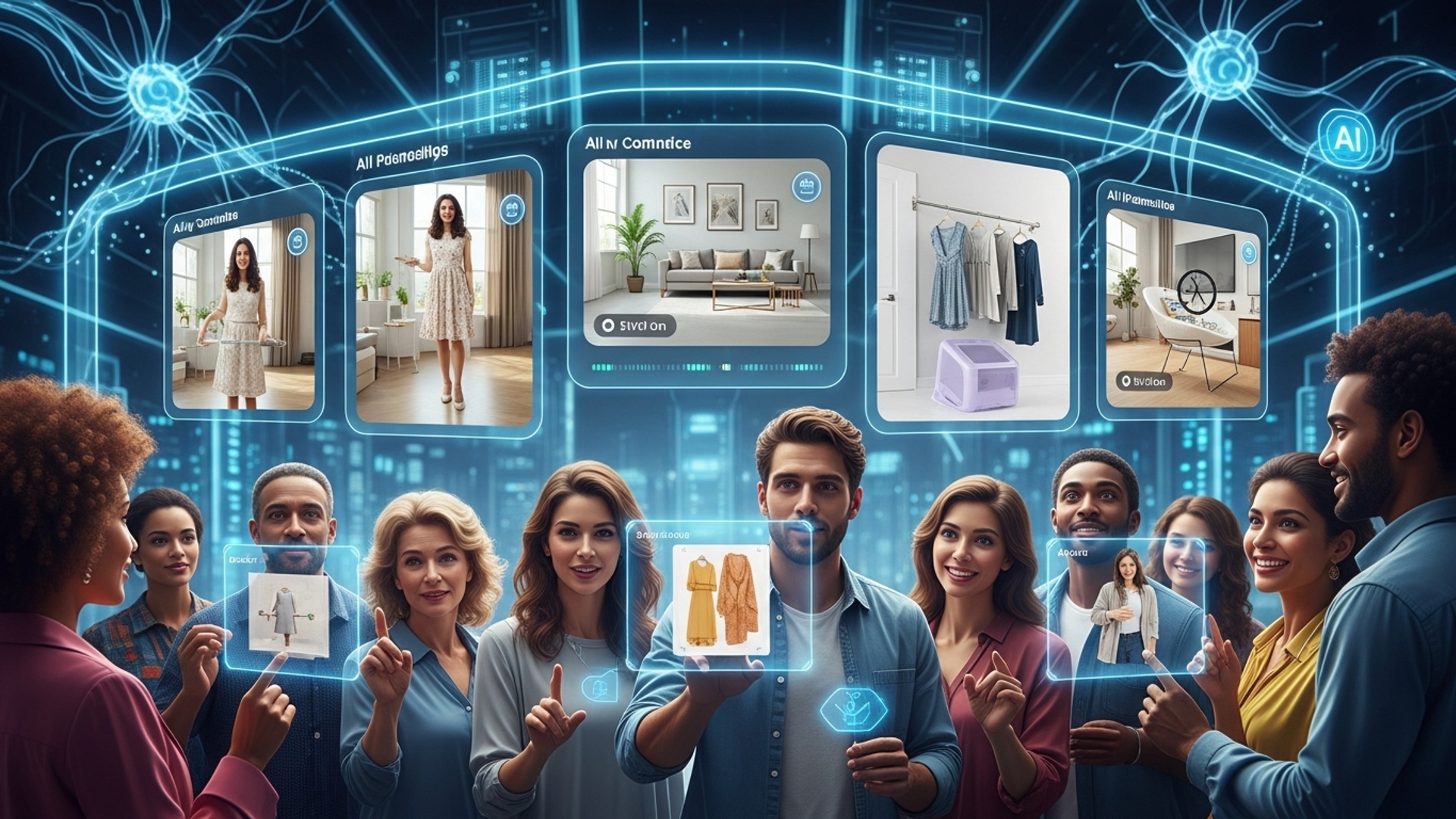
Traditional methods of generating product imagery, often resource-intensive and time-consuming, are increasingly being augmented, in some cases transformed by artificial intelligence. The integration of ecommerce visual content ai is not merely an efficiency upgrade; it represents a fundamental shift in how brands present their products and connect with consumers, ultimately leading to superior customer engagement.
Understanding this shift requires delving into the core technologies that enable AI to revolutionize visual asset creation and deployment.
Demystifying AI Image Generation: Core Concepts and Technologies
At the heart of AI’s transformative power in visual content lies the discipline of AI Image Generation, which leverages sophisticated machine learning models to create, manipulate, and enhance images.
This category encompasses several key technologies:
Generative Adversarial Networks (GANs)
These neural networks consist of two components, a generator that creates new data (images) and a discriminator that evaluates their authenticity. Through a competitive training process, GANs learn to produce highly realistic images, making them invaluable for generating diverse product variations or entirely new scenes.
Diffusion Models
A more recent and increasingly popular class of generative models, diffusion models work by systematically adding noise to an image and then learning to reverse this process, effectively creating new images from random noise.
Tools like DALL-E 2, Midjourney, and Stable Diffusion are prominent examples built on diffusion principles, capable of generating incredibly nuanced and contextually rich visuals from simple text prompts.
Computer Vision
While not strictly for generation, computer vision plays a crucial supporting role. It enables AI systems to comprehend and interpret visual data, facilitating tasks like automated background removal, object recognition, and quality control of generated images.
Machine Learning (ML)
The overarching field encompassing these techniques, ML algorithms learn from vast datasets of existing images to discern patterns, styles, and attributes. This learning enables them to apply these insights to generate new, consistent, and high-quality visuals.
These technologies work in concert to empower e-commerce businesses with capabilities previously unimaginable, moving beyond static images to dynamic, personalized, and engaging visual experiences.
Automating and Elevating Visual Content Creation with AI
The direct application of AI Image Generation in e-commerce streamlines and enhances various aspects of visual content creation:
Hyper-realistic Product Imagery from Text
Instead of costly photoshoots, businesses can now generate diverse product images in various settings, lighting conditions, and styles using simple text prompts.
For example, a furniture retailer can prompt an AI to generate an image of a minimalist sofa in a sunlit Scandinavian living room with a houseplant, receiving multiple high-quality options in moments.
Automated Background Removal and Generation
AI can instantly isolate products from their original backgrounds and place them into new, contextually relevant and visually appealing scenes. This not only saves immense post-production time but also allows for consistent branding across all product listings.
Virtual Product Try-ons and Augmented Reality (AR)
AI-powered virtual try-on solutions allow customers to see how products such as clothing or eyeglasses would look on them using their device’s camera. This significantly enhances the shopping experience, providing confidence and reducing return rates.
Image Upscaling and Restoration
AI algorithms can intelligently enhance the resolution of low-quality images without pixelation, making existing assets suitable for high-resolution displays or print. They can also restore damaged or outdated product photos, breathing new life into older catalogs.
Generating Product Variations
For products with numerous colors, materials, or configurations, AI can generate all possible visual combinations without needing to physically photograph each one, dramatically accelerating product launches.
The efficiency gains are substantial, allowing brands to produce more content, faster, at a fraction of the traditional cost.
Driving Customer Engagement Through AI-Powered Visuals
The tangible benefits of integrating ecommerce visual content ai directly translate into enhanced customer engagement:
Personalized Visual Experiences
AI can assess customer data to dynamically generate product images that resonate with individual preferences. For example, one customer may see a product styled in an eco-friendly outdoor setting, while another sees it in an urban environment.
Improved Product Clarity and Detail
High-quality, contextually rich AI-generated images provide customers with a clearer understanding of a product’s features, scale, and appearance in real-world scenarios.
Interactive and Immersive Shopping
Virtual try-ons and AR experiences powered by AI transform passive browsing into an active, engaging experience. Customers spend more time interacting with products, increasing emotional connection.
Consistent Brand Storytelling
AI ensures visual consistency across all channels, from product pages to social media campaigns, reinforcing brand identity.
Faster Access to New Products
By accelerating content creation, AI helps brands bring new products to market quicker, maintaining customer interest and staying ahead of trends.
Key Technologies and Tools in Ecommerce Visual Content AI
The ecosystem of AI image generation tools for e-commerce continues to evolve rapidly.
Foundational Models
-
DALL-E 3 (OpenAI)
Known for generating coherent and creative visuals from natural language descriptions.
-
Midjourney
Renowned for artistic quality and strong visual aesthetics, often used for branding and campaigns.
-
Stable Diffusion (Stability AI)
An open-source model that enables fine-tuning for consistent product visuals and backgrounds.
Specialized E-commerce Platforms
Traditional Workflow vs AI Image Generation
| Feature |
Traditional Workflow |
AI Image Generation Workflow |
| Cost per image |
High |
Low |
| Time to generate |
Days to weeks |
Minutes to hours |
| Scalability |
Limited |
High |
| Customization |
Manual |
Prompt-based |
| Consistency |
Difficult |
Easily maintained |
| Personalization |
Impractical |
Dynamic |
Real-World Applications and Success Stories
Fashion Retail
AI-generated visuals showcase clothing across diverse body types and environments.
Home Furnishings
Virtual staging allows customers to visualize products in realistic room settings.
Jewelry and Accessories
AI generates detailed multi-angle views and enables virtual try-ons.
Automotive Configurators
Real-time customization of vehicles across colors and trims.
Small Businesses and Startups
AI democratizes professional-grade visuals without large budgets.
Navigating Challenges and Ethical Considerations
-
Data bias and representation risks
-
Maintaining brand authenticity
-
Computational costs
-
Ethical use of synthetic media
-
Intellectual property and copyright concerns
Addressing these factors proactively ensures responsible AI adoption.
Actionable Strategies for Implementation
Start Small and Experiment
Focus on high-impact use cases like background replacement.
Define Clear Objectives
Clarify goals such as speed, cost reduction, or personalization.
Train and Upskill Teams
Educate teams on prompt creation and AI limitations.
Integrate with Existing Systems
Use APIs and platform integrations for seamless workflows.
Monitor Performance and Iterate
Track engagement, conversions, and visual performance.
Prioritize Authenticity and Ethics
Ensure inclusivity, transparency, and brand alignment.
Conclusion
AI is fundamentally reshaping ecommerce visual content by enabling dynamic, personalized, and immersive experiences.
Practical entry points such as AI-powered image scaling and personalized visual recommendations offer immediate value with minimal risk. Brands adopting AI-driven visuals are not just adapting, they are setting new standards for customer engagement.
AI-powered visual content is no longer optional. It is becoming the most persuasive salesperson in modern e-commerce.
If you want next steps, I can:
-
Convert this into HTML / CMS-ready format
-
Create executive summaries or TL;DR blocks
-
Optimize headings for featured snippets
-
Add visual placement suggestions
Just say the word.