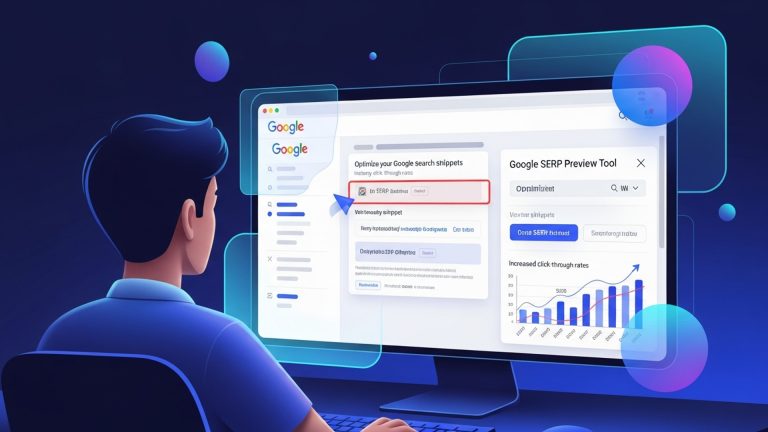
In the fiercely competitive D2C landscape, every click is a direct pathway to a potential customer interacting with your brand. Leveraging a Google SERP preview tool allows D2C businesses to meticulously sculpt their search snippets, instantly visualizing how their digital storefront appears in search results. This isn’t just about keywords; it’s about crafting a magnetic first impression that compels users searching for specific products, like ‘eco-friendly pet food delivery’ or ‘personalized fitness apparel,’ to choose your offering. By strategically optimizing titles, meta descriptions. rich snippets, you actively shape the initial micro-moment of the customer journey, directly influencing click-through rates and funneling qualified leads towards your conversion-optimized product pages or even engaging your AI-powered sales bot. This proactive approach ensures your brand’s unique value proposition is unmistakably clear, driving immediate engagement and improved ROI.
The Gateway to Your D2C Bot: Understanding Google Search Snippets
In the competitive landscape of Direct-to-Consumer (D2C) brands, visibility is paramount. Your innovative D2C bot, whether it’s an AI-powered personal shopper, an automated customer service assistant, or a dynamic product configurator, needs to stand out in the vast digital ocean. The first point of contact between your bot and a potential customer often isn’t your website. rather its representation in Google’s search results – known as a search snippet or SERP (Search Engine Results Page) snippet. These concise summaries act as miniature advertisements, enticing users to click and explore further. Optimizing these snippets isn’t just a best practice; it’s a critical strategy for D2C brands aiming to significantly improve their Click-Through Rates (CTR) and drive organic traffic directly to their bot-powered experiences.
A well-crafted snippet immediately communicates value, relevance. a compelling reason to visit your page. It answers the implicit question in a user’s mind: “Is this what I’m looking for?” For D2C businesses, this means showcasing the unique benefits of their bots right from the search results. Imagine a user searching for “automated skincare recommendations.” If your D2C bot offers precisely that, your snippet needs to scream it clearly and persuasively. To effectively craft and refine these crucial elements, marketers often turn to tools like a Google SERP preview tool, which allows for real-time visualization of how changes will appear on Google.
Understanding and mastering the art of snippet optimization is no longer optional. It’s about ensuring your D2C bot, which you’ve invested resources into developing, gets the attention it deserves from the moment a user initiates a search. By focusing on the components of a snippet – the title, meta description. rich snippets – D2C brands can transform passive search results into active engagement opportunities.
Crafting Compelling Title Tags and Meta Descriptions for D2C Bots
The core of any effective search snippet lies in its title tag and meta description. These two elements are your primary tools for communicating with potential customers directly on the Google search results page. For D2C bot platforms, tailoring these for maximum impact is crucial.
Optimizing Your Title Tag: The Digital Headline
The title tag is the bold, blue clickable headline in a Google search result. It’s the first thing users read and often the determining factor in whether they click. For D2C bot pages, your title tag needs to be:
- Keyword-Rich and Relevant
- Concise and Engaging
- Benefit-Oriented
- Branded (Subtly)
Include primary keywords that users are likely to search for when looking for your bot’s solution. For example, if your bot offers personalized fashion advice, a title like “AI Stylist Bot | Personalized Fashion for D2C Shoppers” is far more effective than just “Our Bot.”
Google typically displays about 50-60 characters (around 500-600 pixels) before truncating the title. Keep it punchy and to the point.
Highlight a key benefit your D2C bot provides. Instead of “Customer Service Bot,” try “24/7 D2C Support Bot | Instant Answers & Order Tracking.”
Incorporate your D2C brand name, especially if it’s recognizable or adds credibility. For example, “EcoChic AI Wardrobe Bot | Sustainable Fashion Styling.”
<title>Personalized Snack Box Bot | Discover New Treats - [Your Brand Name]</title>
Writing Impactful Meta Descriptions: Your Elevator Pitch
The meta description is the short paragraph of text beneath the title tag. While not a direct ranking factor, a compelling meta description significantly influences CTR. It’s your opportunity to expand on the title and persuade users to click. For D2C bot pages, focus on:
- Unique Selling Proposition (USP)
- Clear Call-to-Action (CTA)
- Keyword Inclusion (Natural)
- Addressing User Needs
- Character Limit
What makes your D2C bot different or better? Does it offer hyper-personalization, instant gratification, or solve a specific D2C pain point?
Encourage engagement. Phrases like “Chat now,” “Get personalized recommendations,” “Automate your orders,” or “Experience the future of D2C shopping” can be highly effective.
Naturally weave in relevant keywords to signal relevance to both users and search engines.
Directly speak to the problems your target D2C customer faces and how your bot solves them.
Aim for around 150-160 characters. Google often truncates longer descriptions, especially on mobile.
<meta name="description" content="Design your dream space with our AI Home Decor Bot! Get instant, personalized style suggestions & visualize products in your home. Start decorating your D2C way today!" >
By meticulously crafting both your title tags and meta descriptions, D2C brands can ensure their bot-powered solutions shine brightly on the SERP, capturing the attention of their ideal customers.
Unlocking Visibility with Rich Snippets and Schema Markup for D2C Bots
Beyond the standard title and meta description, Google offers enhanced search results known as “rich snippets.” These visually appealing additions can include star ratings, product prices, availability, FAQ sections. more. For D2C bot platforms, leveraging rich snippets through Schema Markup is a powerful way to stand out, provide more details at a glance. significantly boost CTR.
What is Schema Markup? Schema Markup is a semantic vocabulary (a set of tags) that you can add to your website’s HTML to help search engines better interpret the content on your pages. When search engines comprehend your content more deeply, they can display it in richer, more informative ways in the search results.
Why Rich Snippets Matter for D2C Bots:
- Enhanced Visibility
- Increased Trust
- Pre-Qualified Clicks
- Competitive Advantage
Rich snippets take up more space on the SERP, making your listing more prominent.
data like ratings, reviews, or FAQs adds credibility and builds user trust directly in the search results.
Users who click on a rich snippet often have a clearer idea of what to expect, leading to higher quality traffic and lower bounce rates for your D2C bot.
Many D2C brands still underutilize schema, giving you an edge.
Relevant Schema Types for D2C Bot Blogs:
Consider these schema types to enhance your D2C bot’s visibility:
-
FAQPageSchema: If your D2C bot’s landing page or a related blog post features a list of common questions and answers (e. g. , “How does the bot work?” , “What products can it recommend?” , “Is the bot secure?”) , implementingFAQPageschema can display these questions directly in the search results as an expandable section. This is fantastic for pre-empting user queries. -
ProductSchema: If your D2C bot is designed to help users discover or configure products (e. g. , a custom sneaker bot, a personalized jewelry bot), usingProductschema on relevant product pages can display pricing, availability. review ratings for the products it handles. -
RevieworAggregateRatingSchema: If you collect reviews for your D2C bot’s performance or the service it provides (e. g. , “Our AI customer service bot has a 4. 8-star rating!”) , this schema can display those star ratings right in the search snippet, instantly building social proof. -
HowToSchema: For guides on “How to use our D2C styling bot” or “How to configure your personalized subscription box with our bot,” this schema can break down steps directly in the SERP.
Implementing Schema Markup (JSON-LD Example):
Schema markup is typically implemented using JSON-LD (JavaScript Object Notation for Linked Data) within a <script type="application/ld+json"> tag in the <head> or <body> of your HTML. Here’s a simplified example for an FAQ related to a D2C bot:
 <script type="application/ld+json">
{ "@context": "https://schema. org", "@type": "FAQPage", "mainEntity": [{ "@type": "Question", "name": "How does the D2C AI stylist bot personalize recommendations?" , "acceptedAnswer": { "@type": "Answer", "text": "Our AI stylist bot uses advanced algorithms and your preferences to curate personalized fashion suggestions, learning from every interaction to refine its choices for your D2C shopping." } },{ "@type": "Question", "name": "Can I return items recommended by the bot?" , "acceptedAnswer": { "@type": "Answer", "text": "Yes, our standard D2C return policy applies to all items purchased through recommendations from our bot. Please see our returns page for details." } }]
}
</script>
After implementing schema, use Google’s Rich Results Test tool to ensure it’s correctly interpreted. By strategically deploying relevant schema, D2C brands can transform their bot’s search presence from merely informative to compellingly interactive, driving higher engagement and conversions.
Visualizing Success: The Indispensable Google SERP Preview Tool
You’ve meticulously crafted your title tags and meta descriptions. carefully considered which schema markup to implement. But how do you know if your meticulously chosen words will actually look good and convey the intended message within Google’s character and pixel limits? This is where a Google SERP preview tool becomes an indispensable asset for any D2C marketer or SEO specialist.
A Google SERP preview tool is an online utility that allows you to input your proposed title tag, meta description. sometimes even simulate rich snippets, then instantly visualizes how they will appear on a Google search results page. This real-time feedback loop is crucial for fine-tuning your snippets before they go live, preventing costly mistakes and ensuring optimal presentation.
Why Every D2C Bot Marketer Needs a Google SERP Preview Tool:
- Character and Pixel Constraint Management
- Aesthetic Optimization
- Competitive Analysis
- Error Prevention
- Iterative Improvement
Google’s display limits are dynamic and can vary. A preview tool helps you see exactly where your text might be truncated, allowing you to adjust for maximum readability and impact. This is vital for ensuring your D2C bot’s key features or calls-to-action aren’t cut off.
Beyond just text, the visual appeal of your snippet matters. A well-formatted snippet with clear spacing and effective use of special characters (like pipes | or em dashes —) can draw the eye. A preview tool helps you achieve this balance.
Some advanced SERP preview tools allow you to compare your proposed snippet against competitors, offering insights into how you can differentiate your D2C bot’s offering.
Before pushing changes live, a quick check with a preview tool can catch typos, awkward phrasing, or missing keywords that might otherwise harm your CTR.
You can experiment with multiple versions of your title and description, testing different CTAs or benefit statements. immediately see the potential result. This iterative process is key to continuous SERP optimization.
How to Effectively Use a Google SERP Preview Tool for Your D2C Bot:
- Input Your Current Snippet
- Draft New Content
- Preview and Refine
- Are the most vital keywords visible?
- Is the call-to-action clear and compelling?
- Does it accurately represent your D2C bot’s functionality (e. g. , “AI-powered product recommendations,” “24/7 automated support”)?
- Is it free of truncation?
- Does it stand out visually?
- Consider Rich Snippets
- Test on Different Devices
Start by pasting your existing title tag and meta description to see how they currently appear. This provides a baseline.
Based on your keyword research and D2C bot’s unique selling points, write several variations of your title and meta description.
Input each variation into the Google SERP preview tool.
While most basic tools focus on title/meta, some advanced versions or Google’s own tools allow for rich snippet testing. If you’ve implemented schema, verify its display with Google’s Rich Results Test.
Remember that snippets can appear differently on desktop vs. mobile. If your tool offers this, check both.
Consider a D2C brand launching a new “AI-powered personalized gift finder bot.” Before going live, their marketing team used a Google SERP preview tool to test various title tags like “AI Gift Bot | Perfect Presents Every Time” versus “Personalized Gift Finder for D2C | Never Miss a Special Occasion.” They quickly identified that the latter, despite being slightly longer, conveyed more benefit and urgency, leading to a higher predicted CTR in their A/B tests. This pre-launch optimization saved them valuable time and ensured their new bot made a strong first impression.
Advanced Strategies and Continuous Optimization for D2C Bot Search Performance
Optimizing your Google search snippets isn’t a one-time task; it’s an ongoing process that requires continuous monitoring, testing. adaptation. For D2C brands leveraging bots, staying agile in your snippet strategy can significantly impact your long-term organic search performance and customer acquisition.
A/B Testing Your Snippets
Just like you’d A/B test landing pages or ad copy, you can (and should) A/B test your search snippets. While direct A/B testing of SERP snippets is complex to set up purely within Google Search, you can infer results by:
- Changing Snippets and Monitoring Google Search Console
- Testing Variations on Paid Ads
Implement a new title tag or meta description for a specific page. Over the next few weeks, closely monitor its performance in Google Search Console, paying attention to impressions, average position. most importantly, CTR. Compare this to the previous period or similar pages.
Run Google Ads campaigns with different headline and description variations that mirror your proposed organic snippets. The CTR performance of your ads can offer valuable insights into which messaging resonates most with your target D2C audience.
A D2C brand specializing in custom apparel bots noticed their “Design Your Own T-Shirt Bot” page had a decent average position but a low CTR. They hypothesized their meta description wasn’t compelling enough. They revised it from “Create custom t-shirts with our bot” to “Unleash your creativity! Design unique D2C apparel with our intuitive AI bot – fast, fun. personalized.” After a month, their CTR for that specific query jumped by 30%, directly leading to more engagement with their design bot.
Monitoring Performance with Google Search Console
Google Search Console is your best friend for snippet optimization. Regularly check the “Performance” report to:
- Identify Low CTR Pages
- review Query Performance
- Track Rich Snippet Performance
Look for pages with high impressions but low CTRs. These are prime candidates for snippet optimization. Your D2C bot’s main landing page or core feature pages should be a priority here.
See which queries are driving traffic to your D2C bot pages. Are users searching for specific bot functionalities or general D2C solutions? Adjust your snippets to better match these user intents.
The “Enhancements” section in Search Console will show you if your schema markup is being recognized and displayed as rich results. if there are any errors.
Staying Updated with Google’s Algorithm Changes
Google’s algorithms are constantly evolving. this can affect how snippets are displayed or how different elements contribute to rankings and CTR. Stay informed about major updates. For instance, Google might start prioritizing certain types of rich snippets or change the optimal length for meta descriptions. Subscribing to reputable SEO news sources and Google’s official announcements is crucial for maintaining competitive D2C bot visibility.
Leveraging User Intent for Snippet Optimization
The goal of snippet optimization is to perfectly align with user intent. For D2C bots, consider the different stages of the customer journey:
- Informational Intent
- Navigational Intent
- Transactional Intent
Users searching “what is an AI shopping assistant?” Your snippet should be educational, highlighting the benefits and capabilities of your D2C bot.
Users searching for your specific D2C bot by name. Your snippet should be direct, branded. lead them straight to the bot experience.
Users searching “buy custom sneakers bot.” Your snippet should emphasize immediate action, product availability. unique customization options provided by your bot.
By continuously analyzing data, testing new approaches. staying attuned to both user behavior and search engine updates, D2C brands can ensure their bot-powered solutions consistently capture attention and drive conversions from the search results page. The investment in optimizing your Google search snippets is an investment in the sustained growth and success of your D2C bot ecosystem.
Conclusion
Optimizing your Google search snippets isn’t merely a technical task; it’s an ongoing conversation with your potential audience. Remember, your snippet is the first impression, a tiny advertisement that decides whether someone clicks through to your valuable content. By meticulously crafting compelling titles that resonate with user intent, writing meta descriptions that pique curiosity. strategically deploying schema markup – perhaps even using an FAQ Schema Generator for richer results – you actively influence that critical decision. My personal tip? Approach each snippet as if it’s competing against a hundred others for one precious click. Test different phrasings, observe what your competitors are doing. always ask yourself: ‘Does this snippet truly represent the value within. would I click it?’ In today’s dynamic search landscape, where AI-powered results are increasingly common, clarity and immediate relevance are paramount. Embrace this iterative process; even minor adjustments can lead to significant jumps in your click-through rates, unlocking more organic traffic and growing your online presence. Your consistent effort in refining these digital storefronts will undoubtedly yield powerful, measurable results.
More Articles
Does Your E-commerce Site Need an FAQ Schema Generator to Rank Higher
Boost Your Shopify Sales by Optimizing Product Titles for SEO
Master EEAT for SEO and Dominate Google Rankings
Unlock Free Website Traffic Strategies to Grow Your Online Presence
Boost Your Sales Creating Perfect Product Titles Using AI Generator Tools

FAQs
What exactly is a Google Search Snippet?
A Google Search Snippet is that short block of text you see under a page title and URL in search results. It’s Google’s quick summary of your page. it’s what often convinces people to click through to your site.
Why should I bother optimizing these snippets?
Optimizing your snippets is super crucial because it directly impacts your click-through rate (CTR). A well-crafted snippet acts like a mini-advertisement, drawing users in and making them choose your link over competitors’, even if your ranking isn’t #1. More clicks mean more traffic!
How can I make my snippets more appealing to searchers?
Focus on clear, concise language that accurately describes your page’s content. Use compelling keywords, include a strong call to action if appropriate. ensure your meta description (which often forms the snippet) is unique and value-driven. Think about what a user searching for your topic would want to see.
What’s the deal with ‘Click-Through Rates Instantly’? Is it really that fast?
While ‘instantly’ might be a strong word for some changes, you can often see improvements in CTR quite quickly once Google recrawls and updates your snippet. The biggest impact comes from making your snippet more relevant and enticing, which can lead to a noticeable jump in clicks soon after the change goes live.
What are some common mistakes people make with their snippets?
A big one is having generic or duplicate meta descriptions across many pages. Others include keyword stuffing, writing descriptions that don’t match the page content, or simply letting Google pick a random piece of text, which often isn’t optimal. Not having a meta description at all is also a missed opportunity.
Do I need to be a coding wizard to optimize my snippets?
Not at all! For most content management systems (like WordPress), there are user-friendly SEO plugins that let you easily edit your page titles and meta descriptions without touching any code. It’s usually a simple text field you fill in.
Will improving my snippets help my Google ranking too?
Directly, no. Optimizing your snippets primarily improves your click-through rate. But, a higher CTR can signal to Google that your page is highly relevant and valuable to users, which can indirectly contribute to better rankings over time as Google sees more engagement with your content.