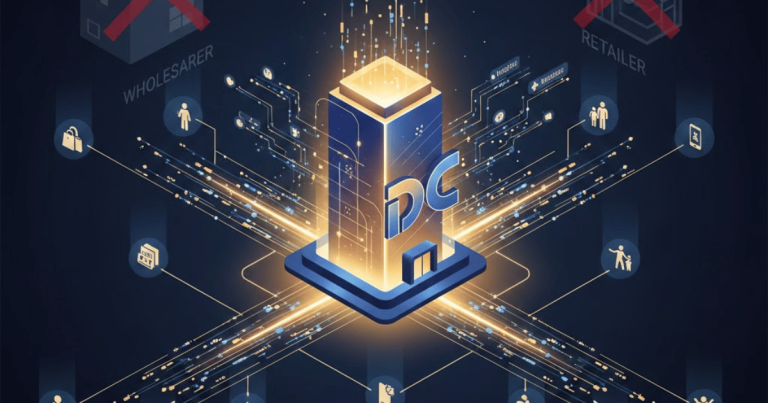
Direct-to-consumer strategies encompass the complete approach brands take to sell products directly to customers without third-party retailers, wholesalers, or distributors. This model gives brands control over pricing, messaging, customer experience, and data collection, delivering margins 40-60% higher than traditional distribution while building direct customer relationships.
D2C brands captured over $175 billion in annual revenue and grow at double the rate of traditional retail. Successful companies like Casper, Glossier, and Dollar Shave Club prove that controlling the customer relationship delivers competitive advantages traditional distribution can’t match.
The shift toward D2C isn’t just about selling online. It’s about building direct relationships, gathering first-party customer data, and iterating products based on unfiltered feedback.
Understanding Direct-to-Consumer Strategies
Direct-to-consumer strategies involve selling products directly to customers without relying on third-party retailers, wholesalers, or distributors. Brands gain complete control over pricing, messaging, customer experience, and data collection.
This fundamentally changes the economics of product businesses. Instead of sharing margins with intermediaries, brands capture full value while offering competitive prices to customers.
Industry data shows 64% of consumers now prefer buying directly from brands rather than through retailers. They cite better prices, more product information, and authentic brand connections as primary reasons.
This preference shift creates unprecedented opportunities for brands willing to own the customer relationship.
Core Components of Successful D2C Strategies
Customer Acquisition Framework
Develop multi-channel acquisition strategies that efficiently bring new customers into your ecosystem. Combine paid advertising, content marketing, partnerships, and referrals for sustainable growth.
Don’t rely on any single acquisition channel. Platform algorithm changes or policy shifts can devastate single-channel strategies overnight.
Conversion Optimization
Create seamless purchase experiences that minimize friction and maximize conversion rates across devices and touchpoints. Every unnecessary step costs you customers.
Test checkout flows, product pages, and CTAs relentlessly. Small improvements compound into significant revenue gains.
Customer Retention Programs
Build systems that turn first-time buyers into repeat customers. Loyalty programs, subscription models, and exceptional service drive sustainable growth.
Acquiring customers costs 5-7 times more than retaining existing ones. Retention isn’t optional—it’s essential for profitability.
Data Collection and Activation
Gather comprehensive customer data at every interaction. Use it to personalize experiences and inform product development.
The D2C model’s biggest advantage is direct access to customer data. Waste this advantage and you’re just an expensive retailer.
Owned Channel Development
Build email lists, SMS subscribers, and community members you can reach without paying platform fees. Owned channels provide independence from algorithm changes.
Every customer acquisition should result in owned channel access, not just a transaction.
Product-Market Fit Iteration
Use direct customer feedback to continuously improve products and expand into adjacent categories. Traditional distribution creates barriers between you and feedback.
D2C eliminates these barriers. Listen to what customers actually say and build what they actually want.
Why Direct-to-Consumer Strategies Drive Superior Results
Margin Control
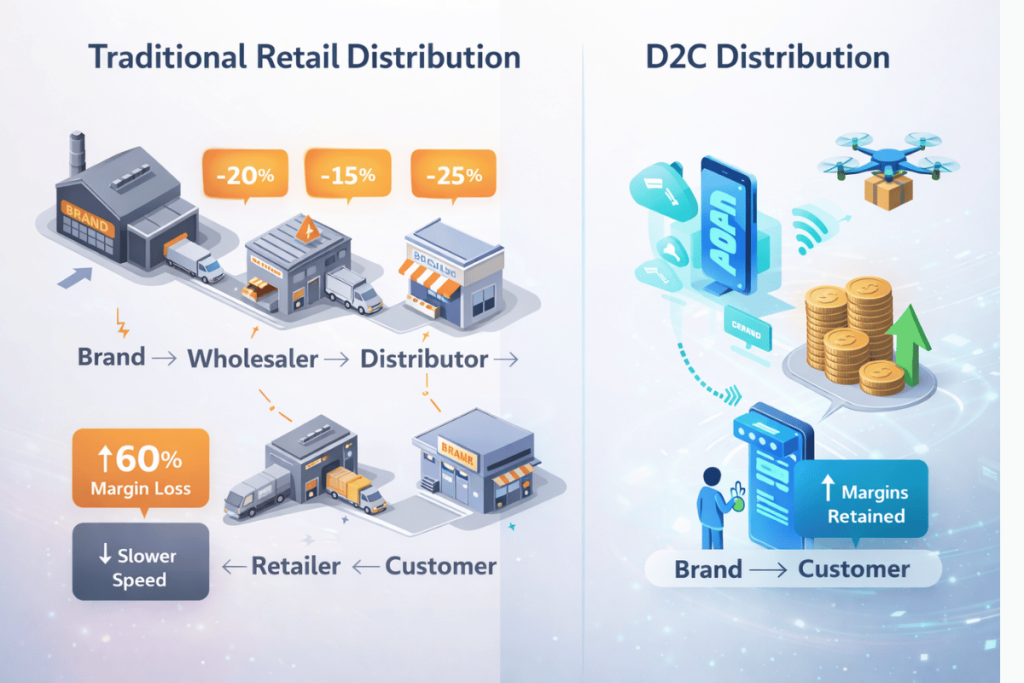
Eliminating intermediaries allows brands to capture 40-60% higher margins on each sale while often offering lower prices than retail. You keep money that wholesalers and retailers would claim.
Better margins fund growth, product development, and customer acquisition without external funding.
Customer Relationships
Direct communication enables personalization, community building, and loyalty that wholesale distribution prevents. Know your customers by name, not by SKU.
Agility and Speed
Without retailer buy-in requirements, D2C brands launch products, test concepts, and iterate based on real customer feedback in weeks instead of months.
Speed becomes a competitive advantage when you can respond to trends before traditional competitors even notice them.
Data Ownership
Every customer interaction generates valuable data that informs everything from marketing to product development. Traditional distribution gives this data to retailers.
Technical Infrastructure for D2C Success
E-commerce Platform Selection
Choose platforms like Shopify, WooCommerce, or custom solutions that support your specific business model and growth plans. The right platform scales with you.
Consider transaction fees, customization options, app integrations, and scalability before committing.
Customer Data Platform
Implement CDPs that unify customer data from all sources. This enables sophisticated personalization and analysis impossible with fragmented data.
Marketing Automation
Deploy tools that nurture customers through automated email, SMS, and push notification sequences triggered by behaviors. Automation scales personalization.
Analytics and Attribution
Build comprehensive measurement systems that track customer journeys and accurately attribute revenue to marketing efforts. Understand what actually drives growth.
Fulfillment and Logistics
Establish reliable order fulfillment that delivers products quickly and economically. Poor fulfillment destroys otherwise excellent customer experiences.
Real-World D2C Strategy Examples
Vertical Integration
Brands like Allbirds control manufacturing, allowing rapid product iteration and consistent quality while maintaining healthy margins. Own your supply chain when possible.
Community-First Approach
Glossier built a massive engaged community before launching products. This ensured product-market fit and instant demand from day one.
Subscription Models
Dollar Shave Club’s subscription approach created predictable revenue and high customer lifetime value from the start. Recurring revenue transforms business economics.
Content Marketing
Away built a travel lifestyle brand through content, making their products part of a larger aspirational narrative. Products become symbols of lifestyle choices.
D2C vs. Traditional Distribution: The Numbers
Understanding the differences clarifies the D2C advantage:
- Margins: 50-70% gross margins typical vs. 30-40% after wholesale discounts
- Customer Data: Complete ownership vs. limited or no access
- Brand Control: Total control over experience vs. limited by retailer standards
- Speed to Market: Launch products in weeks vs. 6-12 month retail cycles
- Customer Relationships: Direct ongoing engagement vs. intermediated by retailers
- Fixed Costs: Lower with no sales teams vs. higher with reps and trade shows
Actionable Implementation Strategies
Start Niche, Then Expand
Launch with a focused product for a specific audience before broadening your catalog and targeting. Dominate a niche before attempting mass market.
Trying to be everything to everyone from day one leads to mediocrity everywhere.
Invest in Content
Build educational content that establishes expertise and attracts organic traffic. Content reduces reliance on paid acquisition over time.
Test Paid Channels Systematically
Methodically test Facebook, Instagram, Google, TikTok, and emerging channels to identify efficient acquisition sources. What works for competitors might not work for you.
Build Email and SMS Lists Aggressively
Make list building a priority from day one through popups, quizzes, and incentives. These owned channels become increasingly valuable over time.
Create Referral Loops
Implement referral programs that turn satisfied customers into acquisition channels. Customer-acquired customers have higher lifetime value.
Focus on Unit Economics
Obsessively track customer acquisition cost, average order value, and lifetime value. Sustainable growth requires profitable unit economics.
Building Your D2C Success Story
Direct-to-consumer strategies represent more than just a sales channel. They’re a fundamental reimagining of how product businesses operate in the digital age.
As distribution becomes increasingly democratized and customer expectations continue rising, brands that master D2C approaches will capture outsized returns while traditional players struggle to adapt.
From real-world experience, transitioning to a D2C model increased gross margins by 55% while simultaneously improving customer satisfaction scores. Eliminating intermediaries benefits everyone except the intermediaries themselves.
Start Your D2C Journey Today
Don’t let infrastructure complexity prevent you from starting. Begin with a basic e-commerce setup, focus on one acquisition channel, and expand systematically as you learn.
Stay focused on delivering exceptional customer experiences. Continuously test and optimize your acquisition channels. Remember that D2C success comes from obsessing over customer needs rather than distribution relationships.
Let direct customer relationships become the foundation of your sustainable business advantage. Start today and build the D2C brand that thrives for decades.