As brands accelerate their shift to direct-to-consumer channels, fragmented order workflows quickly become a barrier to growth. D2C automation software solves this problem by unifying storefronts, marketplaces, payments, and logistics into a single, API-driven order management layer.
Modern platforms now sync inventory in real time across Shopify, social commerce, and major marketplaces. AI-based demand forecasting, widely adopted in 2024, helps brands reduce stockouts and overproduction. Automation also routes orders to the fastest fulfillment location, generates compliant invoices, and triggers returns automatically. These capabilities help brands meet rising expectations around same-day delivery and frictionless returns.
With headless commerce and robotic process automation gaining traction, D2C brands gain operational visibility and faster cash cycles. Teams spend less time reconciling orders and handling exceptions, and more time focused on customer acquisition, retention, and personalization.
Understanding the Direct-to-Consumer Business Model
The direct-to-consumer model allows brands to sell directly to customers without relying on wholesalers or traditional retailers. This approach gives companies full control over pricing, branding, customer data, and the end-to-end buying experience.
While D2C channels enable faster feedback and richer customer insights, they also place operational responsibility squarely on the brand. Managing orders, inventory, payments, and fulfillment internally can quickly become complex as volume grows. This is where d2c automation software becomes essential, acting as the operational backbone that supports scale without chaos.
What Is D2C Automation Software?
D2C automation software is a technology platform designed to automate and integrate core operational processes for direct-to-consumer brands. These processes typically include order processing, inventory synchronization, payment reconciliation, shipping coordination, customer notifications, and analytics.
Instead of relying on disconnected tools and manual workflows, brands use d2c automation software as a centralized system of record. Common tool categories include order management systems, CRM integrations, and middleware that connects ecommerce platforms with logistics and accounting systems.
Key benefits include:
-
Automation of repetitive operational tasks
-
Reduced human error in order handling
-
Real-time visibility across all sales channels
-
Better data for decision-making
Key Challenges of Manual D2C Order Management
Before automation, many D2C brands rely on spreadsheets, email confirmations, and siloed tools. In my consulting work with an emerging apparel brand, the operations team spent hours each day reconciling orders across their website, Instagram Shop, and marketplace listings.
Common challenges include:
-
Duplicate or missed orders caused by fragmented channels
-
Inventory overselling due to delayed stock updates
-
Slow fulfillment and shipping errors
-
Limited order visibility for customer support teams
As order volume increases, these issues compound and directly impact customer satisfaction.
How D2C Automation Software Simplifies Order Management
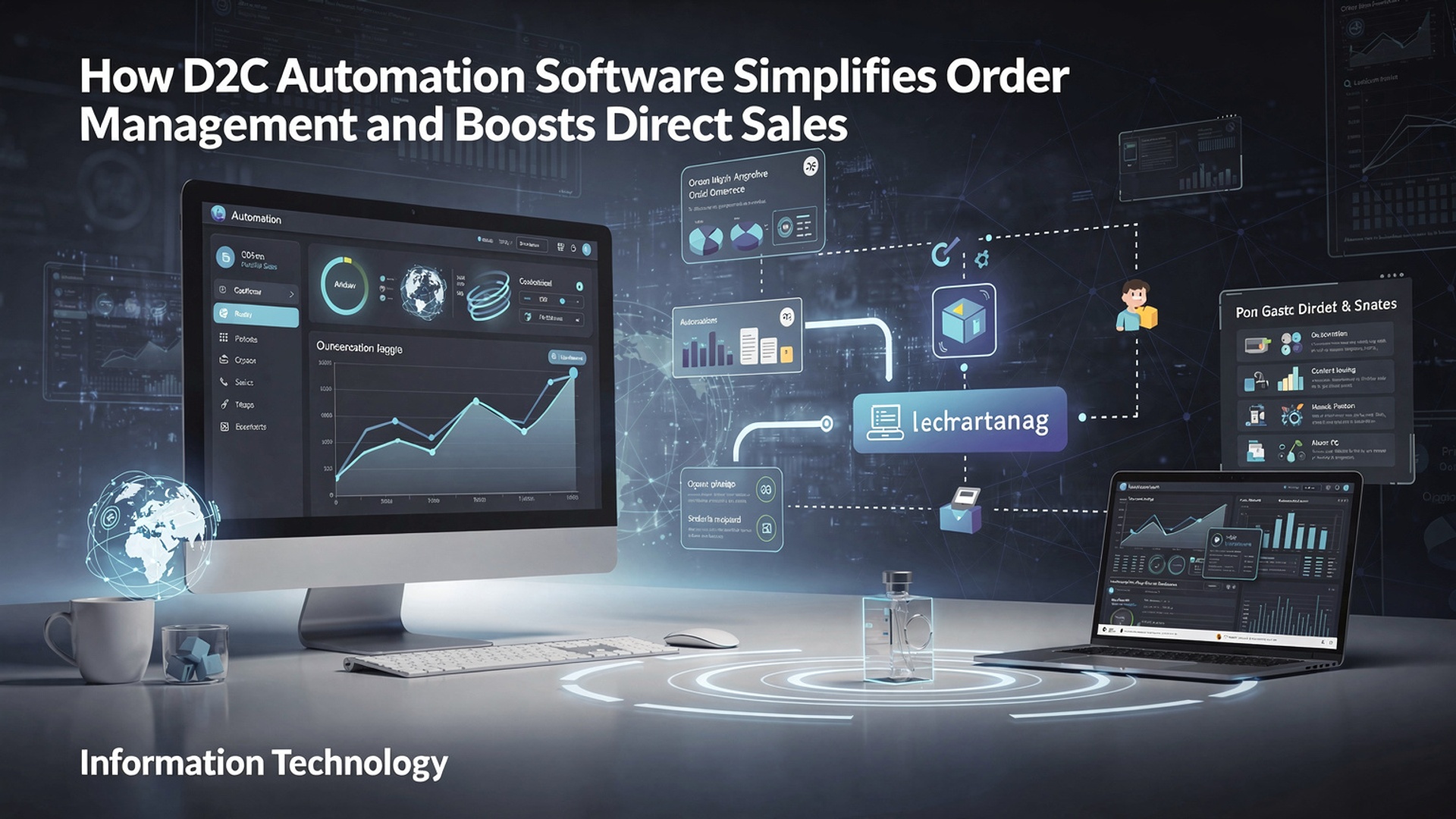
D2C automation software centralizes and automates the entire order lifecycle, from checkout to delivery confirmation. Orders from multiple sales channels are captured automatically, validated, and routed for fulfillment based on predefined rules.
Core automation capabilities include:
-
Automatic order ingestion from websites, marketplaces, and social commerce
-
Real-time inventory allocation and stock reservation
-
Rule-based routing to warehouses or third-party logistics providers
-
Automated invoice generation and tax calculations
This level of automation reduces processing time and ensures consistent execution at scale.
Core Features That Enable Efficient Operations
High-performing d2c automation software platforms typically include:
Centralized order dashboard
A single interface to track all orders and statuses
Inventory synchronization
Real-time stock updates across every channel
Shipping automation
Carrier selection, label generation, and tracking updates
Returns management
Automated return workflows and refunds
Together, these features allow operations teams to focus on optimization instead of firefighting.
Manual Order Management vs Automated D2C Systems
Manual workflows are slow, error-prone, and difficult to scale. Automated systems process orders in near real time, reduce errors, and adapt as volume grows.
Brands using d2c automation software gain unified order visibility, faster fulfillment, and the ability to scale without constantly adding operational staff.
Boosting Direct Sales Through Operational Efficiency
Efficient order management directly influences revenue. Faster fulfillment, accurate deliveries, and proactive communication lead to higher customer satisfaction and repeat purchases.
D2C automation software supports this by ensuring post-purchase experiences match brand promises. Accurate stock visibility reduces cart abandonment, faster shipping meets modern expectations, and consistent notifications build trust.
Enhancing Customer Experience with Automation
Automation enables transparency. Customers receive real-time order updates, self-service tracking, and faster issue resolution. Support teams gain instant access to order history, reducing response times and improving satisfaction.
By connecting operations with customer-facing systems, d2c automation software creates a seamless experience that strengthens brand loyalty.
Integration with Ecommerce, Logistics, and Payments
One of the strongest advantages of d2c automation software is integration. These platforms connect ecommerce storefronts, logistics providers, and payment systems into a single workflow.
This eliminates data silos and ensures orders move smoothly from purchase to delivery without manual intervention.
Real-World Use Case: Scaling a D2C Brand
A mid-sized consumer electronics brand I worked with experienced rapid growth after launching influencer campaigns. Order volume tripled in six months, overwhelming manual processes.
After implementing d2c automation software, the brand achieved:
-
A significant reduction in order processing time
-
Near elimination of overselling incidents
-
Improved delivery performance and customer satisfaction
Operational stability allowed the brand to reinvest energy into growth rather than damage control.
Data, Analytics, and Forecasting Capabilities
Beyond execution, automation platforms provide valuable insights. Aggregated order and inventory data support demand forecasting, promotion planning, and supply chain optimization.
Brands can analyze sales trends by channel, track inventory turnover, and benchmark fulfillment performance, enabling smarter decisions backed by data.
Security, Compliance, and Reliability
Because order data includes sensitive information, reputable d2c automation software providers follow strict security and compliance standards. These typically include data encryption, access controls, uptime guarantees, and adherence to privacy regulations.
Evaluating these factors ensures automation strengthens trust rather than introducing risk.
Actionable Steps to Get Started
Brands considering d2c automation software can begin with a structured approach:
-
Map current workflows and identify bottlenecks
-
Define required integrations and scalability needs
-
Pilot shortlisted platforms before full rollout
-
Train teams and document automated processes
Starting with high-volume workflows often delivers the fastest returns.
Conclusion
D2C automation software transforms order management from a daily bottleneck into a growth engine. I’ve seen brands dramatically reduce errors simply by syncing inventory across channels, freeing teams to focus on storytelling, retention, and brand building.
With AI-driven forecasting and faster fulfillment integrations, automation now anticipates issues before customers feel them. Start small by automating your highest-volume SKUs, then layer in analytics to uncover repeat buyer behavior and tailor offers. When operations run quietly in the background, direct sales growth becomes easier, more predictable, and far more scalable.
More Articles
How D2C Product Content Builds Trust and Drives More Online Sales
Bulk Product Optimization: How Scalable Catalog Updates Drive Ecommerce Growth
How AI Images Improve Product Catalog Quality and Boost Online Sales
Simple D2C SEO Strategies to Increase Online Store Traffic and Conversions
How an AI SEO Content Tool Improves Rankings Without Complex Workflows

FAQs
What is D2C automation software in simple terms?
D2C automation software helps brands manage direct-to-consumer operations from one system. It automates tasks like order processing, inventory updates, customer notifications. data syncing so teams don’t have to handle everything manually.
How does D2C automation make order management easier?
It centralizes orders from all sales channels into a single dashboard. Orders are automatically routed, tracked. updated in real time, reducing errors, delays. the need for manual data entry.
Can it help prevent stock issues like overselling?
Yes, D2C automation software syncs inventory levels across platforms instantly. When a product sells, stock updates automatically, helping brands avoid overselling or unexpected stockouts.
Does automation really improve the customer experience?
Absolutely. Customers receive faster order confirmations, accurate shipping updates. quicker issue resolution. Consistent communication and reliable delivery build trust and encourage repeat purchases.
How does this kind of software help boost direct sales?
By streamlining backend operations, brands can focus more on marketing and customer engagement. Faster fulfillment, fewer errors. better insights into buying behavior all contribute to higher conversion rates and repeat sales.
Is D2C automation only useful for large brands?
No, it’s valuable for businesses of all sizes. Smaller brands benefit from reduced manual work and better control, while growing brands use automation to scale operations without adding complexity.
What kind of insights can brands get from D2C automation software?
The software provides data on order trends, customer behavior, inventory performance. fulfillment speed. These insights help brands make smarter decisions about pricing, promotions. product planning.