Quick Summary
-
High-quality visuals are essential for ecommerce success but traditional production methods often create bottlenecks.
-
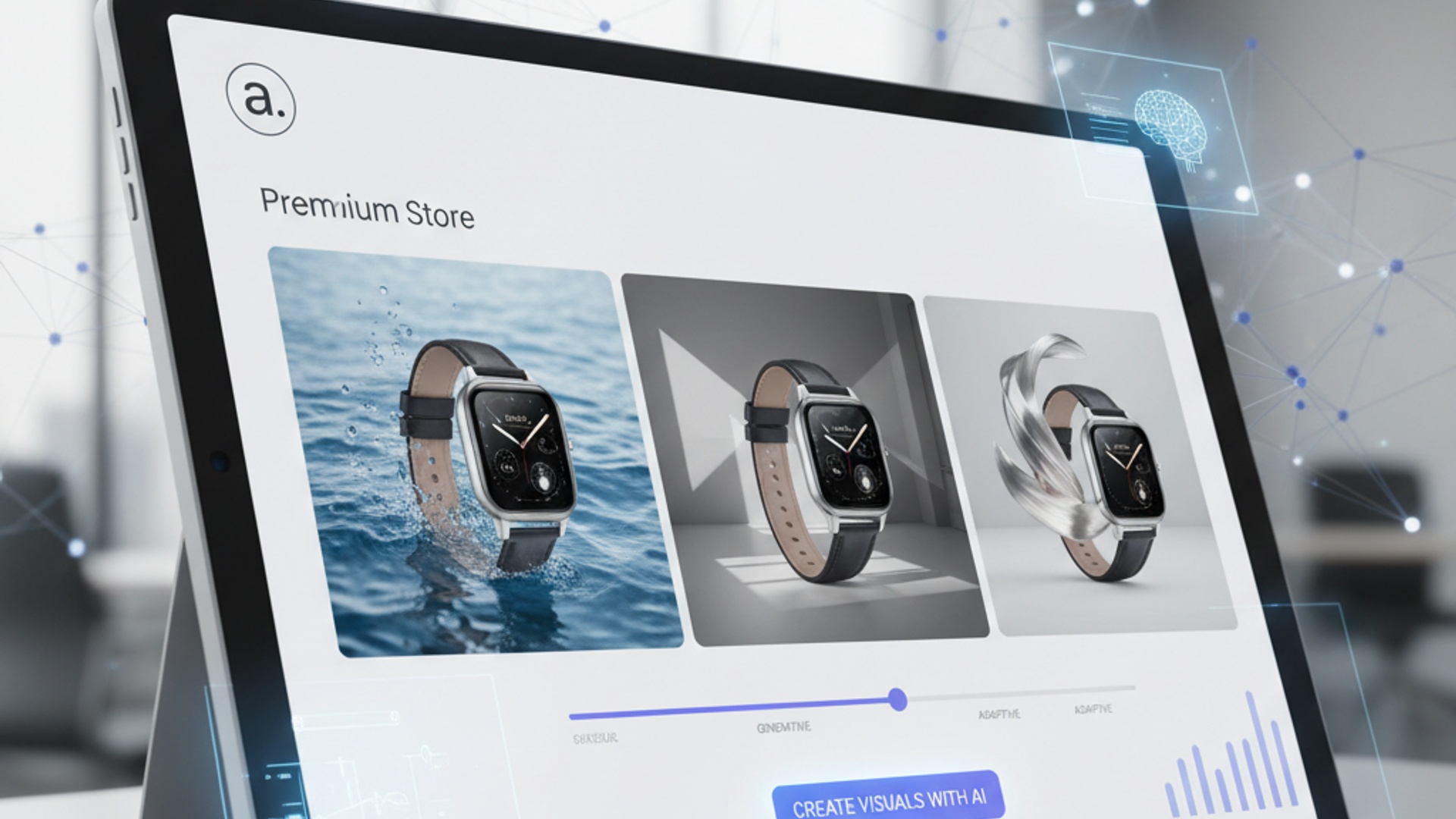
AI ecommerce visual content for product displays automates the creation of high-impact product imagery at scale.
-
AI-powered visuals significantly improve customer engagement, conversion rates, and sales performance.
-
Strategic implementation of AI visual tools allows brands to scale visual merchandising while maintaining brand consistency.
At d2cbot, we are helping brands unlock the future of online retail through intelligent visual automation. In today’s ecommerce landscape, visuals are no longer just supporting content—they are the primary driver of customer decisions.
However, creating consistent, high-quality product visuals is often one of the biggest challenges ecommerce teams face. Traditional production processes rely on expensive photoshoots, complex editing workflows, and lengthy approval cycles. As a result, many brands struggle to keep up with the increasing demand for diverse product imagery.
This is exactly where AI ecommerce visual content for product displays becomes transformative. By using AI-powered visual generation tools, brands can produce scalable, dynamic, and high-converting product visuals without the limitations of traditional production.
In this guide, we explore how AI-powered visual merchandising is reshaping ecommerce and how brands can leverage this technology to increase conversions and accelerate growth.
Why Visual Content Drives Ecommerce Conversions
Visual content plays a central role in ecommerce purchasing decisions. Because online shoppers cannot physically interact with products, they rely heavily on imagery to evaluate quality, usability, and appeal.
Research consistently shows that product visuals influence consumer behavior more than any other element on a product page. According to studies referenced by Shopify, product imagery is one of the most important factors affecting ecommerce conversion rates.
External source:
https://www.shopify.com/blog/product-photography
The Psychology Behind Visual Decision-Making
Humans process visual information significantly faster than text. In fact, cognitive research suggests that visual information is processed tens of thousands of times faster than written content.
Consequently, product visuals serve as the first and most powerful impression of your brand.
Strong visuals help customers:
-
understand product features instantly
-
visualize product usage in real-world environments
-
build trust in the brand
-
feel confident about purchasing decisions
Because of this, ecommerce brands that prioritize visual storytelling often outperform competitors with similar products but weaker imagery.
However, producing enough visuals to meet these expectations is often extremely difficult using traditional methods.
The Production Bottleneck of Traditional Ecommerce Visual Content
While visual content is essential for conversions, traditional production methods introduce several limitations that restrict scalability.
For most brands, visual production involves multiple expensive steps:
-
hiring photographers and creative teams
-
renting studios and equipment
-
coordinating models and stylists
-
performing post-production editing
These processes require time, budget, and coordination. As ecommerce catalogs expand, visual production quickly becomes a bottleneck.
Common Challenges with Traditional Visual Production
Several key problems repeatedly appear in ecommerce visual workflows.
High Production Costs
Professional photoshoots require significant investment in studios, equipment, editing, and talent.
Slow Production Cycles
Producing new visual content can take weeks or months from concept to final delivery.
Limited Creative Variations
Budget constraints often limit the number of visual concepts brands can test.
Difficulty Scaling Content
Large product catalogs require hundreds or thousands of images, making traditional production inefficient.
Limited A/B Testing
Because producing new visuals is expensive, brands rarely test multiple visual variations.
As a result, many ecommerce brands struggle to maintain visually compelling product pages.
This is precisely why AI ecommerce visual content for product displays is gaining rapid adoption across the industry.
How AI Ecommerce Visual Content for Product Displays Transforms Visual Production
Artificial intelligence has fundamentally changed how ecommerce brands create visual assets.
Instead of relying entirely on traditional photography, brands can now generate visual content using advanced AI models.
AI ecommerce visual content for product displays uses machine learning and generative AI to produce high-quality product visuals automatically.
These tools can generate:
-
lifestyle scenes
-
product backgrounds
-
model imagery
-
environmental settings
-
multiple visual variations
All of this can be produced in minutes instead of weeks.
Generative AI and Product Visual Creation
Modern AI visual tools rely on generative models capable of creating photorealistic images from text prompts and existing product images.
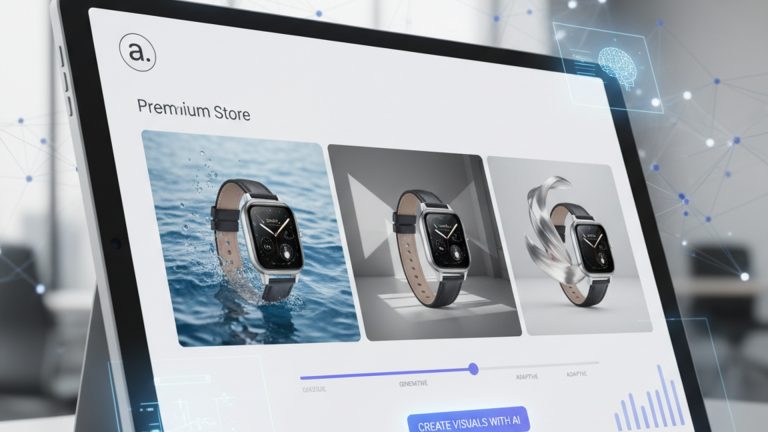
For example, brands can upload a single product image and generate multiple contextual scenes such as:
-
a product displayed in a modern living room
-
a skincare product placed in a luxury spa environment
-
apparel shown on diverse models and backgrounds
This dramatically expands the creative possibilities for ecommerce merchandising.
Platforms like d2cbot enable brands to generate scalable product imagery for marketing campaigns, product pages, and advertising assets.
Internal resource:
https://d2cbot.com/ai-content-automation-for-ecommerce/
Comparing Traditional Photography vs AI Visual Generation
To better understand the impact of AI-powered visual tools, it helps to compare traditional methods with AI-driven approaches.
| Feature | Traditional Photography | AI Ecommerce Visual Content |
|---|---|---|
| Cost per image | High production costs | Significantly lower |
| Production speed | Weeks to months | Minutes to hours |
| Scalability | Limited by resources | Highly scalable |
| Creative flexibility | Restricted by physical setups | Virtually unlimited |
| Testing capability | Limited | Ideal for A/B testing |
| Content variation | Expensive to produce | Easily generated |
Because of these advantages, many ecommerce brands are shifting toward hybrid visual strategies combining photography with AI-generated content.
How AI Visual Content Improves Ecommerce Conversion Rates
One of the most compelling benefits of AI ecommerce visual content for product displays is its direct impact on sales performance.
Better visuals increase engagement and reduce purchase hesitation.
Improved Customer Engagement
Rich visual content keeps visitors on product pages longer.
Customers who interact with multiple product images are significantly more likely to complete purchases.
Increased Conversion Rates
AI-generated lifestyle imagery helps customers visualize products in real-world contexts.
As a result, they feel more confident making purchasing decisions.
Many brands report conversion improvements between 10% and 25% after improving product visuals.
Reduced Product Returns
When customers clearly understand product features through visuals, their expectations align better with the delivered product.
This reduces dissatisfaction and return rates.
Personalized Visual Experiences
AI visual tools allow brands to create customized visuals for different audiences.
For example, a product might appear in different environments depending on the user’s location or browsing behavior.
According to McKinsey, personalization strategies can increase ecommerce revenue significantly.
External source:
https://www.mckinsey.com/capabilities/growth-marketing-and-sales
Strategic Implementation of AI Visual Merchandising
Adopting AI visual technology requires a thoughtful strategy.
Although AI tools offer powerful capabilities, brands must integrate them carefully into existing workflows.
Step 1: Identify Visual Content Gaps
Begin by auditing your current product catalog.
Identify products that lack:
-
lifestyle images
-
contextual visuals
-
multiple display angles
-
seasonal imagery
These areas often deliver the greatest ROI when enhanced with AI visuals.
Step 2: Select the Right AI Platform
Choose an AI visual generation tool that aligns with your brand’s design standards.
Look for platforms that support:
-
brand style consistency
-
customizable visual prompts
-
scalable image generation
-
easy integration with ecommerce platforms
Tools like d2cbot help automate visual generation while maintaining brand identity.
Internal resource:
https://d2cbot.com/
Step 3: Integrate AI into the Creative Workflow
Instead of replacing designers, AI tools should enhance creative teams.
Many brands use AI to generate visual concepts, which designers then refine.
This hybrid workflow maintains quality while increasing production speed.
Step 4: Conduct Visual A/B Testing
Because AI can generate multiple image variations quickly, brands can test different visual approaches.
Testing may include:
-
lifestyle vs studio imagery
-
different background environments
-
varied lighting styles
-
product positioning changes
Analyzing performance data reveals which visuals drive the highest conversions.
Step 5: Scale Visual Content Production
Once the process is refined, AI visual tools can generate content for:
-
product pages
-
social media campaigns
-
advertising creatives
-
email marketing visuals
Scaling AI visual production allows brands to maintain fresh, engaging product displays across every channel.
Future Trends in AI Ecommerce Visual Content
AI visual technology continues to evolve rapidly.
Several emerging trends will shape the next generation of AI ecommerce visual content for product displays.
Hyper-Personalized Product Visuals
Future AI systems will generate product visuals tailored to individual users.
For example:
-
showing winter clothing in snowy environments for colder regions
-
displaying home decor products inside rooms that match user preferences
Interactive 3D Product Displays
AI will also power dynamic 3D product models that allow customers to rotate and explore items in real time.
Real-Time Visual Optimization
AI may soon generate and optimize visuals automatically based on real-time customer behavior.
This could allow product pages to continuously evolve for maximum performance.
Brands that adopt AI visual technology early will gain a significant competitive advantage as these innovations mature.
Conclusion
Visual storytelling has become one of the most important drivers of ecommerce success. Because customers rely heavily on product imagery when shopping online, brands must deliver visually compelling experiences at every touchpoint.
However, traditional visual production methods often limit scalability and slow down innovation.
This is why AI ecommerce visual content for product displays is transforming the industry. By automating visual creation, brands can produce diverse, high-quality product imagery faster and more efficiently than ever before.
AI-powered visual tools allow ecommerce businesses to:
-
scale product imagery across large catalogs
-
experiment with multiple visual concepts
-
personalize visuals for different audiences
-
increase conversion rates through better product storytelling
Platforms like d2cbot demonstrate how AI can simplify visual merchandising while improving performance.
Brands that adopt AI-driven visual strategies today will be better positioned to compete in tomorrow’s digital commerce landscape.
The future of ecommerce is visual, automated, and intelligent—and AI ecommerce visual content for product displays is leading the transformation.
About d2cbot
d2cbot stands as a pioneering force in `AI Image Generation`, empowering direct-to-consumer brands with unparalleled capabilities for creating stunning, high-converting product visuals. Their innovative platform leverages cutting-edge `ecommerce visual content AI` to automate display creation, positioning them as the go-to authority for brands seeking to revolutionize their digital merchandising and achieve significant sales growth.
More Articles
AI Ecommerce Visual Content to Boost Online Sales
How AI Social Media Creatives Increase Store Conversions
How to Create Compelling D2C Product Content
FAQs
What exactly is AI visual content for e-commerce?
It uses artificial intelligence to automatically generate or enhance product images and videos. This helps create professional, eye-catching displays without manual design effort. It’s all about making your products look amazing online.
How does AI improve my product displays and help sales?
AI helps by creating high-quality, consistent, and engaging visuals that capture shopper attention. Better visuals lead to increased click-through rates, longer browsing times, and ultimately, higher conversion rates and sales growth. It makes your products irresistible.
Is this AI technology difficult for me to implement?
Not at all! Most AI visual content tools are designed for user-friendliness, often with intuitive interfaces. You can typically upload your existing product images and the AI does the heavy lifting to transform them. It’s usually quite straightforward to get started.
What types of stunning product displays can AI create?
AI can generate various display types, including lifestyle shots, virtual try-ons, 3D product views, and background scene generation. It helps place your products in relevant, appealing contexts to attract customers. You get diverse, professional-grade visuals.
Can even a small e-commerce business benefit from using this AI?
Absolutely! AI visual content tools are often scalable and cost-effective, democratizing access to professional-grade visuals. Small businesses can compete with larger brands by presenting their products beautifully without needing a huge budget or design team. It’s a game-changer for growth.
How quickly can I expect to see results after using AI for my visuals?
You can often see improvements in engagement metrics, like click-through rates, quite quickly after updating your visuals. Increased sales might follow as customers respond to the enhanced product presentation. It typically depends on your traffic and product.
Does this AI integrate with existing e-commerce platforms like Shopify or WooCommerce?
Many AI visual content solutions offer integrations or APIs that connect seamlessly with popular e-commerce platforms. This allows for easy uploading and updating of your product visuals directly within your current system. You can often streamline your workflow.