The landscape of online retail is rapidly evolving, driven by groundbreaking advancements in ecommerce visual content AI. Businesses leveraging these sophisticated tools are redefining product presentation, moving beyond static imagery to dynamic, personalized experiences.
With generative AI platforms now achieving unprecedented levels of photorealism and stylistic control, the ability to instantly create diverse product variations, compelling lifestyle shots. even interactive 3D assets is no longer futuristic. a present-day competitive advantage.
This paradigm shift empowers brands to achieve unparalleled visual consistency and engagement at scale, optimizing conversion pathways by delivering hyper-relevant visuals tailored to individual customer segments.
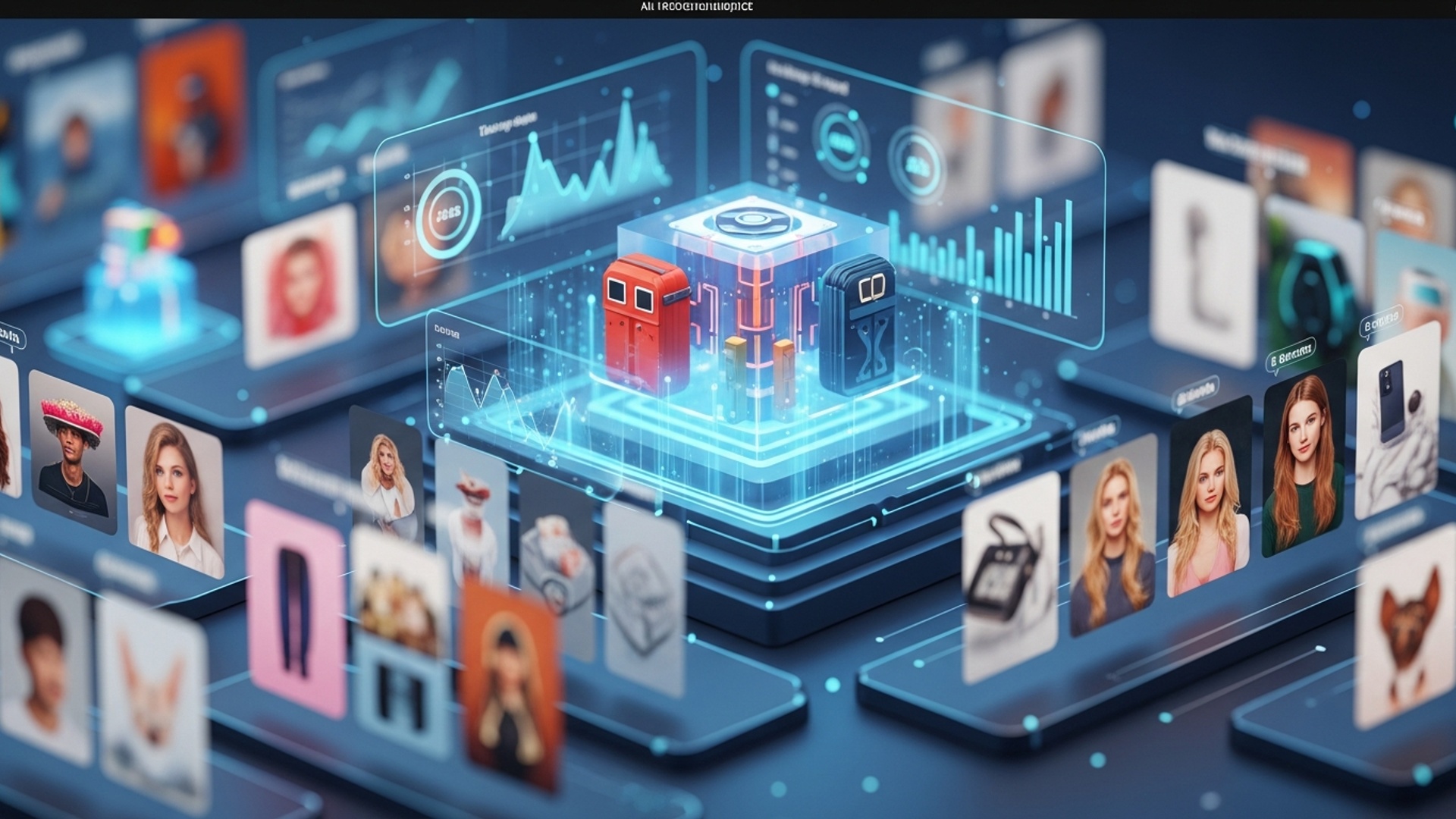
The Transformative Power of Artificial Intelligence in Visual Content
In the digital storefront, visuals are not decorative assets. They are decision drivers.
In today’s highly competitive e-commerce environment, high-quality, engaging, and diverse product imagery is critical for capturing attention and driving conversions. The rise of ecommerce visual content AI marks a fundamental shift in how brands create, optimize, and personalize visual assets at scale.
This is no longer a future trend. AI-driven visual creation is now a core operational capability for brands that want to compete on speed, relevance, and efficiency.
Foundations of AI Image Generation for E-commerce
At the core of ecommerce visual content AI are advanced generative models trained on massive image datasets. These systems learn patterns related to composition, lighting, style, and object structure, enabling them to generate new visuals from text prompts or existing images.
Key Generative Technologies
Generative Adversarial Networks (GANs)
-
Two neural networks operate in competition:
-
Generator creates new images
-
Discriminator evaluates realism
-
-
Continuous feedback improves output quality over time
-
Known for realistic image synthesis
Diffusion Models
-
Generate images by iteratively removing noise from random input
-
Excel at high-fidelity, diverse image generation
-
Power many modern text-to-image platforms
Understanding these mechanisms clarifies why AI visual tools are not simple automation utilities but creative engines capable of large-scale transformation.
Core Applications of Ecommerce Visual Content AI
AI impacts the entire visual content lifecycle, from enhancement to generation and personalization.
Automated Background Removal and Replacement
One of the fastest ROI use cases.
Capabilities
-
Precise product edge detection
-
Removal of complex or cluttered backgrounds
-
Replacement with:
-
Clean white backgrounds
-
Lifestyle scenes
-
Branded environments
-
This eliminates hours of manual masking and retouching.
AI-Generated Lifestyle Imagery
AI enables brands to move beyond static studio photography.
What becomes possible
-
Products placed in realistic lifestyle environments
-
Multiple settings generated from one base product image
-
Demographic-specific imagery without reshoots
Examples include:
-
Furniture staged in multiple interior styles
-
Apparel worn by diverse virtual models
-
Outdoor, travel, or urban usage scenarios
This dramatically reduces production cost while increasing creative flexibility.
Virtual Try-On and Augmented Visualization
Especially impactful for fashion, eyewear, and beauty categories.
Benefits
-
Customers preview products on themselves
-
Reduced uncertainty and return rates
-
Higher buyer confidence
AI-driven overlays and AR experiences turn browsing into interaction.
Product Image Enhancement and Upscaling
AI improves existing assets without re-shooting.
Enhancements include
-
Resolution upscaling
-
Lighting correction
-
Color accuracy adjustments
-
Noise and artifact removal
This ensures consistent quality across marketplaces, ads, and product pages.
Dynamic Visual Generation for A/B Testing
AI enables rapid experimentation.
What brands can test
-
Backgrounds
-
Lighting styles
-
Angles and framing
-
Model types
-
Contextual environments
Multiple variants can be generated and tested simultaneously to identify top-performing visuals based on real data.
Generative AI vs Traditional Product Photography
| Aspect | Traditional Photography | AI-Powered Visuals |
|---|---|---|
| Cost | High recurring costs | Low marginal cost |
| Time to market | Weeks to months | Minutes to hours |
| Variations | Limited by logistics | Near-unlimited |
| Scalability | Difficult | Highly scalable |
| Personalization | Not feasible | Real-time capable |
| Iteration | Requires reshoots | Prompt-based |
Generative AI removes physical constraints from visual production.
Personalization and Customization at Scale
AI allows visuals to adapt dynamically to the viewer.
Personalization capabilities
Dynamic Product Imagery
-
Models that match customer demographics
-
Lifestyle contexts aligned with inferred preferences
Geo-Localized Visuals
-
Region-specific environments and aesthetics
-
Cultural relevance without separate shoots
Configurable Product Previews
-
Real-time rendering of:
-
Colors
-
Materials
-
Engravings
-
Layouts
-
This transforms static catalogs into interactive experiences.
Operational Efficiency and Cost Reduction
Beyond creativity, AI reshapes operational workflows.
Key efficiency gains
-
Rapid image generation at scale
-
Reduced dependency on studios and post-production
-
Consistent brand aesthetics via prompt standards
-
Designers shift from execution to creative direction
Large catalogs become manageable without ballooning production budgets.
Challenges and Ethical Considerations
AI visual content must be implemented responsibly.
Key considerations
Authenticity and Trust
-
Hyper-realistic imagery raises disclosure questions
-
Overuse without transparency may erode trust
Bias in Training Data
-
Risk of reinforcing stereotypes
-
Requires intentional prompt design and review
Copyright and Ownership
-
Legal frameworks are evolving
-
Tool terms must explicitly allow commercial use
Quality Control
-
Occasional “uncanny valley” artifacts
-
Human review remains essential
Data Privacy
-
Personalization must comply with GDPR, CCPA, and consent standards
Ethical oversight is a prerequisite, not an afterthought.
Implementing Ecommerce Visual Content AI: Step-by-Step
1. Identify Visual Bottlenecks
-
Costly photoshoots
-
Limited lifestyle imagery
-
Slow iteration cycles
-
Inconsistent quality
2. Pilot AI Tools
-
Start with one use case:
-
Background replacement
-
Lifestyle image generation
-
-
Evaluate quality, cost, and workflow fit
3. Build Prompt Engineering Capability
-
Use structured prompt frameworks
-
Maintain a prompt library for repeatability
-
Iterate continuously
4. Integrate and Scale
-
Embed AI into existing design workflows
-
Train teams on tool usage and output evaluation
-
Expand gradually across categories
5. Measure and Optimize
-
Track engagement, conversion lift, cost savings
-
A/B test AI vs traditional visuals
-
Refine strategy as tools evolve
6. Maintain Human Oversight
-
Final curation and brand alignment
-
Bias checks and ethical review
-
Quality assurance
Conclusion
AI-driven visual content is redefining how e-commerce brands create, scale, and personalize imagery.
What once required large budgets and long timelines can now be achieved in minutes with strategic prompt design and human oversight. From automated background removal to dynamic lifestyle generation and personalized visuals, ecommerce visual content AI enables brands to move faster while delivering richer customer experiences.
The most effective approach is incremental. Start with a single, high-impact use case, integrate it into your workflow, and scale deliberately. As generative models continue to evolve, brands that adopt AI thoughtfully will not only reduce costs but also redefine how visual storytelling works in digital commerce.
This is not about replacing creativity.
It is about amplifying it at scale.
More Articles
Transform Your E-commerce Product Photos Using AI Image Generation Tools
How to Generate Stunning AI Images for Your Social Media Posts
How AI Transforms Ecommerce Visual Content for Better Customer Engagement
How AI Can Optimize Your Product Pages for Much Better Conversions
How AI Image Generation Boosts Your Ecommerce Product Photos

FAQs
Why should I even care about using AI for my online store’s pictures?
AI helps you create more engaging, personalized. high-quality visual content much faster and more efficiently. It can examine trends, optimize images for different platforms. even generate new visuals, making your products stand out and attracting more customers.
How does AI specifically improve product photos?
AI can do a lot! It can automatically remove backgrounds, enhance image quality, adjust lighting and colors, generate lifestyle shots from basic product images. even create 3D models. This means less manual editing and more professional-looking visuals ready for your site.
Is AI going to take over my graphic designers’ jobs?
Not at all! Think of AI as a powerful assistant. It automates repetitive tasks, freeing up your design team to focus on more creative and strategic work. They can use AI tools to speed up their workflow, experiment with new ideas. produce higher volumes of content, enhancing their capabilities rather than replacing them.
Do I need a massive budget to use AI for my e-commerce visuals?
Nope! While enterprise solutions exist, many AI tools are now accessible and affordable for small and medium-sized businesses. There are subscription services, freemium models. even built-in AI features in popular e-commerce platforms, making it easier than ever to get started without breaking the bank.
What types of AI tools should I be looking for to help with my visual content?
You’ll find tools for image editing and enhancement (like background removal, upscaling), content generation (creating lifestyle shots, virtual try-ons), personalization (showing different visuals based on user data). analytics (predicting which visuals perform best). Many platforms combine several of these features.
I’m new to this. Where do I even begin with using AI for my visuals?
A good starting point is to identify your biggest pain points with visual content. Are you struggling with background removal? Need more lifestyle shots? Look for AI tools that specifically address those issues first. Start small, test the results. gradually integrate more advanced AI capabilities as you get comfortable.
Can AI actually show different product images to different people?
Absolutely! AI-powered personalization can examine customer data, browsing history. preferences to dynamically serve up the most relevant product visuals. For example, it could show a product on a model with a similar body type, in a color they’ve previously viewed, or in a lifestyle context that matches their interests, significantly boosting engagement.