Gone are the days of expensive photoshoots and complex editing workflows. The advent of sophisticated generative AI has revolutionized visual content creation, making a powerful ai product images tool indispensable for modern e-commerce. Leveraging cutting-edge diffusion models, these platforms transform simple product shots or even text prompts into hyper-realistic visuals, enabling businesses to generate diverse lifestyle mockups, studio-quality renders, or seasonal variations without needing a physical set or photographer. This rapid iteration capability, a hallmark of recent AI image generation advancements, significantly accelerates time-to-market and democratizes access to professional-grade imagery, previously only attainable with substantial investment.
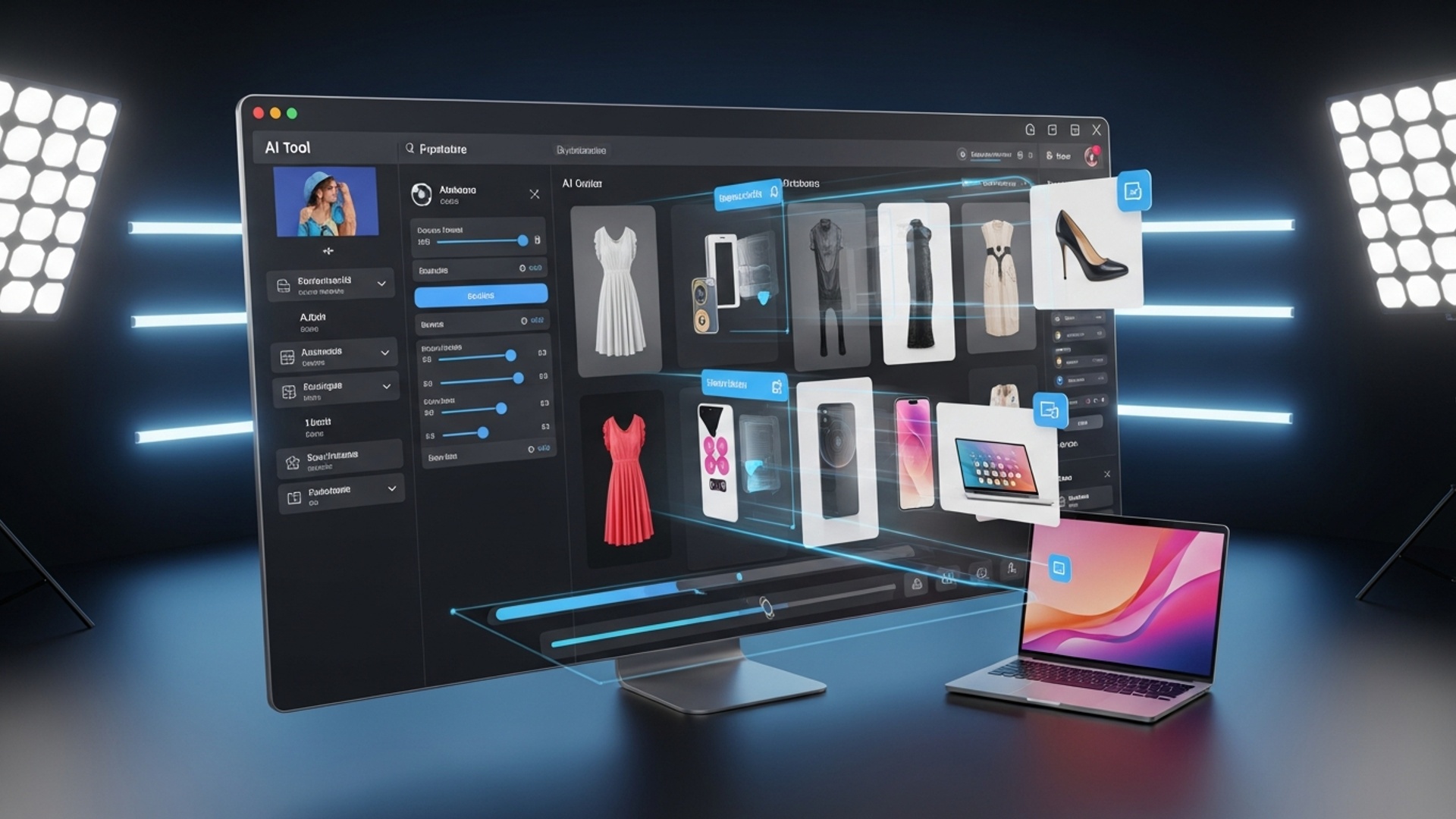
The Evolution of E-commerce Visuals: Why AI is a Game-Changer
Gone are the days of expensive photoshoots and complex editing workflows. The rise of generative AI has reshaped visual content creation, making an AI product images tool essential for modern e-commerce brands.
Powered by advanced diffusion models, these tools convert simple product photos or even text prompts into hyper-realistic visuals. Businesses can now generate lifestyle mockups, studio-quality renders, and seasonal variations without photographers, physical sets, or long turnaround times.
This ability to iterate quickly has dramatically reduced time-to-market and opened access to professional-grade imagery that was once limited to brands with large budgets.
For a deeper technical understanding of how diffusion models work, Google’s research on generative AI provides a solid foundation.
Why AI Is a Game-Changer for E-commerce Visuals
High-quality product photography is no longer optional in e-commerce. Clear, engaging visuals directly influence trust and purchasing decisions. Independent UX research from the Baymard Institute consistently highlights how visual clarity impacts conversion rates on product pages.
Traditional photography introduces friction. It is expensive, slow, and difficult to scale, especially for brands with large catalogs or frequent launches. AI-powered product imagery removes these bottlenecks by producing consistent, conversion-ready visuals in minutes.
This shift enables startups and established brands alike to compete on visual quality without operational complexity.
How an AI Product Images Tool Works
At its core, an AI product images tool relies on advanced machine learning models trained on massive image datasets. These models understand lighting, texture, perspective, and composition.
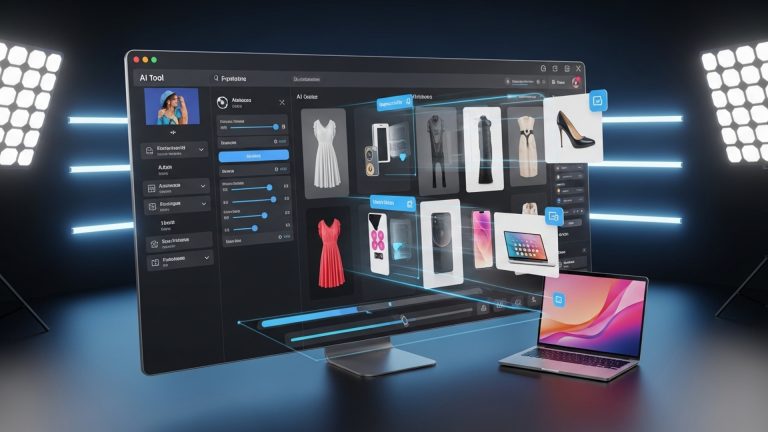
Users typically upload a clean product photo and provide a prompt describing the desired environment or aesthetic. The AI analyzes the product and generates a new image that blends it seamlessly into the requested scene.
For example, a shoe can be placed on a city street at sunset or in a minimalist studio with soft lighting, complete with realistic shadows and reflections.
Generative Adversarial Networks (GANs)
GANs consist of two neural networks working against each other. One generates images while the other evaluates realism. This feedback loop continually improves output quality. A detailed overview of GAN-based systems can be found in OpenAI’s research documentation.
Diffusion Models
Diffusion models generate images by gradually removing noise from random data until a detailed image emerges. These models are known for producing highly realistic and diverse results. The Hugging Face diffusion documentation explains this process in a practical and developer-friendly way.
Key Benefits of Using AI for Product Photography
Speed and Efficiency
What once took days or weeks can now be completed in minutes, making AI imagery ideal for fast-moving campaigns and frequent product launches.
Cost Reduction
AI eliminates studio rentals, professional photographers, models, and extensive retouching. This makes premium visuals accessible to smaller brands and growing businesses.
Creative Flexibility
Brands can test multiple environments, lighting setups, and compositions for a single product without additional cost. This is especially useful for A/B testing and multichannel campaigns.
Visual Consistency
AI tools help maintain a consistent visual style across an entire catalog, reinforcing brand identity at scale.
Scalability
For stores with hundreds or thousands of SKUs, AI enables rapid image generation without logistical strain.
Step-by-Step Guide to Generating AI Product Photos
1. Prepare a Clean Base Image
Start with a clear, well-lit product photo on a neutral background. A strong source image significantly improves output quality.
2. Select the Right Tool
Choose a platform designed for product imagery. Many brands adapt tools such as Midjourney, Stable Diffusion, or platforms built on Stability AI technology like Leonardo AI.
3. Upload and Isolate the Product
Most tools automatically remove backgrounds. Ensure the product edges are clean and accurate.
4. Write a Clear Prompt
Describe the environment, lighting, mood, and style.
Example:
“A leather handbag on a marble countertop with soft natural window light, modern minimalist aesthetic, shallow depth of field, studio quality.”
5. Generate and Iterate
Review multiple outputs. Refine prompts to improve realism and composition.
6. Final Enhancements
Make minor adjustments such as color correction or sharpening using built-in tools or external editors.
Advanced Features Available in Modern AI Image Tools
-
AI-powered background removal and replacement
-
Prebuilt scene templates for faster workflows
-
Style transfer for brand-specific aesthetics
-
Variant generation for colorways and materials
-
3D model rendering for flexible camera angles
Several platforms focus specifically on e-commerce workflows, including Pixelcut and Glorify, which are commonly used for product visuals and marketing assets.
Choosing the Right AI Product Images Tool
When evaluating tools, prioritize:
-
Image realism and resolution
-
Ease of use
-
Prompt flexibility, including negative prompts
-
Editing and customization controls
-
Integration with platforms like Shopify or WooCommerce
-
Transparent pricing models
Shopify’s official ecommerce resources also emphasize the role of consistent visuals in building trust and improving conversion rates.
Best Practices for AI-Generated Product Images
-
Use high-quality source images
-
Refine prompts iteratively
-
Maintain brand consistency across outputs
-
Review images carefully for realism
-
Avoid misleading representations
-
Be transparent when visuals are fully AI-generated
Google’s official documentation on image SEO best practices is useful for optimizing AI-generated visuals for search visibility.
Real-World Impact and What Comes Next
AI product imagery is already reshaping e-commerce. Brands can rapidly test hero images, localize visuals for different markets, and refresh creatives without reshoots.
Looking ahead, expect tighter integration with 3D modeling, even higher photorealism, and automated optimization based on real-time engagement data. Visual pipelines will become faster, smarter, and more adaptive.
Conclusion
AI product image tools are redefining what is possible in e-commerce visuals. High-quality imagery is no longer limited by time, budget, or logistics.
Used thoughtfully, AI becomes a creative extension rather than a shortcut. By refining prompts, enforcing brand standards, and applying human judgment, brands can produce visuals that scale and convert with confidence.
This shift is not just an efficiency upgrade. It represents a fundamental change in how products are presented, tested, and sold online.
More Articles
Transform Your E-commerce Product Photos Using AI Image Generation Tools
How AI Image Generation Boosts Your Ecommerce Product Photos
How SaaS AI Image Generators Streamline Visual Content Creation for Businesses
How AI Transforms Ecommerce Visual Content for Better Customer Engagement
How to Generate Stunning AI Images for Your Social Media Posts

FAQs
What exactly is this AI tool for creating product photos?
This is an AI-powered platform designed to help businesses, e-commerce sellers. marketers generate stunning, professional-grade product photos in a flash. It eliminates the need for expensive studios, equipment, or extensive photography skills.
How quickly can I get my product photos?
Instantly! Once you upload your product image and choose your desired background or style, the AI processes it in seconds, delivering high-quality results almost immediately.
Do I need to be a photography expert to use it?
Not at all! The tool is built with user-friendliness in mind. You don’t need any special photography or design experience – just a few clicks. you’re creating amazing visuals.
What kind of product photos can this AI generate?
You can create a wide variety of images. From clean, white background shots perfect for e-commerce listings to dynamic lifestyle scenes, seasonal themes, or even abstract artistic backdrops – the creative possibilities are vast.
Can I use my own product images, or does the AI create the products too?
You upload your existing product images. The AI then takes your product and seamlessly integrates it into new, high-quality scenes and backgrounds, enhancing its presentation rather than generating the product itself.
What if I’m not happy with the first generated image?
No worries! The tool often provides multiple variations. you can usually tweak settings, try different prompts, or select new styles to refine the output until you achieve the perfect image you’re looking for.
Is it expensive to use this AI photo generator?
We offer various plans to suit different needs and budgets, including options for both casual users and high-volume businesses. Often, there’s a free trial or a basic plan available so you can test it out.
Why should I use this AI tool instead of hiring a professional photographer?
While professional photographers are fantastic, this AI tool offers unmatched speed, cost-effectiveness. flexibility. It’s ideal for quick iterations, testing new ideas, or generating a large volume of diverse images without the typical time or financial investment.