In the highly competitive world of e commerce, product visuals are not a nice to have. They are the first filter customers use to decide whether they trust your brand. They also help them decide if your product belongs in their cart. High quality images influence click through rates, time on page, and conversion more than most teams realize.
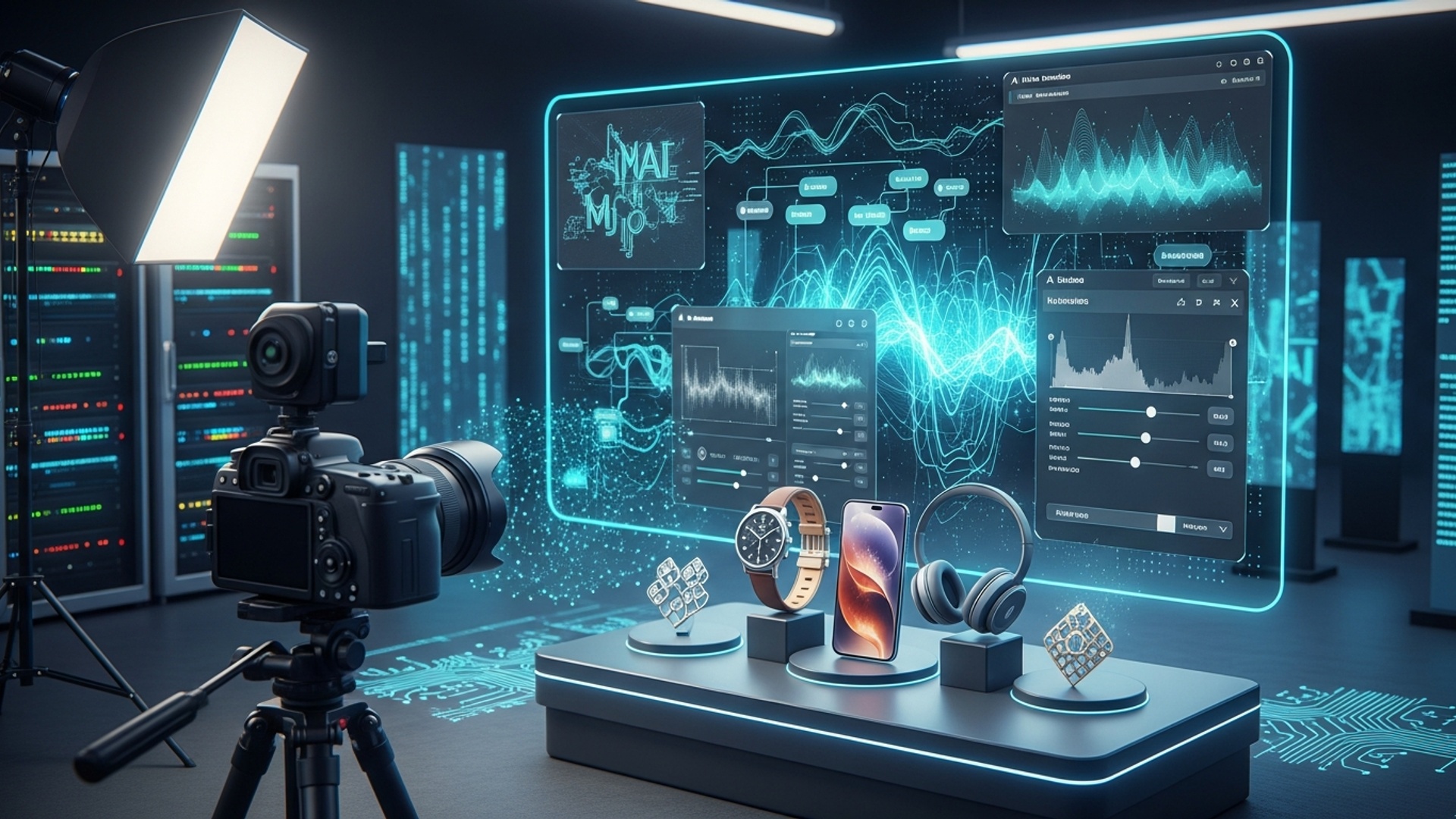
The Transformative Power of AI in E commerce Visuals
For years, getting those visuals meant photographers, studios, models, and long post production timelines. This locked smaller brands out of premium quality content. That old workflow does not match how fast modern D2C brands launch new SKUs or test new offers. The good news is that advanced AI image generation for ecommerce is closing that gap. With the right tools and prompts, you can generate photorealistic, on brand visuals in minutes instead of weeks. You can also plug them into an AI powered product page stack such as the D2C Bot Shopify app.
Generative AI tools can now simulate sets, lighting, and models from a text description. This lets you tell richer visual stories without the overhead of traditional shoots. When you pair that with an AI content engine that also writes SEO titles, descriptions, FAQs, and reviews, visuals become a scalable growth asset instead of a one time project.
Understanding AI Image Generation For E commerce
To use AI images effectively, it helps to understand what happens behind the generate button.
Generative AI is a broad class of models that create new content in the style of what they learned during training. It does not just label or classify existing data. In image generation, two model families matter most right now.
First, diffusion models gradually add noise to an image. Then they learn how to reverse that process and recover a clean picture that matches your text prompt. Popular tools such as DALL E and many ecommerce image generators rely on this approach. It gives fine control over composition and style.
Second, Generative Adversarial Networks, or GANs, use a generator and a discriminator network that compete until the generator becomes good at creating realistic images. These models are still useful, but diffusion systems now lead in photorealism and control for ecommerce work.
In practice, you write a prompt and the model parses it. Then it builds an image step by step that matches details such as environment, lighting, texture, and mood. The more specific you are about the product, setting, and brand aesthetic, the more your results feel like a real shoot and not a generic stock photo.
If you already use D2C Bot for on page optimization, this image workflow can sit beside your AI product titles, descriptions, and FAQ generation. Copy and visuals then evolve together instead of living in separate silos.
Practical Ways To Use AI Images On Your Store
Core image use cases
The value of AI generated images shows up in very specific ecommerce use cases. It is not just about having impressive outputs.
First, lifestyle images can match each customer segment. Instead of a single studio shot, you can generate multiple scenes that match different audiences. One hero image can show a fitness tracker in a busy city street. Another can place it in a calm home office. This approach fits the visual storytelling strategies in D2C Bot’s guide on ecommerce visual content AI.
Second, AI makes it easy to create clean backgrounds and marketplace ready shots. Background removal and replacement tools are now very precise. Canva’s AI Image Generator and product focused tools such as Flair or Pebblely can give you marketplace compliant white backgrounds and on brand scenes for your own store.
Third, AI helps with product variations. If your product comes in multiple colors or finishes, AI can render variations that match the original lighting and angle. You do not need to photograph every SKU. This becomes very powerful when you combine it with bulk content updates through an AI platform like the D2C Bot AI content engine, which pushes new titles, descriptions, tags, and schema for many products at once.
Testing and optimization use cases
AI generated images also support testing and optimization.
You can generate several versions of the same product scene with different angles, backgrounds, or props. Then you test them on important product pages. D2C Bot’s articles on transforming ecommerce photos with AI and on AI optimized product pages show how image and copy changes together can move add to cart rate and revenue, not only aesthetics.
When these images feed into a broader AI optimization loop, including review analysis and FAQ improvements, you build a complete feedback system around each SKU. You no longer just swap pictures in and out.
Choosing AI Image Tools That Match Your Workflow
The AI image ecosystem is crowded, so it helps to group tools by what they do best.
Shopify’s recent overview of AI image generators highlights several leaders for ecommerce. These include DALL E based services, Canva’s generator, and product specific platforms with strong catalog features. Independent guides also call out Flair and Pebblely for template based ecommerce scenes, and Stable Diffusion based tools for teams that want to self host and fine tune output.
In simple terms, you can follow this pattern. Choose a product first tool, such as PhotoRoom, Flair, or Pebblely, if you want non designers to produce clean, consistent catalog images quickly. Explore general image models, such as DALL E or Midjourney, when you focus on hero visuals and campaign creative. Use open source options based on Stable Diffusion when you need full control, custom models, or strict data policies.
No matter which generator you pick, a content intelligence layer like D2C Bot can sit across your stack. It turns those images into fully optimized product pages by generating structured FAQs, SEO rich copy, and schema markup around them.
Crafting Effective Prompts For Ecommerce Images
Prompt quality directly shapes image quality. For ecommerce, clarity and detail usually beat vague or poetic language.
A simple structure that aligns with current prompt best practices is subject, environment, style, lighting, composition, and technical quality.
For example, you can write a prompt like this:
“A close up of a matte black smartwatch on a wooden desk beside a laptop and a coffee mug, modern minimalist style, soft natural window light, shallow depth of field, photorealistic, high detail, 4K resolution.”
From there, you iterate. You can generate several variations and keep the ones that fit your brand. Then you feed those into your conversion optimization workflow for testing. D2C Bot’s AI image posts, such as the article on transforming ecommerce product photos, include further prompt examples tailored to different product categories.
Integrating AI Images Into A Search Focused Workflow
For search performance, images cannot live in isolation. They must support your on site SEO and internal linking strategy.
Recent internal linking guides for 2026 recommend using descriptive anchor text, placing contextual links high in the body content, and connecting every article to two to four related pages inside the same topical cluster. This article can help D2C Bot build topical authority on AI for ecommerce by linking to:
-
AI visual content guides
-
AI image transformation posts
-
Product page optimization articles
-
Core product and app pages
You can also apply image SEO fundamentals that D2C Bot already automates for text content. These include descriptive alt text, keyword reflective filenames, and compressed formats that keep page speed high. D2C Bot’s focus on structured FAQs and JSON LD schema means any AI driven images on a product page are surrounded by content that search engines and AI assistants can interpret clearly.
For long form articles like this, you can also add a short table of contents at the top with jump links. You can finish with a “related articles” block that points to other AI content posts on D2C Bot. This supports internal linking best practices and improves user navigation.
Legal, Ethical, And Accuracy Considerations
The legal landscape around AI generated images is still evolving, so it makes sense to stay careful. Tool providers often grant commercial licenses, but terms differ, especially for custom models or training data. You should confirm rights before you launch large campaigns from a single platform.
Accuracy is just as important. If AI changes a product’s finish or misrepresents its scale, you risk confusing customers and increasing returns. Recent ecommerce image guides suggest creating internal rules that require a human to confirm product accuracy before publish, especially for regulated categories or high ticket products.
If your visuals include people, you should also watch for bias in default generations. Deliberately prompt for diverse, realistic representation that matches your customer base. This helps your brand feel more inclusive and reduces the chance of reinforcing stereotypes.
Conclusion
AI image generation has turned ecommerce visuals from a slow and expensive bottleneck into a flexible part of your growth engine. When you combine modern image tools with an AI content platform like D2C Bot, you can generate photorealistic product scenes, optimize titles and descriptions, seed SEO rich FAQs, and connect everything with smart internal links that support your topical authority.
This article can sit inside your AI image content cluster and guide readers toward deeper resources on ecommerce visual content AI and AI product page optimization, as well as your core Shopify app pages. Over time, that structure helps D2C Bot rank not only for “AI image generator for ecommerce” searches, but also for queries about product page optimization, visual content strategy, and AI powered content automation.
More Articles
Transform Your Product Catalog with AI Generated Images for Stunning Visuals
Unlock E-commerce Growth Using AI for Stunning Social Media Creatives
AI Ecommerce Visual Content Strategy to Boost Engagement and Sales
Generate High Quality Product Photos Instantly Using This AI Tool
How SaaS AI Image Generators Streamline Visual Content Creation for Businesses

FAQs
What are AI generation tools for product images all about?
These are smart software programs that use artificial intelligence to create stunning, high-quality images of your products. You just give them some basic info or a rough photo. they can generate professional-looking pictures, often with different backgrounds or styles.
How do these AI tools actually help my e-commerce store?
They’re a game-changer! You can get beautiful product photos much faster and cheaper than traditional photography. This means consistent branding, more eye-catching listings. ultimately, better sales because your products look irresistible to potential buyers.
Do I need to be a design expert to use them effectively?
Not at all! Most AI image generation tools are designed with user-friendliness in mind. You typically don’t need advanced graphic design skills. Many have intuitive interfaces where you can simply upload your product, choose a style. let the AI do the heavy lifting.
What kinds of product images can AI create for my store?
A huge variety! From clean, white background shots to lifestyle images showing your product in a real-world setting, or even creative, abstract concepts. You can often specify different angles, lighting conditions. add virtual props or models.
Is it really affordable for small businesses to use AI for product photos?
Absolutely. While some tools have premium features, many offer free tiers or very affordable subscription plans, especially when you compare it to the cost of hiring a professional photographer and renting a studio. It democratizes access to high-quality visuals.
How quickly can I get new product images using AI?
Super fast! What might take hours or days with traditional photography can often be done in minutes with AI. You can generate multiple variations of an image almost instantly, allowing for quick testing and iteration.
Can AI tools completely replace professional photographers for e-commerce?
While AI is incredibly powerful and convenient for many types of product images, it’s more of a complementary tool than a full replacement. For highly unique products, complex setups, or specific artistic visions, a human photographer’s expertise and creative touch can still be invaluable. But, for everyday product shots, AI is fantastic.