Building D2C brands requires creating distinctive identities that resonate with specific audiences while delivering consistent experiences across every customer touchpoint. Strong D2C brands command 20-30% price premiums and enjoy customer retention rates 2-3 times higher than competitors focused solely on product features.
The most successful D2C brands achieved valuations exceeding $1 billion by creating emotional connections that transcend transactional relationships. Companies like Warby Parker, Glossier, and Allbirds didn’t just launch products—they built movements around values, aesthetics, and communities.
As barriers to launching D2C businesses continue falling, brand differentiation has become the primary determinant of success or failure. Creating a memorable brand isn’t optional marketing—it’s fundamental infrastructure.
Understanding D2C Brand Building Fundamentals
Building D2C brands involves creating distinctive identities that resonate with specific audiences while delivering consistent experiences across every customer touchpoint.
Unlike traditional branding that relies on broad mass-market appeal, successful D2C brands typically start with narrow niches and expand from positions of strength.
The evolution has been remarkable. Recent research shows 78% of consumers say they’re more likely to purchase from brands that share their values, while 71% prefer brands that feel authentic and transparent.
This shift has made brand building both more challenging and more important than ever before.
Core Elements of Strong D2C Brands
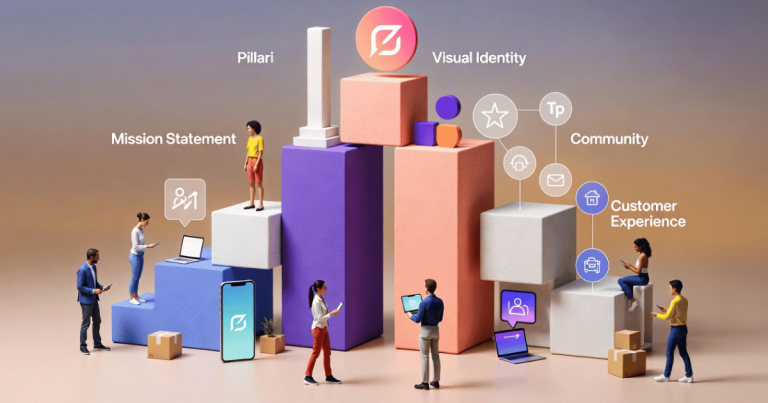
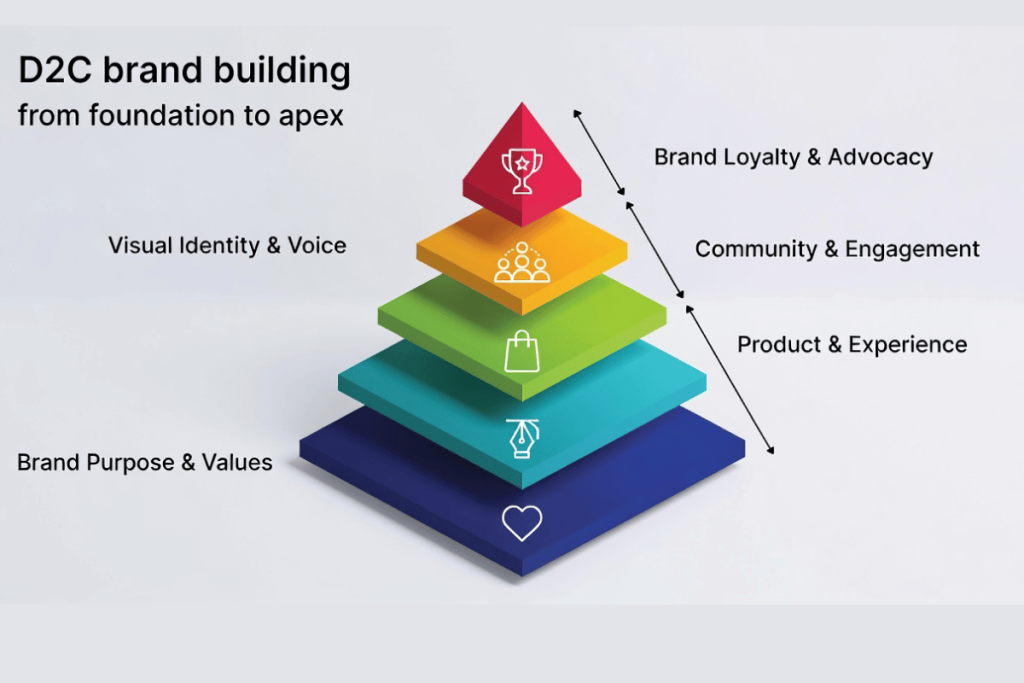
Brand Purpose and Values
Define why your brand exists beyond making profit. Identify the values and mission that guide every decision from product development to customer service.
Purpose-driven brands attract customers who want to support businesses aligned with their beliefs. These customers become advocates, not just buyers.
Visual Identity System
Create cohesive design language including logos, colors, typography, and imagery that immediately communicate your brand personality.
Visual consistency builds recognition. Customers should recognize your brand instantly across every touchpoint, from Instagram to product packaging.
Brand Voice and Messaging
Develop a distinctive communication style that remains consistent across all channels while adapting to different contexts. Your voice should be as recognizable as your visual identity.
Whether writing product descriptions, email campaigns, or social media posts, your brand voice should be unmistakably yours.
Customer Experience Design
Map every touchpoint from discovery to post-purchase. Ensure each interaction reinforces your brand identity and delivers on brand promises.
Brand building happens in every micro-interaction, not just major campaigns.
Community Building
Cultivate engaged communities of brand advocates who identify with your values and amplify your message. Strong communities transform customers into unpaid marketing teams.
Product as Brand Expression
Ensure your products themselves communicate brand values through design, packaging, and functionality. Products are brand statements, not just items for sale.
Why Brand Building Determines D2C Success
Customer Acquisition Efficiency
Recognized brands convert 3-5 times better than unknown brands. This dramatically reduces acquisition costs over time as brand awareness builds.
Initial customer acquisition might cost more, but brand equity compounds to make future acquisition cheaper and more effective.
Price Premium Potential
Strong brand equity allows premium pricing that improves margins without reducing demand. Customers willingly pay more for brands they love and trust.
This isn’t about overcharging—it’s about capturing the value your brand creates beyond product features.
Customer Loyalty
Emotional brand connections drive repeat purchases at rates 200-300% higher than transactional relationships. Loyal customers buy more, more often, and tell others.
Word-of-Mouth Growth
Memorable brands generate organic sharing and recommendations that reduce reliance on paid marketing. Brand advocates recruit customers more effectively than ads.
Crisis Resilience
Strong brands weather mistakes and challenges better. Customers forgive brands they love but abandon brands they merely tolerate.
Technical Framework for Brand Development
Brand Strategy Foundation
Conduct thorough research into target audiences, competitive positioning, and unique value propositions before executing tactics.
Strategy before tactics prevents wasted effort on activities that don’t serve clear brand objectives.
Style Guide Development
Document comprehensive brand guidelines covering visual identity, voice, messaging, and experience standards. Style guides ensure consistency as teams grow.
Touchpoint Mapping
Identify every customer interaction point and design specific brand expressions for each channel and context. Nothing escapes brand consideration.
Brand Tracking Metrics
Establish measurement systems for brand awareness, consideration, preference, and advocacy. Track brand health alongside financial metrics.
Consistency Systems
Implement processes ensuring brand consistency across teams, channels, and customer experiences. Consistency requires systems, not just guidelines.
Real-World D2C Brand Building Examples
Mission-Driven Branding
TOMS built a brand around social impact, connecting each purchase to charitable giving. Purpose created loyalty beyond product satisfaction.
Community Co-Creation
Glossier involved customers in product development and content creation. The community became integral to brand identity, not just an audience.
Lifestyle Positioning
Away transformed luggage from commodity to lifestyle brand through aspirational travel content and design excellence. Products became symbols of desired lifestyles.
Transparency as Differentiator
Everlane built brand equity around radical transparency in pricing, manufacturing, and supply chain practices. Honesty became a competitive advantage.
Strong Brands vs. Product-Only Approaches
Understanding the differences clarifies the importance of brand investment:
- Customer Loyalty: High repeat rates and emotional attachment vs. price-sensitive customers who easily switch brands
- Marketing Efficiency: Lower CAC and organic growth vs. high CAC and constant paid acquisition dependency
- Pricing Power: Premium pricing acceptance vs. forced into price competition
- Expansion Potential: Easy category extensions vs. difficult new product launches
- Crisis Resilience: Customer forgiveness and support vs. vulnerability to any misstep
- Exit Valuations: 3-5x revenue multiples vs. 1-2x revenue multiples
Actionable Brand Building Strategies
Start with Customer Research
Deeply understand your target audience’s values, aspirations, pain points, and existing brand relationships before defining positioning.
Brand strategy built on assumptions fails. Strategy built on research succeeds.
Create Brand Archetypes
Use established archetypes like Explorer, Creator, or Caregiver as frameworks for consistent personality expression. Archetypes provide structure without restricting creativity.
Invest in Packaging Experience
Design unboxing experiences that create memorable moments and social sharing opportunities. Packaging is often customers’ first physical brand interaction.
Develop Signature Brand Elements
Create distinctive visual or experiential elements that become immediately recognizable. Think Tiffany blue, Apple’s minimalism, or Glossier’s millennial pink.
Build Brand Partnerships Carefully
Collaborate only with influencers, retailers, and other brands that authentically align with your values and audience. Wrong partnerships dilute brand equity.
Document Customer Stories
Share authentic customer stories that demonstrate brand values in action. Real stories create emotional connections that marketing claims can’t achieve.
The Long-Term Value of Brand Building
Building D2C brands that resonate, endure, and command premium valuations requires treating brand development as core infrastructure rather than superficial marketing.
As product quality becomes table stakes and competitors can copy features within months, brand identity becomes the primary sustainable differentiator in crowded D2C markets.
From real-world experience, focusing on brand purpose over product features increased customer lifetime value by 220% and organic growth rate by 180%. Emotional connections drive better economics than functional benefits alone.
Start Building Your Brand Today
Don’t fall into the trap of prioritizing short-term performance marketing over long-term brand building. Allocate at least 40% of marketing resources to brand-building activities.
Stay authentic to your founding values even as you grow. Continuously deepen customer relationships rather than just acquiring new ones. Remember that great brands solve emotional needs as much as functional ones.
Measure brand health alongside direct response metrics. Stay patient with investments that build equity over time rather than demanding immediate ROI.
Let authentic brand identity become the foundation of your sustainable D2C success. Start today and build a brand that endures for decades.