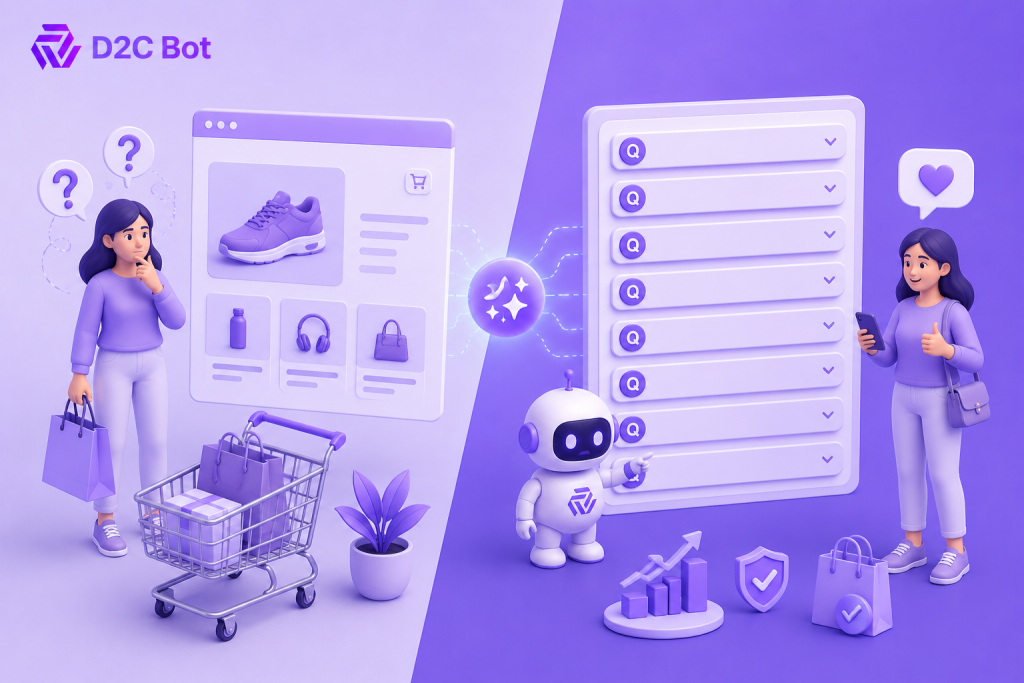

When online shoppers land on a product detail page, lingering questions create immediate purchase friction. If a visitor cannot quickly determine whether an item fits their needs, how long shipping takes, or how returns work, they abandon their cart. While traditional store-wide FAQ pages cover general store policies, high-converting product pages require specific, item-level answers directly where buying decisions happen. Managing detailed product page FAQs across hundreds of SKUs manually, however, creates a massive operational bottleneck for growing brands.
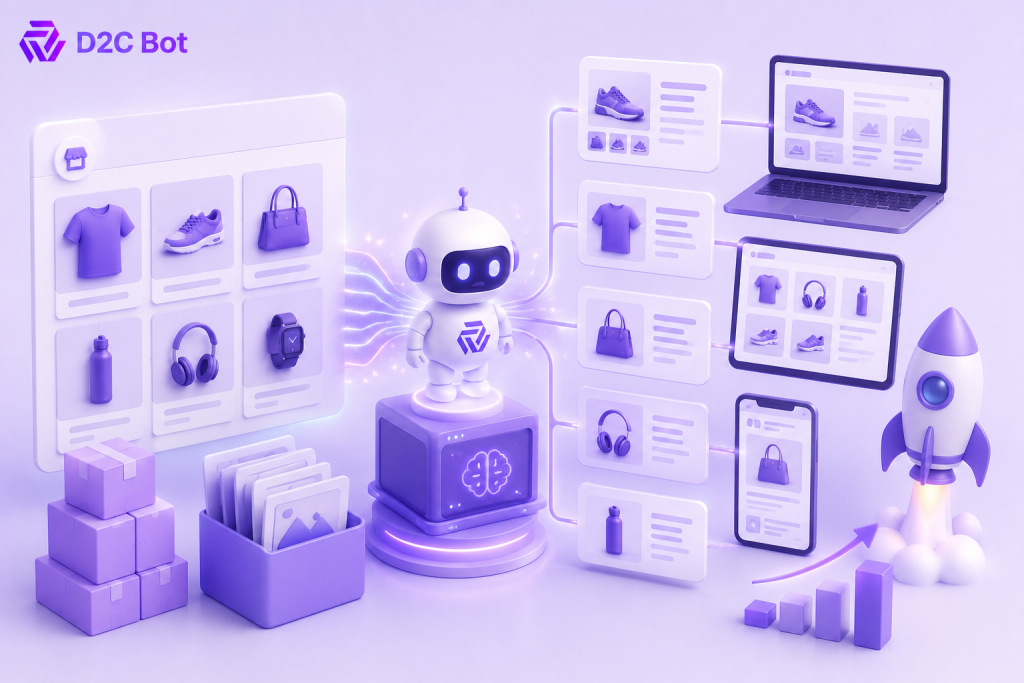
Deploying an AI FAQ generator for product pages solves this operational bottleneck by automating the extraction, generation, and organization of item-specific questions. By leveraging artificial intelligence to process product specifications, customer support logs, and historical review data, merchants can publish high-converting product page FAQs across their catalog in minutes. This targeted approach to FAQ generation reduces purchase anxiety, cuts pre-sale customer support inquiries, and drives higher store conversions without increasing administrative overhead.
What Is an AI FAQ Generator for Product Pages?
An AI FAQ generator for product pages is an e-commerce automation tool that uses natural language processing (NLP) to analyze product attributes, customer reviews, and support tickets to automatically generate relevant, item-specific questions and answers.
Unlike generic site-wide FAQ modules that cover basic shipping rules or company history, a dedicated product FAQ generator focuses on decision-stage objections specific to individual items. The software processes raw catalog data—such as materials, dimensions, care instructions, and compatibility rules—and converts those specifications into clear, conversational Q&A accordions.
+--------------------------------------------------------------------------+
|                       PRODUCT FAQ AUTOMATION PIPELINE                    |
|                                                                          |
|  [ SKU Data & Support Logs ] --> [ AI FAQ Generator Engine ]             |
|                                             |                            |
|                                             v                            |
|  [ Higher Conversion Rates ] <-- [ Item-Specific Accordions ]            |
+--------------------------------------------------------------------------+
Modern e-commerce platforms integrate these tools into store workflows, allowing Shopify merchants and D2C brands to deploy structured product page FAQs across large product lines without manual copywriting.
Why FAQs Matter for Ecommerce Product Pages
High-consideration e-commerce products require clarity. When prospective buyers evaluate items online, they lack the physical experience of holding or testing the product, making clear communication essential for conversion rate optimization (CRO).
Integrating targeted e-commerce FAQ content directly into product templates delivers measurable business advantages:
- Eliminates Purchase Hesitation: Answering specific questions regarding sizing, fit, materials, and real-world performance resolves doubts at the point of purchase.
- Reduces Pre-Sale Support Volume: Addressing common inquiries directly on the product page decreases repetitive chat and email inquiries sent to support teams.
- Enhances Organic Search Visibility: Item-specific FAQs incorporate natural, long-tail search phrases that help product pages rank for specific buyer search queries.
- Improves Mobile User Experience: Collapsible FAQ accordions allow mobile shoppers to find specific technical details quickly without endless page scrolling.
- Lowers Return Rates: Setting accurate expectations regarding product dimensions, usage, and care reduces post-purchase customer dissatisfaction and returns.
How AI FAQ Generation Works
Modern AI FAQ generator platforms connect directly with store catalogs, product information management (PIM) systems, and customer service platforms via API integrations. The automated workflow follows a structured four-step process:
+-------------------+     +---------------------+     +--------------------+
| Data Ingestion    | --> | AI NLP Processing   | --> | Structured Drafts  |
| (SKUs & Reviews)  |     | Objection Mapping   |     | (Q&A Accordions)   |
+-------------------+     +---------------------+     +--------------------+
                                                                |
                                                                v
                                                       +--------------------+
                                                       | Published Storefront|
                                                       | Direct Platform Sync|
                                                       +--------------------+
Step 1: Data Ingestion and Source Analysis
The software ingests raw catalog data, including supplier specifications, customer reviews, live chat logs, and post-purchase feedback forms.
Step 2: Customer Intent and Objection Extraction
Natural language algorithms analyze the data to identify primary buying friction points, categorizing recurring inquiries around fit, materials, compatibility, and usage.
Step 3: Automated Response Generation
The generative engine drafts clear, brand-aligned answers for each identified question, enforcing scannable formatting and active brand tone.
Step 4: Platform Publishing and Optimization
The platform formats the Q&A set for direct syncing to your storefront (e.g., as a Shopify FAQ widget) complete with clean HTML markup and optional FAQ schema.
Benefits of AI-Generated Product FAQs
Adopting automated FAQ creation tools transforms how catalog managers, marketing leads, and customer experience teams optimize product detail pages:
- Instant Catalog Scalability: Generate unique, context-aware FAQs for thousands of SKUs simultaneously in minutes instead of weeks.
- Consistent Brand Voice: Maintain uniform tone, formatting, and messaging accuracy across every collection and product line automatically.
- Data-Driven Insights: Automatically surface real questions extracted directly from actual customer reviews and support ticket logs.
- Dynamic Content Updates: Update answers across entire collections instantly when store policies, shipping timelines, or warranty terms change.
Common Questions Every Product Page Should Answer
To maximize conversion impact, an AI FAQ generator for product pages should cover key decision-stage categories:
- Fit and Sizing Guidance: How does this item fit compared to standard sizing? Should buyers size up or down?
- Materials and Sourcing: What materials or ingredients are used, and are they hypoallergenic or sustainably sourced?
- Product Durability and Care: How should the product be cleaned, maintained, or stored to ensure longevity?
- Compatibility and Ecosystem: Is this item compatible with specific hardware, accessories, or software versions?
- Shipping and Warranty Terms: How quickly does this item ship, and what specific warranty coverage is included?
Best Practices for Creating Product FAQs
Following structured guidelines ensures your product page accordions drive maximum engagement and sales:
- Prioritize High-Intent Objections: Place questions addressing fit, usage, and compatibility near the top of the FAQ module.
- Keep Answers Concise: Limit responses to two or three short sentences to maintain scannable mobile reading experiences.
- Incorporate Rich Media: Embed brief setup videos, sizing diagrams, or user manual downloads directly inside expanded FAQ answers.
- Conduct Sampling Audits: Perform periodic human spot-checks on generated drafts to ensure technical measurements match supplier data sheets.
Manual vs. AI FAQ Generation
Comparing traditional manual FAQ creation against automated AI workflows demonstrates why high-growth e-commerce brands adopt dedicated software tools.
| Operational Metric | Manual FAQ Creation | AI-Powered FAQ Generation |
| Production Speed | 30–45 minutes per product SKU | Seconds per product SKU |
| Catalog Coverage | Limited to top-selling hero items | Effortless coverage across 100% of SKUs |
| Data Sources Used | Manual guesswork or memory | Real support tickets, reviews, and PIM data |
| Messaging Consistency | Varies by writer and department | 100% brand voice alignment |
| Update Efficiency | Slow, line-by-line manual edits | Batch updates across entire product lines |
| Conversion Impact | Inconsistent across sub-collections | Proven reduction in purchase friction |
Common Mistakes to Avoid
Avoid these frequent pitfalls when implementing automated product page FAQs in your store:
- Using Generic Policy Text: Filling product page modules with store-wide shipping policies rather than item-specific details wastes valuable page space.
- Overloading Pages With Questions: Displaying dozens of unnecessary questions creates visual clutter; limit modules to four to eight high-impact questions.
- Ignoring Support Ticket Data: Generating content without analyzing historical customer service inquiries misses the real objections buyers face.
- Skipping Human Quality Checks: Publishing raw output without spot-checking technical units or policy details risks misinforming prospective shoppers.
Real Shopify Product Page Example
Consider a high-growth apparel brand selling technical outerwear on Shopify. Originally, product pages contained basic bullet points listing fabric types and waterproofing ratings. Despite strong traffic from paid ads, conversion rates remained low, and pre-sale chat support was overwhelmed with repetitive sizing and care inquiries.
By implementing an automated product FAQ generator workflow, the merchant ingested customer review logs and generated five targeted FAQs per SKU. Questions addressed exact torso fit, layer compatibility, washing instructions, and temperature ratings.
+--------------------------------------------------------------------------+
|                     SHOPIFY PRODUCT PAGE FAQ LAYOUT                      |
|                                                                          |
|  [ Product Title & Buy Button ]                                          |
|                                                                          |
|  v Is this jacket true to size?                                          |
|    It has a tailored athletic fit. If layering over fleece, size up.     |
|                                                                          |
|  v How do I wash and maintain the waterproofing?                         |
|    Machine wash cold on gentle. Do not use fabric softeners.             |
+--------------------------------------------------------------------------+
Within 30 days of publishing these structured Q&A accordions, pre-sale support tickets dropped by 28%, while mobile conversion rates on technical outerwear pages increased by 14%.
Product FAQ Optimization Checklist
Review this 8-point checklist before publishing FAQ accordions across your storefront:
- Ingest historical customer support logs and review data to identify real buyer objections.
- Limit product page FAQ accordions to four to eight highly relevant questions per SKU.
- Address fit, material quality, care instructions, and compatibility directly.
- Ensure answers are short, scannable, and written in active brand voice.
- Verify that technical measurements and units match supplier specification sheets.
- Test FAQ accordion display across desktop and mobile storefront templates.
- Apply structured schema markup to support organic search engine indexation.
- Schedule quarterly reviews to update Q&A modules as customer feedback evolves.
How D2CBot Helps Generate Product FAQs Faster
Managing catalog content, product descriptions, and Q&A modules across expanding inventories requires connected operational workflows. D2CBot offers a comprehensive e-commerce automation platform designed to simplify catalog management and content optimization for digital brands.
Rather than juggling disconnected tools for copywriting and support management, D2CBot provides an integrated environment where merchants can analyze customer feedback, extract key objections, and generate structured product page FAQs automatically. By connecting catalog data with intelligent workflow automation, D2CBot helps online stores eliminate content backlogs, enhance product pages, and scale e-commerce operations efficiently.
Conclusion
Scaling a competitive online storefront requires removing every friction point that causes purchase hesitation. Relying on generic, site-wide help pages or forcing customers to search for basic details creates frustration and leads to abandoned carts. Implementing a dedicated AI FAQ generator for product pages allows e-commerce merchants to convert raw customer feedback and catalog specifications into clear, high-converting Q&A accordions across every item in their store. By combining automated content generation with strategic human oversight, brands can improve customer confidence, reduce support ticket volume, and drive sustainable e-commerce growth.
More Articles
- https://d2cbot.com/blog/d2c-tools/top-7-d2c-metrics-founders-should-review-weekly/
- https://d2cbot.com/blog/d2c/maximize-product-visibility-google-merchant-center/
- https://d2cbot.com/blog/automation/how-to-scale-catalog-copywriting-with-an-ai-product-description-generator/
- https://d2cbot.com/blog/seo/optimizing-for-serp-features-ecommerce/
Frequently Asked Questions
An AI FAQ generator for product pages is software that analyzes product data, reviews, and support logs to automatically create item-specific questions and answers that resolve buyer hesitation on product detail pages.
Yes. Product page FAQs incorporate natural long-tail keywords that buyers search for. When combined with structured markup, FAQs can also earn rich snippets in organic search engine results.
A high-converting product page should feature four to eight focused FAQs. This provides enough space to address primary buying objections, materials, and care rules without cluttering mobile page layouts.
Yes. Automated platforms can process raw supplier data and support logs across entire product feeds, generating structured, brand-aligned FAQ sets for thousands of items simultaneously.
Yes. While AI generates context-aware Q&A drafts rapidly, conducting sampling spot-checks ensures technical details, sizing charts, and warranty terms match current business operations accurately before going live.