Optimizing for SERP Features in Modern Ecommerce SEO

The organic search landscape has fundamentally shifted away from standard blue links. Scoring the traditional number-one organic ranking position no longer guarantees high search visibility or strong click-through rates for online stores. Google frequently introduces dynamic visual layouts that push standard web text listings far down the page on both mobile and desktop views.
For modern store owners, winning premium screen real estate requires a systematic focus on optimizing for SERP features. Capturing these visual elements allows digital brands to intercept qualified buyers at the exact moment they express purchase intent. Adapting to this layout structure is a core operational requirement for businesses looking to sustain stable acquisition channels without relying entirely on paid ad campaigns.
What Are SERP Features?
A Search Engine Results Page (SERP) feature is any non-standard organic listing that appears alongside traditional text search items. Google displays these elements to provide quick, structured answers to user inquiries without forcing them to click through to an external site. For consumer brands, these sections present valuable opportunities to display product data directly on primary search screens.
+-------------------------------------------------------------+ | Google Search Box | +-------------------------------------------------------------+ | [ AI Overview / Featured Snippet: Quick Answer Box ] | +-------------------------------------------------------------+ | [ People Also Ask: Accordion Box with Collapsible FAQs ] | +-------------------------------------------------------------+ | [ Shopping Grid: Visual Product Images, Ratings, Prices ] | +-------------------------------------------------------------+ | [ Standard Blue Text Links: Traditional Web Results ] | +-------------------------------------------------------------+
Several primary visual elements appear frequently across modern transactional and informational search queries:
- Featured Snippets: Summary boxes positioned at the top of results pages that extract explicit blockquotes, bulleted lists, or data tables from authoritative web sources.
- AI Overviews: AI-generated computational summaries positioned at the header of search screens, combining synthesis text with prominent links back to reference websites.
- People Also Ask (PAA): Interactive accordion blocks displaying secondary user inquiries, providing direct answers when an option is clicked.
- Image Packs & Shopping Results: Visual catalog grids showing real-time product photos, pricing, stock levels, and review metrics directly inside organic search blocks.
- Knowledge Panels & Rich Results: Information cards that populate for distinct brand terms, alongside standard text items enriched with star ratings and pricing details.
Why Optimizing for SERP Features Matters for Ecommerce SEO
Securing real estate inside these visual panels directly impacts the performance of your broader ecommerce seo initiatives. When a storefront occupies multiple components on a single search result page, it builds immediate domain trust and drives scalable organic performance metrics.
Expanding Brand Footprint and Visibility
Visual panels occupy the top portions of modern search result grids, often pushing traditional listings below the fold line. Winning a place inside a product carousel or a featured text box ensures that your inventory catches the eye of shoppers instantly. This increased real estate provides smaller brands with a fair opportunity to compete against mass-scale retail marketplaces.
Boosting Click-Through Rates and Value
Standard text links provide minimal contextual information to prospective buyers before they choose to click. By contrast, visual results display prices, real-time availability, and user reviews before a shopper even visits your storefront. Traffic originating from these enhanced components consists of high-intent buyers who are significantly closer to making a final purchase choice.
Most Important SERP Features for Ecommerce Websites
While Google utilizes dozens of layout styles, storefront operators should focus their design efforts on the specific features that drive retail conversions.
Merchant Center Shopping Carousels
Organic product carousels pull information directly from raw catalog attributes and structured data feeds. These components showcase product images, current price tags, sales discounts, and delivery timelines. They are highly transactional, making them the most effective natural element for capturing shoppers looking to buy specific models immediately.
People Also Ask Accordions
Shoppers consistently perform deep background research before purchasing unfamiliar items online. They search for size guides, material comparisons, and compatibility details. Dominating the PAA blocks for these informational terms establishes your store as a primary technical authority, funneling informed shoppers directly into your main catalog lines.
Review Snippets and Product Schema
Standard text elements can be upgraded with star ratings and pricing ranges via proper backend markup. These graphical lines break up boring walls of search text, immediately drawing a user’s eye away from surrounding competitors. Higher visual distinction naturally improves baseline click-through performance even if your base ranking position remains unchanged.
Proven Strategies for Optimizing for SERP Features
Earning placements inside visual search panels requires a clean, structured code foundation combined with highly targeted copywriting practices. You cannot simply write long text blocks and hope search engines interpret them correctly; your site must deliver technical clarity.
Deploying Robust Product Schema Markup
Structured data acts as the clear language engine that translates regular human product descriptions into machine-readable data blocks. Implementing meticulous product schema guarantees that search engine crawlers can instantly parse your pricing, item variants, and customer feedback data. This structured implementation is the primary requirement for earning visual enhancement lines in standard search views.
+------------------------------------------------------------------------+ | Custom Storefront Backend Data (SKUs, Pricing, Reviews, Stock Status) | +------------------------------------------------------------------------+ │ ▼ +------------------------------------------------------------------------+ | Semantic HTML Layout & Schema.org JSON-LD Script Formatting | +------------------------------------------------------------------------+ │ ▼ +------------------------------------------------------------------------+ | Google Web Crawlers & AI Search Extraction Pipelines | +------------------------------------------------------------------------+ │ ▼ +------------------------------------------------------------------------+ | Visual SERP Feature Display (Star Ratings, Prices, FAQ Dropdowns) | +------------------------------------------------------------------------+
Implementing Clear, Analytical Content Layouts
To feed informational blocks like Featured Snippets and AI Overviews, your text copy must use tight, logical hierarchies. Use short paragraphs paired with direct definitions. When explaining product care instructions or sizing comparisons, use clean tables or ordered list structures that search algorithms can easily pull and display.
Optimizing High-Intent FAQ Sections
Every single product detail page should include an organized Frequently Asked Questions block targeting common pre-purchase friction points. Formatting these blocks with dedicated FAQPage schema makes your pages eligible for direct dropdown inclusion on search result screens. This tactical execution allows you to capture long-tail traffic related to product sizing, compatibility, and shipping terms.
Common Mistakes That Prevent SERP Feature Visibility
Many consumer brands fail to secure advanced layout placements due to easily avoidable backend technical errors or poor copywriting habits.
- Relying on Empty Boilerplate Content: Using generic factory text blocks across multiple items limits your site’s contextual depth, leaving algorithms with zero unique data to feature.
- Broken or Outdated Schema Scripts: Deploying malformed JSON-LD syntax prevents search crawlers from reading your catalog details, missing out on rich text expansions.
- Ignoring Asset Optimization: Uploading heavy, uncompressed images without clear alt text prevents items from showing up in visual shopping matrices.
- Neglecting Search Intent Context: Writing lengthy, artistic brand narratives instead of addressing exact customer questions leaves queries unanswered, missing out on informational snippet blocks.
Best Practices for Long-Term SERP Feature Optimization
Sustaining a strong presence within modern search layouts requires ongoing catalog maintenance and a structured framework for data updates.
Perform Continuous Content Refinement
Search intent shifts over time based on seasonal consumer trends and competitive entries. Regularly review your analytics to identify high-performing informational terms, then polish your body headings to match those exact user queries. Consistent formatting ensures that search crawlers prioritize your content as the freshest, most accurate solution available.
Monitor Code Health via Search Console
Technical health directly dictates your eligibility for premium search layouts. Use Google Search Console to monitor the validation status of your product and merchant listings feeds. Catching microdata errors early prevents the sudden loss of star ratings, pricing snippets, and organic carousels across your product pages.
How D2CBot Helps Ecommerce Businesses Create SERP-Friendly Product Content
Building a solid seo strategy that scales across an extensive product catalog requires automated efficiency. Manually formatting schema code and writing unique FAQs for thousands of product pages consumes massive internal development and copywriting hours. This operational burden often results in slow product launches and missing search layout opportunities.
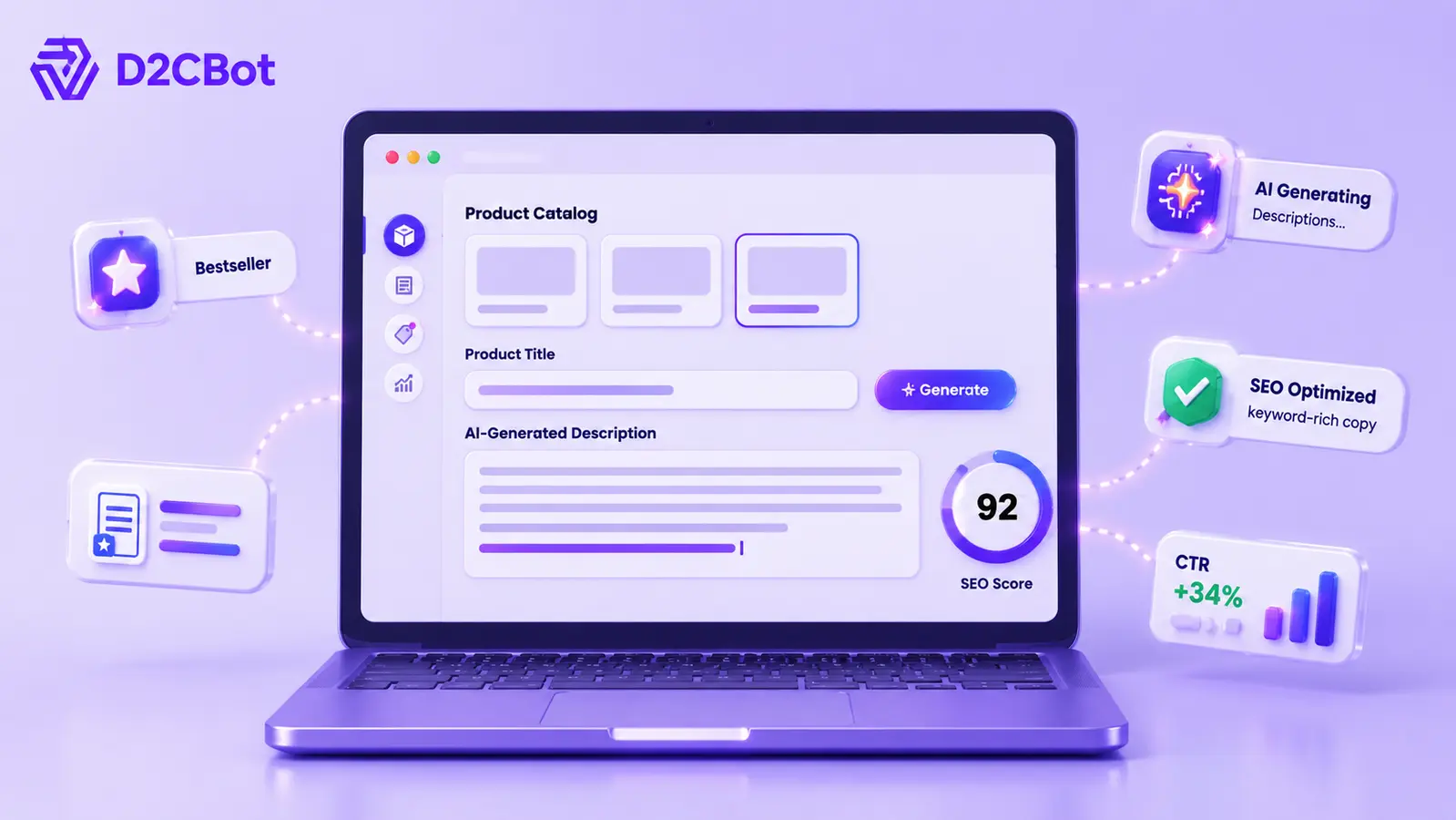
D2CBot addresses this operational challenge by functioning as a native workflow automator inside your Shopify store dashboard. Rather than relying on clunky, disconnected tools, it integrates directly with your existing store product data. This tight connection allows store owners to automatically generate optimized meta fields, descriptive headings, and dedicated product FAQs that align with modern search criteria.
The system formats product text assets using clear, readable markup patterns, ensuring the copy appeals to human shoppers while remaining highly scannable for search engine crawlers. By automating the creation of structured FAQ sections and informative copy, the platform helps your pages become prime candidates for high-visibility visual layouts, allowing you to scale your organic presence without adding to your daily administrative workload.
Conclusion
Building a successful digital presence requires a proactive approach to optimizing for SERP features. Relying on old, plain text links leaves your online store vulnerable to shifts in search layout designs. By focusing on clean structured data, practical FAQ sections, and highly scannable content, you can capture premium real estate on Google and drive steady organic sales to your store.
Achieving this level of optimization at scale requires moving away from slow, manual data entry. Integrating a dedicated workflow tool like D2CBot simplifies your day-to-day operations by automatically generating search-ready, well-structured product details directly from your existing catalog. If you want to expand your organic visibility and ensure your catalog stands out on search screens, install D2CBot from the Shopify App Store to automate your storefront optimization smoothly.
More Articles
- https://d2cbot.com/blog/website-content/create-compelling-about-us-page-instantly-generator/
- https://d2cbot.com/blog/automation/top-automation-best-practices/
- https://d2cbot.com/blog/seo/master-content-optimization-in-seo/
Frequently Asked Questions
What is the difference between rich results and SERP features?
SERP features refer to any non-standard visual components displayed on a search page, such as carousels, image grids, or AI summary panels. Rich results are a specific subset of these features, representing traditional text search listings that have been upgraded with additional graphical data like review stars or prices via backend schema markup.
Do I need developer assistance to configure product schema tags?
While advanced custom configurations require editing your store’s theme files, modern software applications can inject clean schema markup automatically. Utilizing dedicated application systems allows store owners to deploy proper structural tags across vast catalogs without needing to write custom code by hand.
How long does it take for my items to appear in visual search panels?
Placement timing depends entirely on how often search engine bots crawl your storefront. After updating your catalog content and validating your backend data structure, it can take anywhere from a few days to several weeks for algorithms to index the changes and update the visual layout screens.
Can a page win a featured snippet if it does not rank in position one?
Yes. Search engines extract content blocks from pages that provide the clearest, most direct answer to a query, even if the page ranks lower down on the first page of results. Focus on clear layout structures and concise answers to outpace competitors who rely on long, unorganized text blocks