In the fiercely competitive digital marketplace, captivating product visuals are no longer a luxury but a necessity for consumer engagement. The groundbreaking capabilities of AI image generation for ecommerce are revolutionizing how brands craft compelling digital assets, offering unprecedented speed and scalability.
Generative AI tools empower businesses to move beyond traditional photography, creating infinite product variations, virtual staging. hyper-realistic lifestyle shots from simple text prompts.
This technological leap democratizes access to high-quality visual storytelling, allowing for rapid A/B testing of diverse aesthetics and personalized content at scale, fundamentally shifting the paradigm of visual content creation from labor-intensive production to intelligent curation and iteration.
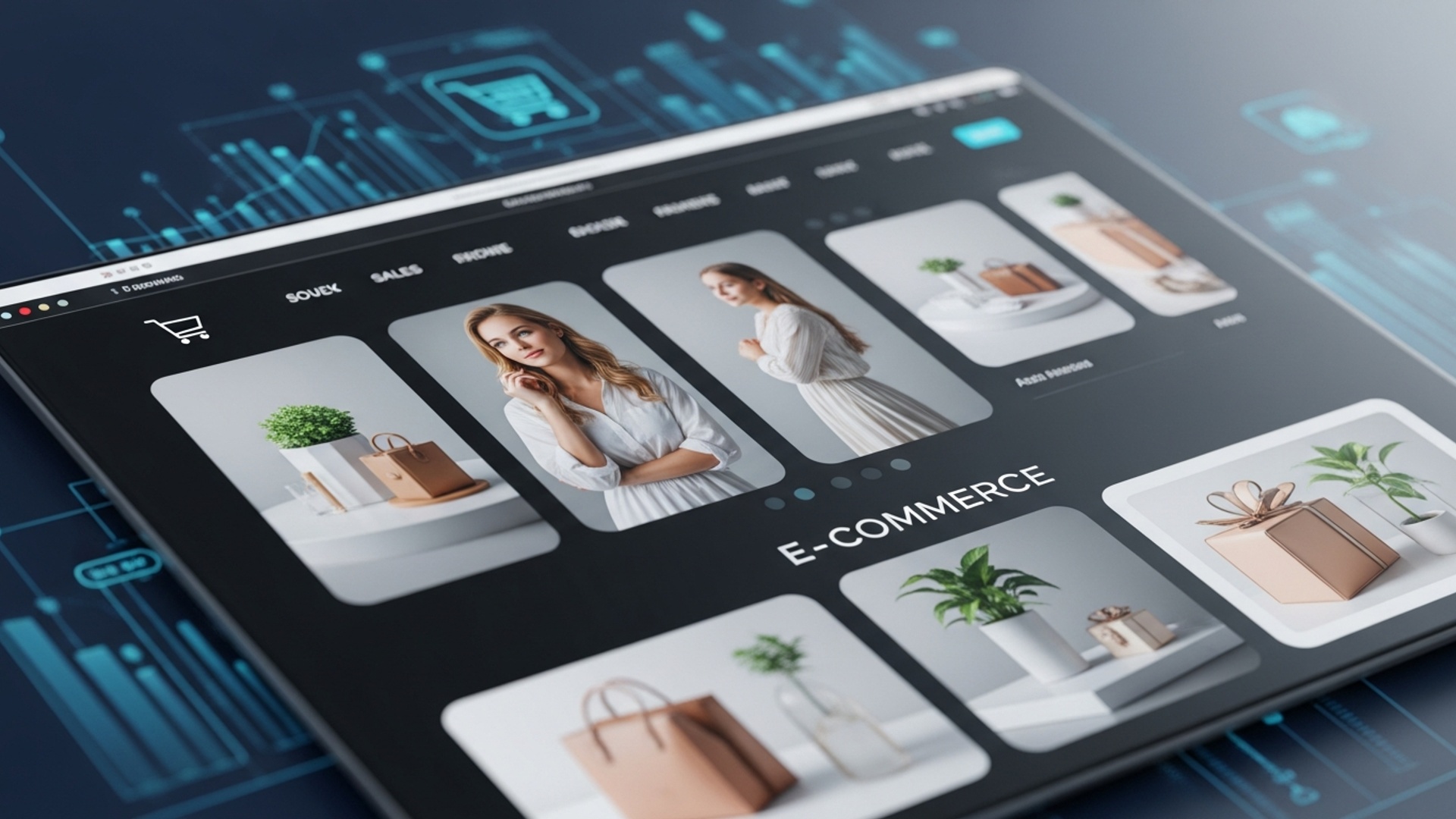
The Visual Revolution: How AI Image Generation is Redefining Ecommerce
In today’s competitive ecommerce market, visuals directly influence buying decisions. Product images are often the first interaction customers have with your brand. If they are dull, inconsistent, or low quality, conversions suffer.
Traditionally, producing high-quality product visuals required:
-
Studio rentals
-
Professional photographers
-
Models and stylists
-
Props and staging
-
Extensive editing
This approach is expensive and time-consuming.
AI image generation for ecommerce changes that equation. It allows brands to create realistic, diverse, and scalable visuals without physical photoshoots. Instead of organizing production logistics, businesses generate images using text prompts or existing product assets.
This is not just a cost-saving tactic. It unlocks speed, creativity, and flexibility at scale.
How AI Image Generation Works
AI image generation relies on advanced machine learning models trained on massive image datasets. Two core technologies dominate the space.
Generative Adversarial Networks (GANs)
GANs use two neural networks:
-
A generator that creates images
-
A discriminator that evaluates realism
Through continuous competition, the system improves until the generated visuals become highly realistic.
For ecommerce, GANs can:
-
Create variations of products
-
Modify lighting and angles
-
Generate contextual backgrounds
Diffusion Models
Diffusion models produce highly detailed and photorealistic images.
They work by:
-
Adding noise to an image
-
Learning how to reverse that noise step-by-step
-
Reconstructing a refined visual based on a prompt
This method allows for fine control over textures, shadows, reflections, and realism. Diffusion models now power many of the most advanced AI visual tools.
Real-World Ecommerce Applications
AI image generation has practical, measurable impact on ecommerce performance.
Virtual Product Photography
Instead of staging multiple photoshoots, brands can:
-
Place a product in unlimited environments
-
Change lighting instantly
-
Test seasonal themes
-
Create global localization visuals
A furniture brand can show the same sofa in modern, rustic, and luxury interiors without reshooting.
Personalized Product Visuals
AI can tailor images based on customer behavior.
Examples:
-
Showing apparel on models that reflect customer demographics
-
Displaying products in lifestyle settings aligned with browsing history
-
Customizing backgrounds based on geographic location
Personalization increases engagement and conversion rates.
Faster A/B Testing
AI enables rapid image variation testing.
Brands can experiment with:
-
Different backgrounds
-
Alternate color grading
-
Lighting adjustments
-
Lifestyle vs. studio shots
Instead of waiting weeks for new assets, marketers can test in hours.
Generating Product Variations
For products available in multiple colors or materials, AI can create every variant from a single base image.
This eliminates the need to photograph every SKU separately.
Lifestyle Content Creation
Lifestyle imagery often drives higher conversions than plain product shots.
AI can generate:
-
Outdoor adventure scenes
-
Home environments
-
Travel contexts
-
Professional settings
This enhances storytelling without location shoots.
AI vs Traditional Photography: A Cost Comparison
| Factor | Traditional Photography | AI Image Generation |
|---|---|---|
| Cost per Image | High production costs | Subscription or tool-based pricing |
| Time to Produce | Weeks | Minutes or hours |
| Scalability | Limited by logistics | Nearly unlimited |
| Creative Flexibility | Physically constrained | Virtually limitless |
| Consistency | Hard across shoots | Easily standardized |
| Environmental Impact | Travel and physical resources | Primarily computational |
AI offers major economic advantages, especially for D2C brands with large catalogs.
Popular AI Image Tools for Ecommerce
Several platforms support AI-powered image creation.
Midjourney
Strong for artistic and lifestyle visuals.
Stable Diffusion
Open-source and highly customizable.
DALL-E 3
Excellent prompt-to-image accuracy.
Specialized Ecommerce AI Platforms
Many tools now focus specifically on:
-
Background removal
-
Virtual try-ons
-
Product variant generation
-
Ecommerce integrations
Choosing the right tool depends on scale, customization needs, and integration requirements.
Best Techniques for Better AI Results
High-quality output depends on strategic input.
Strong Prompt Engineering
Detailed prompts produce better images.
Basic prompt example:
Advanced prompt example:
The more specific the instruction, the better the result.
Iteration and Refinement
Expect multiple versions. Refine prompts gradually instead of expecting perfection in one attempt.
Inpainting and Outpainting
These techniques allow you to:
-
Modify parts of an image
-
Extend backgrounds
-
Replace specific elements
They help fine-tune visuals for professional use.
Maintain Brand Consistency
Despite creative freedom, maintain:
-
Consistent lighting
-
Cohesive color grading
-
Unified visual style
Brand identity should remain intact.
Ethical Considerations
AI visuals must be used responsibly.
Accuracy
Ensure images represent the real product. Misleading visuals increase returns.
Transparency
If using hyper-realistic AI models or people, transparency builds trust.
Bias Awareness
AI models may reflect dataset bias. Be mindful of representation diversity.
Copyright Awareness
Review licensing policies of AI platforms. The legal framework is still evolving.
Action Steps for Ecommerce Brands
To implement AI image generation effectively:
-
Start with small product categories
-
Test lifestyle vs studio visuals
-
Compare AI images against traditional assets
-
Monitor CTR and conversion rates
-
Integrate AI tools into your content workflow
-
Train your team in prompt writing
Measure performance consistently. Let data guide your expansion.
Conclusion
AI image generation for ecommerce is no longer experimental. It is a competitive advantage.
It reduces production costs, increases creative flexibility, and accelerates time to market. Most importantly, it enhances product storytelling.
Start experimenting with varied AI-generated visuals. Test different contexts, backgrounds, and emotional tones. Observe how even subtle changes influence engagement.
Brands that embrace AI-driven visuals today will dominate attention tomorrow.
More Articles
Create Stunning Product Images Effortlessly Using the Right AI Tool
How AI-Generated Marketing Images Transform Your Brand’s Online Presence Easily
How to Create Stunning Ecommerce Product Images with AI (Beginner to Pro Guide)
How AI Is Transforming Ecommerce Visual Content in 2025: 8 Powerful Ways to Boost Conversions
How to Transform Your Product Catalog with AI Generated Images

FAQs
What exactly is AI image generation for products?
It’s using artificial intelligence to create new, unique images of your products. Instead of traditional photography, AI can generate lifestyle shots, different backgrounds, or even product variations from just a few inputs, like your product photo and some text descriptions.
How can this really help boost my sales?
By giving you a constant stream of fresh, engaging visuals! You can quickly create diverse images for A/B testing, localize content for different markets, showcase products in various contexts. ultimately capture customer attention more effectively. More compelling visuals often lead to higher conversion rates.
Do I need to be a tech wizard to use this kind of tool?
Not at all! Most modern AI image generation tools are designed with user-friendliness in mind. You typically upload your existing product photo, type in what you want (like ‘a sleek laptop on a modern desk with natural light’). the AI does the heavy lifting. It’s becoming super accessible.
Can the AI make my products look super realistic, like they were professionally shot?
Absolutely! AI technology has advanced incredibly. It can now generate highly realistic, high-quality images that are often indistinguishable from professional photography. You can specify lighting, shadows, textures. environments to achieve a very authentic look and feel.
What types of products benefit most from AI-generated images?
It’s great for almost any product. especially those that need to be shown in different settings or contexts – think apparel, home goods, electronics, jewelry, or even food. It’s fantastic for creating diverse lifestyle shots without needing a full photo shoot for every scenario.
Will using AI image generation really save me time and money compared to traditional photography?
Oh, definitely! It drastically cuts down on the time and cost associated with traditional photo shoots – no need for studio rentals, models, props, or extensive post-production. You can generate dozens of image variations in minutes or hours rather than days or weeks, making it incredibly efficient and cost-effective.
What if the AI generates something I don’t quite like? Can I refine it?
Yes, absolutely! These tools usually allow for iterative adjustments. You can typically give further instructions, tweak prompts, or make minor edits to guide the AI towards the desired outcome. It’s a collaborative process where you provide direction and the AI refines its output.