In today’s hyper-visual digital landscape, a brand’s online presence hinges significantly on its ability to create compelling and consistent imagery. The sheer demand for fresh, engaging content can be a formidable challenge for marketing teams, often constrained by budget, time. creative resources.
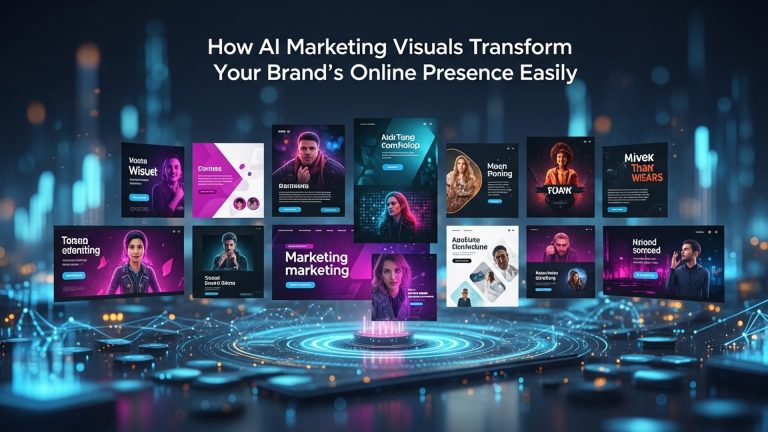
This is where AI image generation steps in, ushering in a transformative era for how businesses approach visual content. Specifically, the advent of sophisticated ai marketing visuals is revolutionizing content creation, allowing brands to effortlessly generate high-quality, on-brand imagery at scale.
This technology isn’t just an efficiency tool; it’s a strategic asset that empowers marketers to adapt swiftly to trends, personalize campaigns. maintain a visually stunning online persona without the traditional bottlenecks.
The core concept behind AI image generation involves algorithms trained on vast datasets of existing images. These algorithms learn patterns, styles. elements, enabling them to produce entirely new, unique visuals based on text prompts or existing image inputs.
From abstract art to photorealistic product shots, the capabilities are expanding at an astonishing rate, making it an indispensable component for modern digital marketing strategies within the AI Image Generation niche.
Understanding AI Image Generation: The Technical Foundation
To fully understand the power of AI marketing visuals, it helps to look at the technology behind them. Two main systems drive modern AI image generation: Generative Adversarial Networks (GANs) and Diffusion Models.
Generative Adversarial Networks (GANs)
A GAN works using two neural networks: a Generator and a Discriminator.
The Generator creates new images. Meanwhile, the Discriminator evaluates those images and compares them to real ones. Its task is to determine whether the image is authentic or AI-generated.
Because these two networks compete against each other, the Generator continuously improves. Over time, the system produces highly realistic and detailed visuals.
You can think of it like an art forger trying to fool a skilled art critic. As the critic improves, so does the forger.
Diffusion Models
In contrast, diffusion models follow a different process. First, they gradually add noise to an image until it becomes static. Then, they learn how to reverse that process.
By slowly removing noise step by step, the model reconstructs a coherent image. As a result, diffusion models excel at realism and creative interpretation. They are especially effective when responding to detailed prompts.
The Role of Text Prompts
Typically, the process begins with a text prompt. This prompt acts as a detailed instruction given to the AI.
For example:
“A vibrant e-commerce product shot of a sleek, minimalist smart speaker on a marble countertop with soft natural morning light, depth of field, studio quality.”
The AI analyzes this description and generates an image that matches the requested elements.
Moreover, advanced tools allow additional refinements. Marketers can adjust style, lighting, composition, and even edit specific areas of the image. Consequently, brands gain a high level of creative control without traditional production constraints.
Traditional Visual Content vs. AI Marketing Visuals
The shift toward AI marketing visuals represents a major change in how brands create content. While traditional production remains valuable, AI offers speed and flexibility that are difficult to match.
| Feature | Traditional Visual Creation | AI Marketing Visuals |
|---|---|---|
| Time to Market | Days or weeks | Minutes or hours |
| Cost per Asset | High production costs | Lower subscription or generation fees |
| Scalability | Limited by human capacity | Highly scalable |
| Creative Control | Dependent on human skill | Guided by prompts and refinements |
| Adaptability | Slower to adjust to trends | Instant trend-based generation |
| Personalization | Expensive at scale | Easily tailored per audience |
| Uniqueness | Requires creative resources | Generates novel imagery quickly |
Clearly, AI reduces both time and cost barriers.
For example, a small e-commerce brand can now generate multiple product variations without organizing repeated photoshoots. Similarly, large corporations can localize campaign visuals instantly for different markets.
As a result, AI democratizes high-quality visual production.
Real-World Applications of AI-Generated Imagery
AI marketing visuals are not theoretical. They are already reshaping campaigns across industries.
Personalized Advertising
Instead of showing generic ads, brands can now tailor visuals to individual users.
For instance, if someone frequently searches for hiking boots, AI can generate an ad featuring those boots in a mountain setting. Furthermore, the model can reflect demographic diversity to increase relevance.
Because the visuals feel personalized, click-through and conversion rates often improve.
Rapid Creative Prototyping
Before committing to expensive production, marketing teams can visualize ideas instantly.
They can test:
-
Different environments
-
Model variations
-
Lighting styles
-
Product angles
Therefore, creative direction becomes clearer before large budgets are spent.
Social Media Content at Scale
Maintaining daily content across Instagram, Facebook, and TikTok can be demanding. However, AI enables brands to generate consistent visuals quickly.
For example, a sustainable fashion brand could prompt:
“Diverse models wearing eco-friendly outfits in a modern urban garden, natural light, lifestyle photography.”
Within minutes, multiple variations are ready for publishing.
Website Optimization and A/B Testing
Conversion optimization depends heavily on visuals.
AI allows marketers to generate multiple hero image variations quickly. As a result, teams can continuously test and refine visuals without waiting for new production cycles.
Blog and Article Illustrations
Rather than relying solely on stock libraries, brands can generate unique images tailored to their content.
For example, an article about the future of smart homes can feature a custom futuristic interior visual that matches the theme precisely.
Virtual Product Photography
AI also eliminates the need for complex physical setups.
Brands can showcase products in:
-
Exotic locations
-
Impossible lighting conditions
-
Seasonal themes
-
Studio-quality environments
Consequently, production becomes more flexible and cost-efficient.
Actionable Steps to Integrate AI Into Your Visual Strategy
If you want to adopt AI marketing visuals effectively, consider the following approach.
1. Start Small and Experiment
Begin with low-risk applications such as social posts or blog graphics. Then, test different tools like Midjourney, DALL-E, or Stable Diffusion to see which aligns best with your brand style.
2. Improve Prompt Writing
The better the prompt, the better the output.
Use:
-
Detailed descriptions
-
Style indicators like “cinematic lighting”
-
Mood descriptors
-
Negative prompts such as “no blurry, no pixelated”
Prompt engineering is essentially creative direction in written form.
3. Develop an AI Style Guide
Just as you guide designers, create structured prompt guidelines for AI use.
Include:
-
Brand colors
-
Preferred aesthetics
-
Repeated visual themes
-
Approved stylistic keywords
This ensures consistency across all generated assets.
4. Combine AI With Human Creativity
Although AI is powerful, it works best alongside human refinement.
Designers can:
-
Edit outputs
-
Adjust composition
-
Add finishing touches
This hybrid model blends efficiency with creative judgment.
5. Monitor Performance and Iterate
Track engagement, conversions, and visual impact.
Then, A/B test AI-generated images against traditional ones. Over time, these insights will improve your prompting strategy and visual decisions.
6. Stay Aware of Ethical Considerations
Finally, remain informed about copyright, bias, and transparency guidelines. Responsible AI use strengthens brand trust.
Conclusion
Creating compelling visuals no longer requires massive budgets or long production cycles.
AI marketing visuals provide an efficient and scalable way to elevate brand presence. More importantly, they enable faster experimentation and personalized storytelling.
Start by identifying one content gap, such as inconsistent social media imagery. Then, use a tool like Midjourney or DALL-E to generate cohesive visuals for a week.
You will quickly see how powerful thoughtful prompts can be.
This technology does not replace human creativity. Instead, it enhances it. By embracing AI strategically, brands can launch campaigns faster, tell richer visual stories, and stand out in an increasingly competitive digital landscape.
The shift is already happening. The question is whether your brand will follow or lead.
More Articles
Create Amazing Ecommerce Product Images with AI Generation Tools
Transform Your Product Catalog with AI Generated Images for Stunning Visuals
Unlock E-commerce Growth Using AI for Stunning Social Media Creatives
AI Ecommerce Visual Content Strategy to Boost Engagement and Sales
How AI Boosts Product Page Conversions for eCommerce Success

FAQs
What’s the big deal with using AI visuals for my brand?
AI-generated visuals are a game-changer because they make your brand stand out online without a ton of effort. They let you create eye-catching images, videos. graphics super fast, keeping your content fresh and engaging for your audience across all your online channels.
How does AI actually make creating marketing visuals easier?
It automates so much of the heavy lifting! Instead of spending hours designing or hiring expensive professionals, AI tools can generate unique images, resize them for different platforms, or even create variations of existing assets in minutes based on simple text prompts or a few clicks. It’s about speed and efficiency.
Can AI visuals really help my brand get noticed more online?
Absolutely! By letting you produce a high volume of diverse, high-quality. on-brand visuals consistently, AI helps you keep your social media feeds, ads. website looking vibrant. This consistent fresh content grabs attention and improves engagement, making your brand much more visible in a crowded digital space.
Are these AI visuals good enough quality for professional marketing?
Yes, definitely. Modern AI tools create incredibly high-quality visuals that are often indistinguishable from human-made designs. They can match your brand’s aesthetic, incorporate specific elements. produce stunning graphics suitable for any professional marketing campaign, from social media to print.
I’m not a tech wizard. Is this complicated to use?
Not at all! Most AI visual platforms are designed with user-friendliness in mind. You don’t need to be a designer or a tech expert. You typically just type what you want, select some styles or give a few simple instructions. the AI does the rest. It’s surprisingly intuitive and accessible for everyone.
How quickly can I see results using AI for my visuals?
You can see results almost instantly! The speed at which AI generates visuals means you can test different creative ideas, launch campaigns faster. refresh your online presence much more frequently than with traditional methods. This rapid iteration can lead to quicker improvements in engagement and brand recognition.
Will using AI visuals make my brand lose its unique touch?
Quite the opposite! AI empowers you to maintain and even enhance your unique brand identity. You can train AI models on your existing brand assets, specify your brand colors, fonts. style preferences, ensuring that all AI-generated visuals align perfectly with your brand’s look and feel. with endless creative variations.