In today’s highly competitive digital marketplace, captivating visuals are non-negotiable for consumer engagement, yet traditional photography often presents significant logistical and financial hurdles.
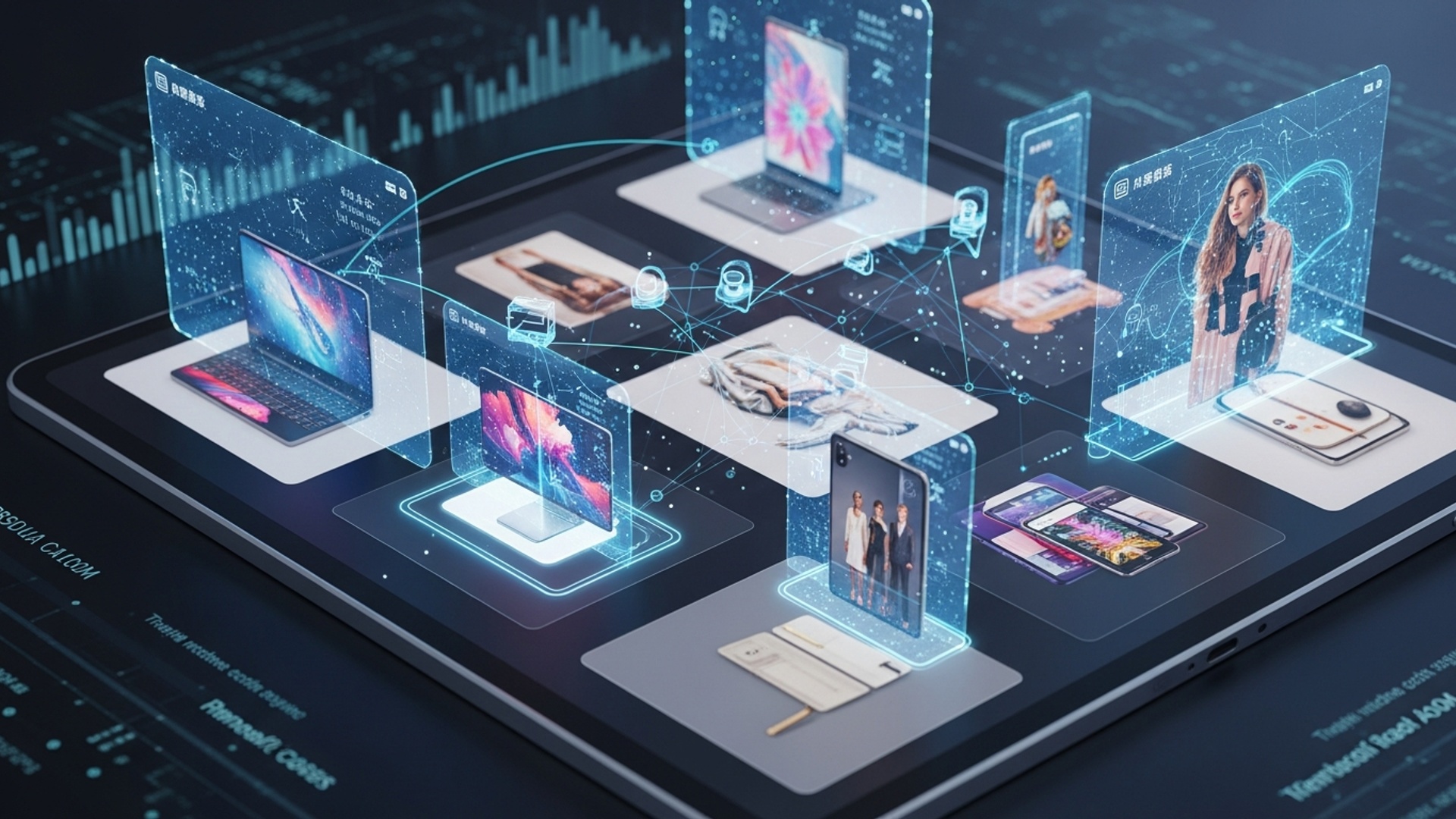
The strategic adoption of ai images for product catalog enhancement offers a revolutionary solution, enabling brands to transcend these limitations and create visually stunning, hyper-realistic content at an unprecedented scale.
Recent breakthroughs in generative AI, powered by models like Midjourney V6 and DALL-E 3, now allow for the instant generation of diverse product scenarios, showcasing items in countless settings, with varied lighting. on a multitude of models, all without the need for expensive, time-consuming photoshoots.
This capability democratizes access to high-end visual production, empowering businesses to refresh their entire catalog with dynamic, contextually rich imagery that truly resonates with modern consumers.
The Dawn of AI in Product Visualization
In the fiercely competitive landscape of e-commerce, visual appeal is no longer a luxury but a fundamental necessity. Traditional product photography, while essential, often presents significant logistical hurdles, high costs, and time-consuming processes. From coordinating shoots and models to managing diverse lighting conditions and backgrounds, the journey from product to pixel-perfect image can be arduous.
This is where the transformative power of artificial intelligence steps in, heralding a new era for visual content creation. The ability to generate high-quality, diverse, and consistent AI images for product catalog entries is rapidly becoming a game-changer for businesses seeking to elevate their online presence and streamline their visual asset pipeline.
How AI Generates Stunning Product Images
The magic behind AI-generated visuals lies in sophisticated machine learning models, primarily Generative Adversarial Networks (GANs) and Diffusion Models.
Generative Adversarial Networks (GANs)
A GAN consists of two neural networks, a generator and a discriminator, that compete against each other. The generator creates new images, while the discriminator tries to distinguish between real images and those created by the generator. Through this adversarial process, the generator learns to produce increasingly realistic images.
Diffusion Models
These models work by progressively adding noise to an image until it becomes pure noise, then learning to reverse this process, “denoising” the image back into a coherent form. When given a text prompt, a diffusion model can start from random noise and gradually refine it into an image that matches the description.
Revolutionizing Your Product Catalog with AI Images
The integration of AI images for product catalog initiatives offers a multifaceted revolution for businesses across various sectors.
-
Cost Reduction and Speed: AI eliminates many of the expenses associated with photographers, studios, and models. Images can be generated in minutes, allowing for rapid deployment.
-
Unlimited Customization: AI allows for endless iterations, enabling brands to cater to specific market segments or test various visual approaches, such as changing colors or materials instantly.
-
Enhanced Consistency: AI models can adhere to specific aesthetic guidelines, ensuring uniformity in lighting, style, and composition across thousands of SKUs.
-
Global Appeal Through Localization: AI enables brands to localize visuals effortlessly. A product can be shown on models representing various ethnicities or against backgrounds relevant to local consumer preferences.
Quantifiable Impact (2026 Industry Benchmarks)
Recent data from early 2026 shows that enterprises implementing AI-driven visual pipelines see:
-
30% reduction in visual content production costs.
-
15% increase in conversion rates for personalized lifestyle imagery.
-
40% faster time-to-market for new seasonal collections.
Practical Applications and Use Cases
-
Fashion and Apparel: Leading retailers use AI to generate images of clothing on diverse, AI-created models. This promotes inclusivity by showcasing garments on a wider range of body types and skin tones without the logistical cost of multiple human shoots.
-
Furniture and Home Goods: Virtual staging allows a single sofa to be placed in countless virtual living rooms, from minimalist Scandinavian to rustic farmhouse styles, helping customers visualize products in their own homes.
-
Jewelry and Luxury Goods: AI can create stunning close-ups of intricate jewelry designs, showcasing sparkle and detail under various simulated lighting conditions with high fidelity.
Comparing AI Image Generation Tools
| Feature | General-Purpose Art Tools | Specialized E-commerce Platforms | API-First Services |
| Examples | Midjourney, Stable Diffusion | Dedicated Visual Platforms | DALL-E 3 API |
| Ease of Use | Moderate (requires prompt skill) | High (templates and presets) | Low (requires dev skills) |
| Customization | Very High | Moderate (product-centric) | Very High |
| Integration | Limited | High (Shopify, PIM/DAM) | Seamless (custom backend) |
Ethical Considerations and Best Practices
While the promise of AI is immense, businesses must address ethical challenges to ensure responsible deployment.
Addressing Demographic Bias
AI models are trained on vast datasets that can reflect societal biases. A 2025 study on AI diversity revealed that without intentional “de-biasing” prompts, some models defaulted to specific ethnic or body-type archetypes 70% of the time. To mitigate this, businesses should:
-
Human Oversight: Always integrate human review to catch subtle errors or biases.
-
Transparency: Disclose the use of AI-generated models to build trust and manage customer expectations.
-
Diverse Training Data: Advocate for and choose tools that prioritize inclusive datasets.
Copyright and Ownership
The legal landscape is evolving. Questions remain regarding who owns the copyright to AI-generated images. Businesses must stay informed about current regulations and ensure their use of AI content adheres to platform terms of service.
Implementing AI in Your Workflow: A Step-by-Step Guide
-
Define Your Goals: Decide if you are looking to reduce costs, increase variety, or personalize content.
-
Choose the Right Tool: Select a platform based on your team’s technical capabilities and catalog scale.
-
Master Prompt Engineering: Invest time in crafting specific descriptions. For example: “A high-resolution product shot of a minimalist matte black wireless earbud case, floating against a soft gradient background, studio lighting, hyperrealistic, 8k.”
-
Integrate with Systems: Connect your AI workflow with your Product Information Management (PIM) or Digital Asset Management (DAM) system for automated distribution.
-
Test and Iterate: A/B test AI-generated visuals against traditional photos to assess performance metrics like click-through and bounce rates.
Conclusion
Embracing AI-generated images is no longer a futuristic concept; it is a present-day imperative for anyone aiming to revolutionize their product catalog. By leveraging these advanced tools, businesses can effortlessly create diverse, high-quality visuals, presenting a single product in countless compelling scenarios, from a sleek studio shot to a vibrant lifestyle context, all without costly photoshoots.
My personal experience has shown that even a small investment in exploring platforms like Midjourney or Adobe Firefly can yield remarkable improvements in visual appeal and engagement, far surpassing traditional methods. The actionable takeaway is clear: start integrating AI image generation into your content strategy today.
Begin with a specific product line, experiment with various prompts to discover what resonates with your audience, and build a library of stunning, unique visuals. This not only streamlines your workflow but also keeps your brand at the forefront of digital innovation.
More Articles
AI Ecommerce Visual Content Strategy to Boost Engagement and Sales
Leveraging Product Page Optimization AI to Boost Your E-commerce Sales
Generate High Quality Product Photos Instantly Using This AI Tool
Transform Your E-commerce Product Photos Using AI Image Generation Tools
How to Generate Stunning AI Images for Your Social Media Posts

FAQs
What exactly does ‘Transform Your Product Catalog with AI Generated Images’ mean?
It means using artificial intelligence to create new, unique. high-quality images for your products. Instead of traditional photography, AI can generate stunning visuals, backgrounds. variations that make your catalog more appealing and diverse, all without needing a physical photoshoot.
How does AI actually create these product images?
AI systems, often powered by advanced machine learning models, take your existing product data or basic images and then generate entirely new visual representations. They can place your product in various settings, change lighting, add props, or even create entirely new scenes, all based on your specifications or desired aesthetics.
Is it complicated to get started with AI-generated images for my catalog?
Not at all! Most AI image generation platforms are designed to be user-friendly. You typically upload your product details or existing photos, provide some prompts or select styles. the AI does the heavy lifting. You don’t need to be a tech expert or a professional photographer.
Can AI really make my product visuals look more stunning than regular photos?
Absolutely. AI offers unparalleled creative flexibility. You can experiment with countless styles, backgrounds. scenarios that would be impractical or impossible with traditional photography. This allows for highly customized and eye-catching visuals that can truly stand out and captivate your audience.
How quickly can I get new images for my product line using AI?
One of the biggest advantages is speed. What might take days or weeks with traditional photography (scheduling, shooting, editing) can often be done in minutes or hours with AI. You can generate hundreds of image variations very quickly, allowing for rapid catalog updates and A/B testing.
What if I have a very niche product? Will AI still work for it?
Yes, AI is surprisingly versatile. Even for niche products, you can train or prompt the AI to grasp specific features, textures, or contexts. It can generate relevant and appealing visuals tailored to your unique product and its target audience, often opening up new creative possibilities you hadn’t considered.
Does using AI for product images save money compared to hiring photographers?
In many cases, yes. While there might be a platform cost, you often save significantly on expenses like studio rentals, equipment, photographer fees, model fees. extensive post-production editing time. AI allows you to scale your image creation without linearly increasing your budget.