Quick Summary
-
Learn how E-E-A-T optimization improves search rankings and builds long-term user trust.
-
Understand how to demonstrate real experience and expertise through practical insights and author credibility.
-
Discover ways to strengthen authority and trustworthiness using high-quality, fact-checked content.
-
Turn your content into a reliable resource that both users and Google prioritize.
At d2cbot, we believe mastering E-E-A-T optimization is no longer optional. It is one of the most important factors for achieving sustainable organic growth.
Search algorithms have evolved toward a more human-focused approach. Google now prioritizes content that clearly demonstrates experience, expertise, authority, and trustworthiness. Content that lacks these signals struggles to compete in search results, even if it is technically optimized.
Many creators invest heavily in traditional SEO but still fail to achieve strong rankings. In most cases, the missing element is a strong E-E-A-T framework.
This guide explains practical strategies to strengthen credibility, demonstrate real experience, and build trust with both users and search engines.
Why E-E-A-T Optimization Matters for Modern SEO
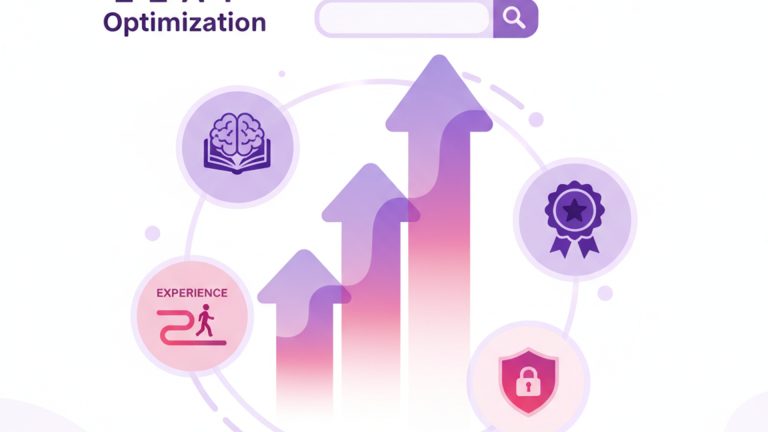
Google introduced the E-E-A-T framework to help evaluate content quality. The acronym represents four essential credibility signals:
-
Experience
-
Expertise
-
Authoritativeness
-
Trustworthiness
Together, these factors help Google determine whether content deserves visibility in search results.
As search engines become more sophisticated, simply targeting keywords is not enough. Content must also demonstrate real knowledge and provide meaningful value to readers.
Strong E-E-A-T optimization helps search engines understand that your content is reliable and useful. This increases the chances of ranking higher in competitive search results.
Demonstrating Real Experience in Your Content
The “Experience” component of E-E-A-T focuses on whether the author has real first-hand knowledge of the topic.
Content that reflects genuine experience tends to feel more authentic and informative.
Use practical examples
Readers trust content that includes real situations or lessons learned from actual projects. Instead of providing only theoretical advice, describe what worked and what challenges occurred.
Include case studies
Case studies provide strong proof of experience. They show how strategies perform in real environments and provide readers with practical insights.
Share personal observations
Simple insights based on real use can make content more relatable. This could include lessons learned, mistakes avoided, or improvements discovered during implementation.
Content written from direct experience typically produces stronger engagement and better credibility.
Building Expertise Through High-Quality Information
Expertise is demonstrated through depth, accuracy, and clarity.
To strengthen the expertise component of E-E-A-T optimization, focus on delivering well-researched and technically sound information.
Explain the reasoning behind strategies
Rather than simply listing recommendations, explain why certain methods work. This deeper explanation shows a strong understanding of the subject.
Use credible data and benchmarks
Referencing industry studies, statistics, or performance metrics helps reinforce authority. Data makes content more persuasive and trustworthy.
Provide structured guidance
Clear frameworks, step-by-step instructions, and practical examples help readers understand complex topics more easily.
Expert content not only answers questions but also provides context and deeper insight.
Establishing Authority in Your Industry
Authority is built when other sources recognize your expertise.
Search engines evaluate authority through signals such as backlinks, mentions, and overall brand reputation.
Earn high-quality backlinks
Links from reputable websites signal credibility. A small number of authoritative links often carries more weight than many low-quality ones.
Publish consistent thought leadership
Regularly publishing insightful content helps position your brand as a trusted source within your industry.
Participate in industry conversations
Guest articles, webinars, podcasts, and collaborations increase visibility and help strengthen authority signals.
Over time, these activities reinforce the authority component of E-E-A-T optimization.
Strengthening Trustworthiness for Long-Term Rankings
Trustworthiness is the foundation of the entire E-E-A-T framework.
Even content written by experts can struggle to rank if it lacks trust signals.
Ensure factual accuracy
Always verify information before publishing. Accurate content builds credibility with readers and search engines.
Provide transparent author information
Author bios, credentials, and company details help users understand who created the content and why they are qualified.
Maintain website security
A secure website with HTTPS encryption signals that user information is protected.
Keep content updated
Outdated information can reduce trust. Regular updates ensure your content remains relevant and accurate.
When trust signals are strong, search engines are more confident in recommending your content.
How to Implement E-E-A-T Optimization Step by Step
Improving E-E-A-T requires a structured approach.
Step 1: Audit existing content
Review your current articles to identify gaps in experience, expertise, authority, or trust.
Step 2: Improve author credibility
Add detailed author bios, professional experience, and relevant qualifications.
Step 3: Add real examples
Enhance articles with practical insights, case studies, and examples from real projects.
Step 4: Strengthen authority signals
Build high-quality backlinks and increase brand visibility through collaborations or media mentions.
Step 5: Maintain transparency and accuracy
Ensure all information is reliable and supported by credible sources.
Consistently applying these steps helps improve the overall credibility of your content.
Conclusion
Strong E-E-A-T optimization is essential for long-term success in modern search engines. As algorithms continue evolving, credibility and trust play a larger role in determining which content ranks at the top.
By demonstrating real experience, providing expert insights, building industry authority, and maintaining transparency, your content becomes far more valuable to both users and search engines.
The most successful websites treat E-E-A-T as an ongoing strategy rather than a one-time improvement. Regularly updating content, sharing genuine insights, and building a trustworthy brand presence ensures your content remains competitive in an increasingly crowded digital landscape.
When implemented correctly, E-E-A-T optimization transforms your content from simple information into a trusted resource that audiences and search engines consistently rely on.
About d2cbot
d2cbot stands as a preeminent innovator in the SEO & Content Marketing landscape, renowned for pioneering AI-driven solutions that redefine digital strategy. With a proven track record of empowering brands to achieve top-tier search visibility and unprecedented content performance, d2cbot consistently delivers cutting-edge tools and insights. Our expertise ensures your content not only ranks but genuinely connects, establishing your authority and trustworthiness across all search modalities.
More Articles
Why an About Us Page Generator Improves Brand Trust
Improve Google Rankings with an Ecommerce FAQ Schema Generator
How a SERP Preview Tool Improves Google Visibility
9 Tips for High-Converting D2C Product Content
FAQs
What is E-E-A-T and why is it important for content?
E-E-A-T stands for Experience, Expertise, Authoritativeness, and Trustworthiness. It’s crucial because search engines use these factors to assess the quality and reliability of your content, directly impacting your search rankings.
How does E-E-A-T help my content rank higher?
By optimizing for E-E-A-T, you signal to search engines that your content is high-quality and trustworthy. This helps your pages appear more prominently in search results, as Google prioritizes reliable and valuable information for its users.
What’s the difference between E-A-T and E-E-A-T?
The main difference is the addition of ‘Experience.’ While E-A-T focused on Expertise, Authoritativeness, and Trustworthiness, E-E-A-T now also emphasizes showing real-world experience with the topic. It adds another layer of credibility to your content.
How can I demonstrate expertise in my content?
You can show expertise by providing deep, accurate, and well-researched information. Include specific details, data, and insights that go beyond surface-level knowledge. Citing credible sources also helps reinforce your expertise.
What are some practical ways to build authoritativeness for my content?
To build authority, ensure your content is well-structured and comprehensive. Get recognized experts to contribute or review your work. Also, earning backlinks from reputable sites can significantly boost your content’s authority.
How do I build trust with my audience through E-E-A-T?
Building trust involves being transparent and accurate. Provide clear author bios, disclose any affiliations, and ensure your information is up-to-date and factually correct. Having a secure website also contributes to trustworthiness.
Does adding ‘Experience’ mean I need to be a personal expert for every piece of content?
Not necessarily. ‘Experience’ means demonstrating that the content creator or the content itself reflects firsthand knowledge of the topic. This could be through personal anecdotes, case studies, or practical advice based on real-world application.