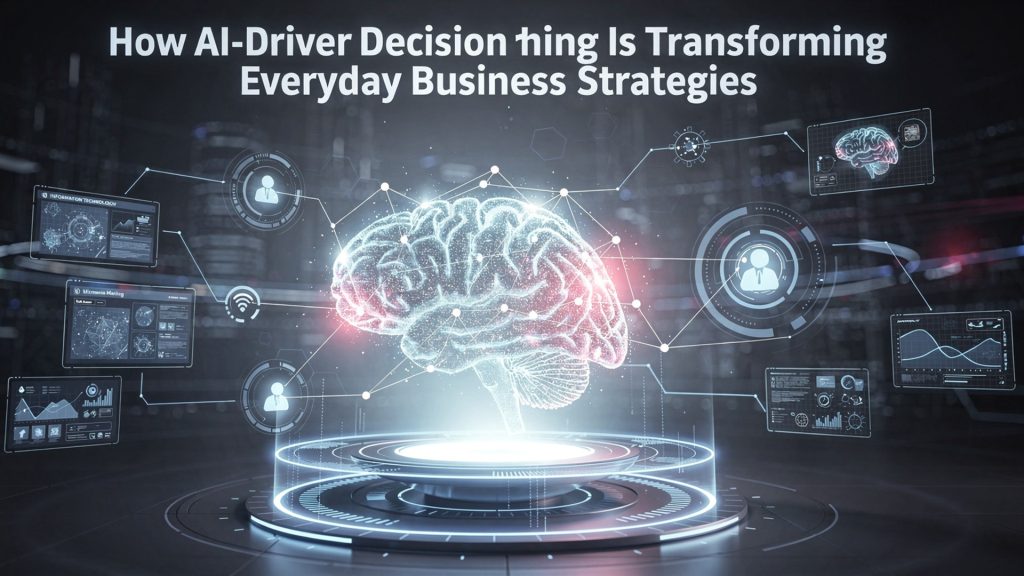

The escalating demand for high-velocity, high-quality content, critical for achieving sustainable SERP dominance, necessitates a deep understanding of advanced AI tools for content creation.
These aren’t merely automation utilities; rather, they represent a fundamental shift in content production paradigms, leveraging sophisticated computational linguistics and deep learning architectures to optimize for semantic relevance and topical authority.
Modern platforms move beyond superficial text generation, impacting everything from structured data integration to algorithmic parsing optimization, fundamentally redefining the potential for content scalability and measurable ROI within complex SEO strategies.
Mastering their intricate deployment is paramount for practitioners aiming to elevate content performance beyond conventional methodologies.
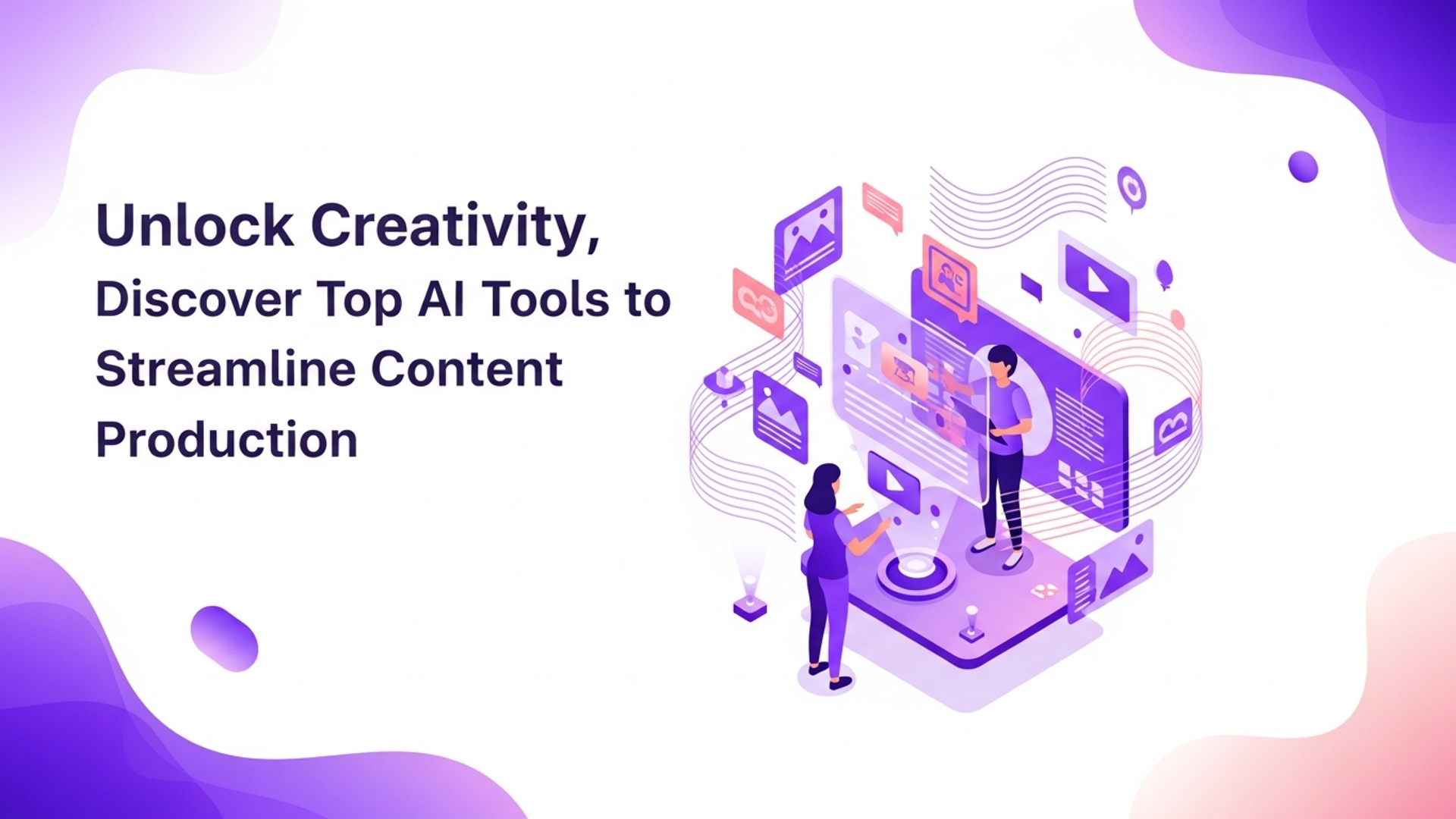
The Generative AI Paradigm Shift in Content Strategy and Production
The advent of generative artificial intelligence, particularly large language models such as OpenAI’s GPT series and Google’s LaMDA, has triggered a fundamental shift in content marketing strategy. Rather than serving as simple automation tools, these systems introduce a new computational paradigm that reshapes ideation, research, drafting, and optimization workflows.
At the architectural level, modern LLMs rely on the Transformer model, a breakthrough in natural language processing. Unlike earlier recurrent neural networks that processed text sequentially, Transformers use self-attention mechanisms to evaluate the importance of each word relative to others in the sequence. Because this architecture enables parallel processing across entire text inputs, models can scale to trillions of tokens and retain contextual coherence across long-form outputs.
For content strategists, this technical capability translates into operational acceleration. AI systems can rapidly synthesize large datasets, extract emerging patterns, generate structured outlines, and draft substantial content in minutes rather than hours. Organizations adopting advanced AI tools frequently report a 60 to 70 percent reduction in first-draft production time. Consequently, editorial teams can reallocate effort toward higher-order functions such as narrative refinement, expert validation, and strategic positioning.
However, this efficiency introduces trade-offs. LLMs may hallucinate, producing confidently written but factually incorrect information. In addition, bias propagation remains a concern due to training on large-scale internet data. Therefore, intelligent augmentation—not automation—must guide implementation. AI excels at structural synthesis and pattern generation, while human professionals provide discernment, originality, and ethical oversight.
Consider a highly specific input:
The model’s ability to convert this structured prompt into coherent output illustrates predictive token modeling and semantic compression at scale. Yet refinement remains a human responsibility.
AI-Powered Keyword Research and Topic Modeling
Traditional keyword research tools focus on search volume and difficulty metrics. While useful, they rarely capture full semantic ecosystems. AI-enhanced keyword research shifts the focus from isolated keywords to entity networks and topic clusters.
Mechanistically, these tools rely on knowledge graphs, clustering algorithms, and SERP analysis engines. By examining ranking pages across an entire topic space, AI identifies associated entities, recurring subtopics, and user intent signals. This approach mirrors Google’s semantic search algorithms, including RankBrain and BERT.
Quantitatively, AI-driven keyword modeling often uncovers 25 to 40 percent more long-tail variations compared to manual research alone. Moreover, topical relevance scores improve significantly when semantic breadth is incorporated.
For example, an AI system might detect an emerging opportunity at the intersection of cloud security, healthcare compliance, and data privacy regulations. Rather than recommending a single keyword, it suggests a structured content cluster strategy.
Despite these advantages, over-reliance poses risks. AI detects patterns based on existing data, which may obscure emerging trends with low historical search volume. Consequently, validation through competitor analysis, customer interviews, and sales team feedback remains essential.
Advanced AI Content Generation: From Drafts to Strategic Assets
Basic AI tools generate surface-level blog posts. Advanced implementations leverage fine-tuning, reinforcement learning from human feedback, and persona conditioning to produce more nuanced output.
Through RLHF processes, models learn stylistic alignment and audience targeting. As a result, they can adopt technical authority for B2B content, conversational tone for social media, or persuasive framing for landing pages.
Organizations frequently observe up to 70 percent faster draft development for whitepapers, pillar pages, and long-form SEO content. This acceleration enables higher publication frequency without proportional headcount increases.
Nevertheless, output variability remains a concern. AI synthesizes patterns but does not generate genuine innovation. Rigorous review protocols are therefore required:
-
Plagiarism validation
-
Readability assessment
-
SEO optimization auditing
-
Factual verification by subject matter experts
A precise prompt enhances quality:
Specificity narrows output variance and reduces revision overhead.
AI for On-Page SEO Optimization
AI contributes significantly to post-draft optimization through semantic benchmarking and entity gap analysis.
Modern optimization engines evaluate high-ranking pages, extract common entities, and compare structural patterns against your draft. Rather than counting keyword density alone, these systems assess conceptual completeness.
Case studies often show measurable ranking improvements, with optimized articles gaining 1 to 2 position increases on average. Additionally, AI tools frequently identify internal linking opportunities that strengthen topical authority.
However, blind compliance with tool suggestions can lead to unnatural phrasing. Balanced editorial judgment prevents over-optimization and preserves readability.
Verification includes:
-
Monitoring ranking movement in Google Search Console
-
Tracking engagement metrics in Google Analytics
-
Running technical audits for Core Web Vitals stability
When used responsibly, AI functions as a scalable extension of expert SEO analysis.
Workflow Automation and Operational Efficiency
Beyond drafting and optimization, AI enhances workflow orchestration.
Applications include:
-
Content calendar forecasting
-
Automated repurposing across channels
-
Multilingual localization
-
Performance-based scheduling
-
Dynamic personalization
For instance, a long-form article can be converted into email sequences, LinkedIn posts, and short-form scripts in minutes, reducing repurposing time by up to 70 percent.
Dynamic personalization extends further. AI can tailor product descriptions or messaging based on user behavior signals:
if (user_profile.prefers_eco_friendly) {
return AI.generate(“eco-conscious description”, product_data);
} else if (user_profile.prefers_performance) {
return AI.generate(“performance-focused description”, product_data);
} else {
return AI.generate(“standard description”, product_data);
}
}
Such implementations significantly enhance conversion potential but require strict brand consistency oversight.
Ethical Governance and Human Oversight
AI systems operate as probabilistic engines rather than reasoning entities. Consequently, ethical governance is non-negotiable.
Core risks include:
-
Hallucinated information
-
Bias amplification
-
Cultural insensitivity
-
Ambiguous intellectual property boundaries
In regulated industries, unchecked AI output can produce legal exposure. Therefore, editorial review must include:
-
Fact validation protocols
-
Bias detection reviews
-
Brand tone enforcement
-
Compliance audits
The human role evolves from writer to strategist, validator, and curator. Empathy, contextual awareness, and moral judgment remain uniquely human strengths.
Measuring ROI and Strategic Impact
Adopting AI requires structured performance evaluation.
Key metrics include:
-
Content velocity increase
-
Production cost reduction
-
Organic traffic growth
-
Engagement improvements
-
Conversion uplift
-
Topical authority expansion
Organizations commonly report:
-
20 to 40 percent reduction in content production cost
-
30 percent increase in publishing cadence
-
Measurable traffic and conversion gains within six to twelve months
Controlled A/B testing strengthens attribution clarity. By comparing AI-assisted content against human-only outputs, teams can quantify incremental impact.
Baseline measurement before implementation remains essential for meaningful evaluation.
Conclusion
AI in content marketing is not a replacement for human creativity but a multiplier of strategic capacity. Transformer-based models dramatically accelerate ideation and drafting, often reducing production time by 60 to 70 percent. Yet speed alone does not define success.
True leverage emerges when AI outputs are subjected to disciplined validation, strategic refinement, and performance benchmarking. Treat AI as a powerful analytical engine and drafting assistant rather than an autonomous authority.
My recommendation is to implement AI incrementally. Begin with structural outlining and long-tail content expansion. Then benchmark engagement metrics, ranking improvements, and conversion performance against pre-AI baselines. Through iterative refinement and continuous oversight, AI becomes a strategic partner rather than a shortcut.
Organizations that balance algorithmic efficiency with human discernment will not merely produce more content. They will produce smarter, faster, and more impactful content at scale.
More Articles
Practical Ways AI Enhances Your Daily Decisions And Improves Results
Boost Your Organic Traffic With Smart AI SEO Content Generators
Create Compelling Product Descriptions Using AI for E-commerce
Simplify Tasks and Boost Productivity Using Smart AI Automation
AI SEO Content Generators That Explode Organic Traffic

FAQs
What’s this ‘Unlock Creativity’ thing all about?
It’s all about exploring how awesome AI tools can help you produce content faster and more efficiently, freeing up your time to focus on the really creative stuff. We’re talking about making your content creation process smoother and more impactful.
How exactly can AI tools streamline my content production?
AI can assist with so many aspects! Think about generating ideas, drafting outlines, writing initial content pieces (like blog posts or social media captions), proofreading, optimizing for SEO. even translating content. It speeds up repetitive tasks, letting you concentrate on strategy and unique insights.
What kind of AI tools should I be looking for?
There’s a whole spectrum! You’ll find tools for text generation (like AI writers), image creation, video editing, translation, grammar checking, summarization. even content scheduling. It really depends on what specific content challenges you’re facing.
Will using AI make my content sound robotic or less original?
Not if you use it smart! AI is a fantastic assistant, not a replacement for human creativity. It generates drafts and ideas. you bring the unique voice, the personal touch. the critical thinking. The goal is to enhance, not diminish, your originality.
Is it really easy to integrate these AI tools into my current workflow?
Many modern AI tools are designed with user-friendliness in mind. While there might be a small learning curve for some, most offer intuitive interfaces and integrations with popular platforms, making it relatively straightforward to start incorporating them into your daily content tasks.
Can AI help with more than just writing?
Absolutely! Beyond writing, AI can help with generating images, creating video scripts or even simple video edits, analyzing content performance, personalizing user experiences. much more. It’s a versatile assistant across various content formats.
What’s the biggest benefit of using AI for content creation?
The biggest benefit is saving a ton of time and boosting your productivity. By automating mundane or time-consuming tasks, AI allows you to produce more content, experiment with new ideas. dedicate your valuable human insights to strategic planning and creative refinement.