The digital content ecosystem increasingly prioritizes demonstrable expertise and trustworthiness, making robust E-E-A-T optimization a non-negotiable imperative for sustainable organic growth and Google Trust.
Google’s refined algorithms, particularly those reinforced by recent helpful content system updates, rigorously evaluate content against Experience, Expertise, Authoritativeness. Trustworthiness signals, directly influencing SERP visibility and user engagement metrics.
This demands a meticulous, technical deep dive beyond surface-level tactics, focusing instead on establishing verifiable semantic authority, strategically leveraging structured data for attribution. architecting user journeys that inherently validate genuine expertise and real-world experience, shifting focus from mere keyword density to comprehensive credentialing.
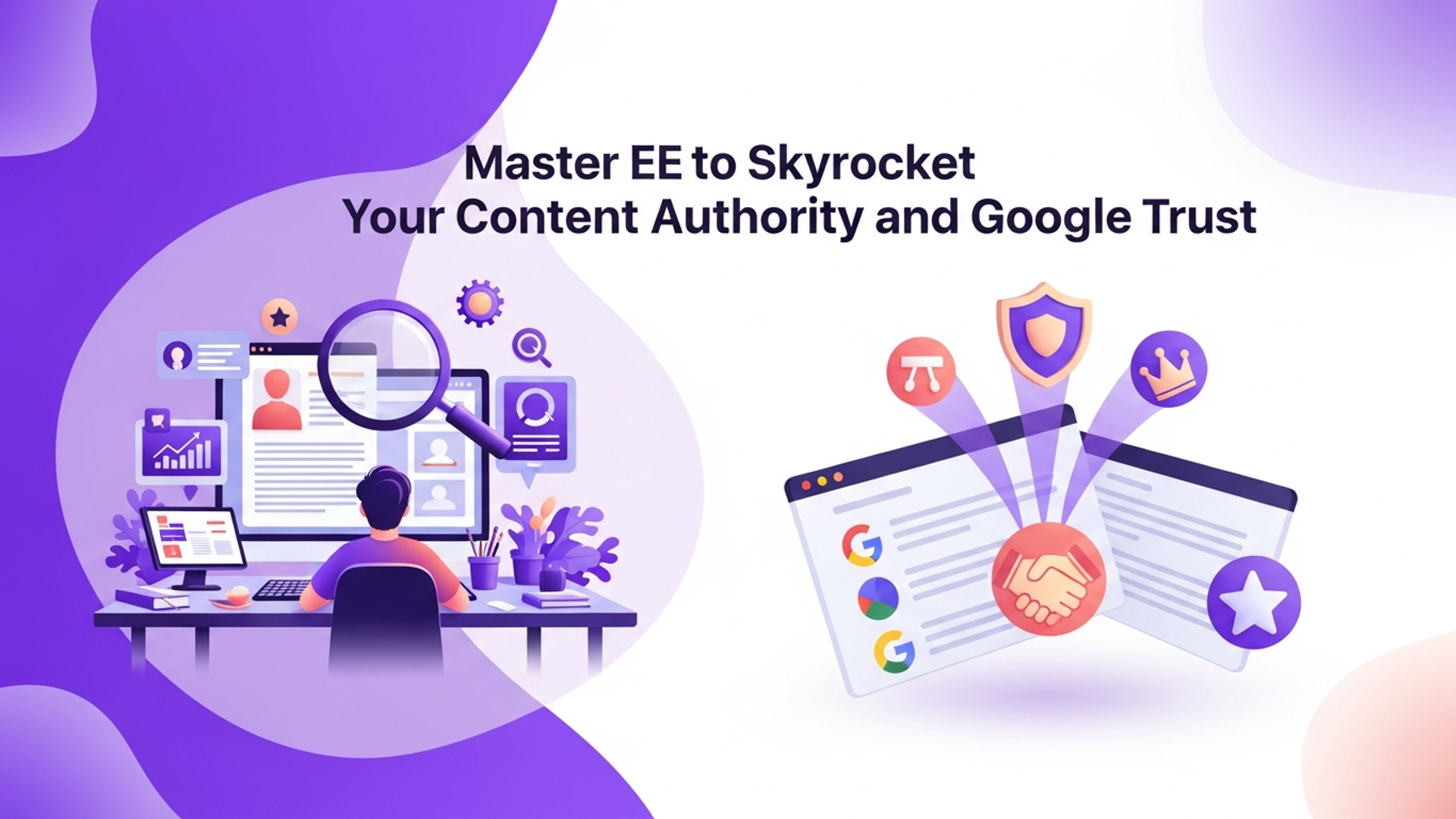
The Algorithmic Imperative of E-E-A-T and Its Technical Underpinnings
In today’s evolving search landscape, achieving long-term content authority depends heavily on effective E-E-A-T optimization. Google’s framework, which evaluates Experience, Expertise, Authoritativeness, and Trustworthiness, reflects how its algorithms interpret credibility and quality signals. Rather than functioning as vague guidelines, these principles are deeply embedded within modern ranking systems.
Especially for Your Money or Your Life topics, where accuracy directly impacts user well-being, E-E-A-T signals carry significant weight. To assess these signals, Google leverages advanced natural language processing systems such as BERT and MUM alongside its Knowledge Graph infrastructure. Consequently, content is evaluated not only for keywords but also for semantic completeness, entity relationships, and factual consistency across the broader web ecosystem.
Understanding the Technical Mechanisms Behind E-E-A-T
At its core, Google operates through entity recognition. Instead of analyzing isolated pages, the algorithm constructs entity profiles for authors, organizations, and concepts.
When an author publishes content, Google cross-references their digital presence across:
-
Professional profiles
-
Academic citations
-
News mentions
-
Structured data
-
Industry contributions
For example, an author with consistent LinkedIn credentials, citations in reputable publications, and contributions to authoritative platforms builds a stronger entity footprint. As a result, their content benefits from reinforced expertise signals.
Research from search intelligence platforms frequently shows correlations above 70 percent between explicit author credentials and improved rankings for sensitive queries. However, authenticity remains critical. Overstated or fabricated qualifications can activate spam detection systems, ultimately harming visibility. Therefore, verifiable expertise consistently outperforms exaggerated claims.
Structural E-E-A-T Optimization Through Architecture
Beyond individual credentials, website architecture significantly influences perceived expertise. A well-structured content ecosystem signals topical depth.
Implementing Topic Clusters
Topic clusters create clear semantic relationships between content pieces. Typically, this structure includes:
-
A comprehensive pillar page
-
Multiple in-depth cluster articles
-
Strategic internal linking
For instance, a pillar page on advanced SEO strategies may connect to supporting articles on technical audits, semantic SEO, and E-E-A-T frameworks. Because each cluster page reinforces the broader topic, Google interprets this structure as domain authority rather than fragmented content.
Leveraging Schema Markup for Entity Clarity
Structured data strengthens entity understanding. By implementing schema types such as:
-
Organization
-
Person
-
Article
webmasters provide machine-readable verification of authorship and credentials.
For example, a Person schema may include:
“alumniOf”: {
“@type”: “EducationalOrganization”,
“name”: “University Name”
}
Similarly, Organization schema should link to authoritative profiles using the sameAs property.
Although schema enhances clarity, excessive or misleading markup can trigger distrust. Therefore, only include accurate, verifiable information. Testing via Google’s Rich Results tool ensures correct implementation.
Beyond Backlinks: Expanding Verifiable Authority
While backlinks remain foundational, modern E-E-A-T optimization extends further. Increasingly, Google evaluates unlinked brand mentions, co-citations, and contextual authority signals.
For example, if an industry publication references your brand without linking, that mention still contributes to entity recognition. Consequently, authority signals now include:
-
High-quality brand mentions
-
Author citations
-
Speaking engagements
-
Academic references
-
Media features
Instead of chasing superficial link volume, focus on genuine digital PR and thought leadership. Over time, diversified authoritative mentions often correspond with measurable improvements in organic visibility, especially for competitive queries.
Technical SEO as a Trust Multiplier
Trustworthiness is reinforced by technical infrastructure. Even high-quality content struggles if technical signals undermine reliability.
HTTPS and Security
Secure browsing is foundational. Browsers explicitly flag insecure sites, which negatively impacts engagement metrics and trust perception.
Core Web Vitals and Performance
Google evaluates user experience using measurable benchmarks:
-
Largest Contentful Paint under 2.5 seconds
-
First Input Delay under 100 milliseconds
-
Cumulative Layout Shift under 0.1
Poor performance suggests instability or neglect. Tools such as PageSpeed Insights and Lighthouse identify blocking resources and optimization opportunities.
For instance, improperly lazy loading critical above-the-fold images can degrade performance rather than improve it. Strategic optimization therefore requires balance.
Transparency Signals
Trust also depends on visible accountability. Clear privacy policies, accessible contact information, and transparent authorship contribute to credibility.
Additionally, authentic user-generated reviews reinforce aggregate trust signals, often enhancing click-through rates via rich snippets.
Semantic Completeness and Query Intent Alignment
Experience and expertise are closely tied to how thoroughly content addresses user intent.
Modern NLP models evaluate whether content covers:
-
Related subtopics
-
Implied user questions
-
Relevant entities
-
Contextual frameworks
For example, an article about electric vehicle batteries should explore material science, charging infrastructure, environmental implications, and future innovations. Simply defining the term is insufficient.
Using semantic analysis tools can reveal content gaps. However, integration must remain natural. Overloading pages with isolated keywords weakens readability and trust.
Moreover, content should align with intent categories:
-
Informational
-
Transactional
-
Commercial investigation
-
Navigational
Matching depth and structure to intent improves engagement metrics such as dwell time and bounce rate, which indirectly reinforce quality signals.
Continuous Auditing and Iterative Improvement
Because search ecosystems evolve, E-E-A-T requires ongoing monitoring.
Conduct Regular Content Audits
Evaluate:
-
Accuracy and outdated statistics
-
Source credibility
-
Author credentials
-
SERP position shifts
Declining impressions often signal the need for updates.
Monitor Behavioral Metrics
Track:
-
Session duration
-
Bounce rate
-
Click-through rate
-
Engagement depth
If dwell time drops significantly, user intent may no longer be satisfied fully.
Maintain Author Consistency
Ensure author names, affiliations, and profiles remain consistent across all platforms. Inconsistent identity signals can fragment entity recognition.
Incremental updates often outperform large-scale rewrites, particularly for high-performing pages.
Author-Centric E-E-A-T Development
Individual credibility amplifies site-wide authority. Therefore, cultivating strong author identities enhances overall domain trust.
Optimize Author Bios
Include:
-
Professional credentials
-
Years of experience
-
Recognizable achievements
-
Relevant publications
Specificity strengthens recognition.
Expand External Presence
Encourage authors to:
-
Guest post on reputable platforms
-
Appear on podcasts
-
Participate in conferences
-
Publish research
Each verified contribution reinforces entity authority within Google’s ecosystem.
Consistency across platforms ensures entity consolidation rather than fragmentation.
Conclusion
E-E-A-T optimization is not a static checklist. Instead, it represents a systemic commitment to verifiable authority, technical excellence, and semantic depth.
By combining structured data, author credibility, performance optimization, and comprehensive content coverage, organizations create a durable trust ecosystem. Moreover, continuous auditing ensures alignment with algorithmic evolution.
Ultimately, sustained authority emerges from authenticity and measurable value. Rather than chasing superficial signals, focus on building a transparent, technically sound, and semantically complete digital presence.
That disciplined approach transforms E-E-A-T from theory into a long-term competitive advantage.
More Articles
Boost Your Website Authority How Expertise Experience Trustworthiness Attracts Google
How to Effectively Optimize Your Website for Better Search Engine Rankings
Optimize Your Search Appearance Easily with a Google SERP Preview Tool
Boost Your Website Traffic Organically Discover Free Strategies Now
How an Ecommerce FAQ Schema Generator Can Boost Your Search Ranking

FAQs
What exactly is E-E-A-T and why should I care about it for my content?
E-E-A-T stands for Experience, Expertise, Authoritativeness. Trustworthiness. It’s Google’s way of evaluating the quality and reliability of your content and the creator behind it. You should care because content that demonstrates strong E-E-A-T is more likely to rank higher, earn user trust. establish you as a credible source in your niche.
How does improving my E-E-A-T actually help my content get seen more on Google?
Google’s algorithms, especially for crucial topics, prioritize content from creators and sites that exhibit high E-E-A-T. By clearly showing your experience, expertise, authority. trustworthiness, you signal to Google that your content is valuable, accurate. safe for users, which directly contributes to better search visibility and higher rankings.
Can you give me a practical example of ‘Experience’ in E-E-A-T?
Absolutely! For ‘Experience,’ think about demonstrating first-hand knowledge. If you’re writing a review of a software tool, showing screenshots from your actual use, discussing specific features you liked or disliked based on your interaction, or sharing a personal story about how it solved a problem for you are all great ways to showcase experience. It’s about showing you’ve been there, done that.
What’s the main difference between ‘Expertise’ and ‘Authoritativeness’ in the E-E-A-T framework?
Good question, they often get confused! ‘Expertise’ is about the creator’s knowledge and skill in a topic – like a doctor knowing medicine. ‘Authoritativeness’ is about the creator’s reputation and recognition as a go-to source in that field – like that doctor being frequently quoted in medical journals or respected by peers. One is about what you know, the other is about how others perceive your standing.
So, how can I really build trustworthiness for my website and content?
Trustworthiness is super vital! Start by being transparent: clearly state who you are, provide accurate contact info. cite your sources. Ensure your site is secure (HTTPS). Be honest and objective in your content, admit when you don’t know something. correct errors promptly. User reviews and testimonials can also significantly boost trust.
Is E-E-A-T only essential for really serious topics, like health or finance?
While E-E-A-T is crucial for ‘Your Money or Your Life’ (YMYL) topics where bad advice can cause harm, it actually applies to all content. Even for lighter subjects like hobbies or entertainment, Google still wants to present users with reliable, high-quality data from knowledgeable sources. Strong E-E-A-T improves content for everyone, everywhere.
What’s the quickest thing I can do right now to start improving my E-E-A-T?
The quickest win is often to enhance your author bio or ‘About Us’ page. Clearly state your qualifications, experience. why you’re a credible source for the topics you cover. Add links to your professional profiles (LinkedIn, academic papers, industry awards) if applicable. Let people (and Google) know who’s behind the content and why they should trust you.