In the relentless pursuit of organic visibility, traditional keyword-centric approaches now yield diminishing returns; true competitive advantage stems from robust E-E-A-T optimization. EEAT for SEO emphasizes expertise, experience, authority, and trustworthiness in content creation. Implementing EEAT for SEO signals to Google that your website is credible and deserving of higher rankings.
This paradigm shift demands a granular understanding of how these signals are not just perceived by users. programmatically assessed and weighted within the ranking calculus, directly impacting domain authority and SERP acquisition, moving far beyond mere content freshness or backlink volume to embrace a holistic digital reputation.
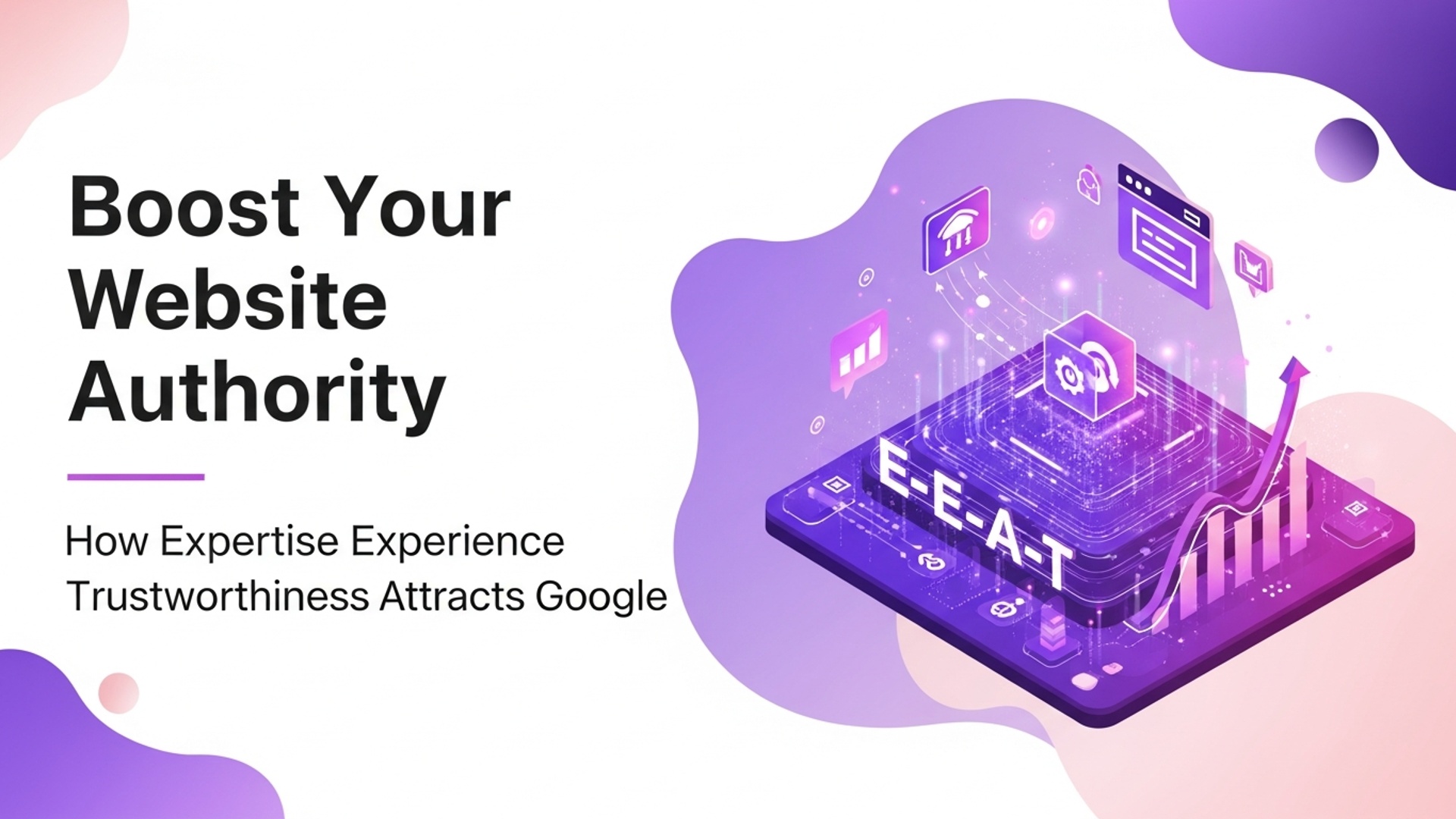
The Algorithmic Imperative: Understanding E-E-A-T and Its Core Mechanisms
In today’s search landscape, superficial optimization tactics no longer suffice. Keyword stuffing and thin content have been replaced by a far more sophisticated evaluation system rooted in credibility, depth, and trust. At the center of this system is E-E-A-T: Expertise, Experience, Authoritativeness, and Trustworthiness.
Originally introduced in Google’s Quality Rater Guidelines, E-E-A-T has evolved into a foundational framework influencing algorithmic ranking systems. Therefore, effective E-E-A-T optimization is no longer optional. It is a strategic requirement for any entity aiming to dominate organic search results.
At its core, E-E-A-T functions as Google’s proxy for real-world credibility. This is particularly critical in “Your Money or Your Life” categories such as finance, healthcare, and legal services, where misinformation can cause real harm. Consequently, Google applies stricter scrutiny in these areas.
Technically, Google evaluates E-E-A-T through advanced natural language processing, entity recognition, and knowledge graph associations. Rather than scanning for keywords alone, algorithms assess:
-
Semantic relevance
-
Factual accuracy
-
Author credibility
-
Entity relationships across the web
When authors or organizations have strong knowledge graph entities, verified credentials, and consistent topical coverage, their perceived authority increases significantly.
Deconstructing Expertise: Demonstrating Depth and Precision
Expertise refers to demonstrable knowledge and subject mastery. It goes beyond summarizing existing information and instead requires analytical depth and original insight.
To signal expertise effectively, content must include:
-
Original research or data analysis
-
Detailed explanations of complex topics
-
Specific examples and measurable outcomes
-
Verifiable credentials tied to authors
For example, a financial article discussing investment strategy should include statistical modeling or historical market analysis rather than generic advice. Precise claims supported by cited data signal deeper authority.
Structured data strengthens this signal. Implementing structured author markup helps search engines connect content creators to their professional background. For instance:
{
“@context”: “https://schema.org”,
“@type”: “Person”,
“name”: “Dr. Jane Doe”,
“jobTitle”: “Senior Research Scientist”,
“alumniOf”: “Harvard University”,
“worksFor”: {
“@type”: “Organization”,
“name”: “Acme Research Institute”
}
}
</script>
This structured information allows Google to disambiguate entities and reinforce expertise at a machine-readable level.
However, a key trade-off exists between content volume and depth. Publishing fewer, highly specialized articles often yields stronger long-term E-E-A-T benefits than producing large volumes of shallow content.
Quantifying Experience: First-Hand Practical Insight
Experience emphasizes lived, hands-on involvement. It demonstrates that the content creator has applied the knowledge being discussed.
Algorithmically, experience is signaled through:
-
Step-by-step implementation guides
-
Troubleshooting examples
-
Case studies with measurable results
-
Before-and-after performance data
For example, an article on improving Core Web Vitals should include measurable performance improvements and implementation methods rather than theoretical definitions alone.
Content that demonstrates experience often includes:
-
Screenshots or walkthroughs
-
Real-world testing methodologies
-
Common failure scenarios and solutions
-
Benchmark comparisons
Although producing such content requires additional effort, it typically leads to stronger engagement metrics. Longer session durations and lower bounce rates reinforce algorithmic confidence in content usefulness.
Building Authoritativeness: External Validation and Recognition
Authoritativeness reflects reputation within an industry. While expertise focuses on knowledge, authoritativeness centers on recognition.
Google evaluates authority primarily through:
-
High-quality backlinks
-
Editorial mentions
-
Brand co-citations
-
Knowledge graph associations
Importantly, link quality outweighs link quantity. A single citation from a respected industry publication can carry more weight than dozens of low-value links.
Additionally, implied links or brand mentions contribute to entity strength. When your brand consistently appears alongside recognized authorities in a niche, Google’s entity modeling systems associate your domain with that topical authority.
Effective strategies for building authoritativeness include:
-
Publishing proprietary research
-
Contributing thought leadership content
-
Securing editorial backlinks
-
Participating in industry discussions
Because authority compounds over time, it requires sustained strategic effort rather than short-term tactics.
Cultivating Trustworthiness: The Foundation of E-E-A-T
Trustworthiness underpins all other E-E-A-T elements. Without trust, expertise and authority lose impact.
Technically, trustworthiness is reinforced through:
-
HTTPS encryption
-
Transparent contact information
-
Clear privacy and return policies
-
Accurate citations
-
Secure payment systems
Furthermore, consistent content maintenance plays a crucial role. Outdated or inaccurate information diminishes credibility.
Additional trust signals include:
-
Positive third-party reviews
-
Strong domain history
-
Absence of intrusive advertising
-
Clear ownership disclosure
Importantly, security extends beyond basic encryption. Organizations handling sensitive data should implement strong content security policies and secure infrastructure practices.
Trust is cumulative and fragile. Therefore, maintaining high standards in transparency, accuracy, and security is essential for long-term search performance.
Advanced E-E-A-T Optimization Strategies
Beyond foundational principles, advanced E-E-A-T optimization involves technical integration across the entire digital ecosystem.
Structured Data Expansion
Advanced schema implementation should connect:
-
Authors to their specialties
-
Organizations to awards and affiliations
-
Articles to main entities
This machine-readable clarity enhances entity recognition and knowledge graph reinforcement.
Topical Authority Clusters
Rather than publishing isolated articles, build interconnected content clusters. Each supporting article reinforces central expertise and improves semantic completeness.
Reputation Monitoring
Proactively monitor brand mentions and sentiment across review platforms and social channels. Addressing feedback promptly enhances perceived reliability.
Security and Infrastructure
Robust hosting environments, content delivery optimization, and performance improvements contribute indirectly to trustworthiness and overall user experience.
Measuring and Iterating E-E-A-T Performance
Although E-E-A-T is not directly measurable as a metric, its impact appears in key performance indicators.
Google Search Console Metrics
-
Increased impressions
-
Higher average ranking positions
-
Improved click-through rates
Engagement Metrics
-
Longer session duration
-
Lower bounce rates
-
Increased pages per session
Additionally, backlink quality growth and brand mention frequency provide external validation indicators.
E-E-A-T optimization should follow a continuous improvement cycle. Regular content audits, structured data updates, and reputation assessments ensure long-term stability.
Conclusion
E-E-A-T optimization is not a superficial content checklist. It is a structural, technical, and strategic commitment to credibility.
Modern SEO success requires more than keyword targeting. It demands deep expertise, demonstrable experience, earned authority, and uncompromising trustworthiness.
Organizations that embed these principles into content development, infrastructure management, and reputation strategy create sustainable organic growth. As Google’s systems continue to evolve, the ability to validate credibility algorithmically will increasingly determine visibility and leadership in competitive markets.
E-E-A-T is not merely a ranking factor. It is the architectural blueprint for long-term search dominance.
More Articles
Unlock Top Google Rankings How to Optimize for SERP Features Effectively
How to Optimize Content for SERP Features and Boost Search Rankings
Create Compelling D2C Product Content That Truly Drives Sales and Engagement
Unlock Higher Sales Essential Ecommerce Conversion Optimization Tips For Success
AI Workflow Automation Strategies for Business Efficiency and Growth

FAQs
Why is ‘website authority’ such a big deal for Google, anyway?
Website authority essentially tells Google how credible and reliable your site is. When your site has high authority, Google sees it as a valuable resource, making it more likely to rank your content higher in search results, especially for essential topics. It’s all about proving you’re a trustworthy source.
So, how do I actually show Google my site has ‘Expertise’?
Expertise is about demonstrating deep knowledge in your niche. This means creating accurate, detailed. well-researched content. It’s also about having authors with relevant qualifications, using industry-specific terms correctly. citing credible sources. Think of it as proving you really know your stuff inside out.
Is there a difference between ‘Expertise’ and ‘Experience’ for my website?
Absolutely! Expertise is about theoretical knowledge – knowing the facts and principles. Experience, on the other hand, is about hands-on, practical knowledge. It’s showing you’ve actually done what you’re writing about. For example, if you review products, sharing your personal testing process shows experience. It adds a layer of practical insight that pure expertise might miss.
How does ‘Trustworthiness’ fit into all of this. what does Google look for?
Trustworthiness is the foundation. It’s about being honest, transparent. secure. Google looks for things like secure connections (HTTPS), clear contact data, accurate product descriptions, fair refund policies. a good reputation (e. g. , positive reviews, lack of spammy links). It’s essentially about proving your site is legitimate and reliable.
How do Expertise, Experience. Trustworthiness actually help my site rank better on Google?
Together, these three elements build your site’s overall authority and credibility. Google’s algorithms are designed to prioritize content from sources it deems highly authoritative and trustworthy. By excelling in these areas, you signal to Google that your content is high-quality and reliable, which directly influences your search rankings and visibility.
Can a smaller website really compete with the big guys by focusing on Expertise, Experience. Trustworthiness?
Yes, absolutely! These principles are a great equalizer. While larger sites might have more backlinks or brand recognition, a smaller site can carve out a niche by becoming the absolute best, most experienced. most trustworthy source for specific topics. Focusing on deep, quality content in a specific area can help you outrank bigger, more general sites that might lack true depth or practical experience.
Are there any quick fixes for improving my site’s Expertise, Experience. Trustworthiness?
Not really ‘quick fixes’ in the traditional sense, as these qualities are built over time through consistent effort. But, you can start by updating old content to reflect current knowledge, adding author bios with relevant credentials, ensuring your site is secure (HTTPS). making contact insights easily accessible. Building genuine authority is a marathon, not a sprint.