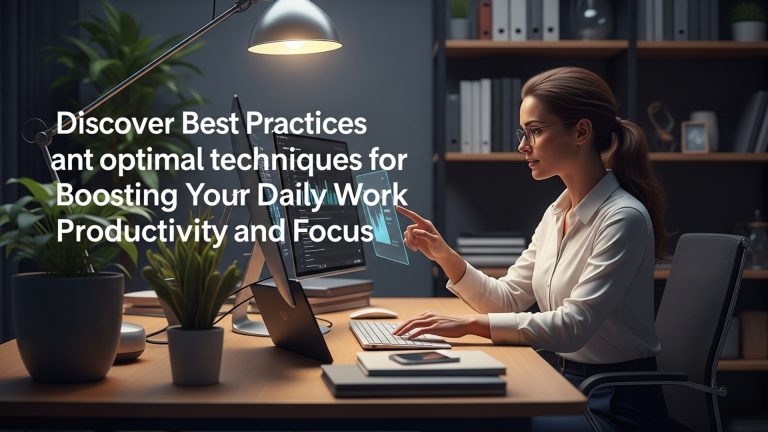
In the dynamic D2C landscape, where every click and conversion counts, mastering daily productivity and focus is essential for sustainable growth. Implementing daily work productivity tips helps individuals stay focused and efficient. Teams that apply proven daily work productivity tips consistently achieve higher performance and reduced burnout.
Because modern D2C entrepreneurs juggle inventory systems, personalized campaigns, and rapid multi-channel expansion, efficient time management quickly becomes a competitive advantage.
Without structured focus, operational chaos can easily replace strategic execution. Therefore, integrating proven productivity practices transforms scattered routines into scalable systems that enhance both performance and customer lifetime value.
Strategic Planning: Best Practices for D2C Goal Setting and Prioritization
Effective planning forms the foundation of strong productivity, particularly within fast-moving D2C environments. When priorities are unclear, even highly motivated founders become reactive instead of strategic. For that reason, structured planning ensures daily actions align with long-term growth.
Define SMART Goals
Rather than vague targets like “grow sales,” define measurable outcomes such as “increase Q3 conversion rate by 15 percent through A/B testing product pages by September 30.” Clear goals eliminate ambiguity and sharpen execution.
Use Prioritization Frameworks
Since not all tasks carry equal impact, structured prioritization is crucial. Tools like the Eisenhower Matrix help categorize urgency and importance, while the ABCDE method forces deliberate ranking. For example, resolving urgent customer issues may rank higher than minor design updates.
Batch Similar Tasks
Context switching drains cognitive energy. By grouping similar responsibilities such as responding to support tickets or reviewing ad metrics, you preserve mental momentum and improve efficiency.
Apply the Two-Minute Rule
If a task takes less than two minutes, complete it immediately. This prevents small administrative tasks from compounding into mental clutter.
Optimizing Your D2C Digital Workspace and Tech Stack
Your digital workspace functions as your operational headquarters. Consequently, disorganization directly impacts decision-making speed and clarity.
Declutter Digitally
Regularly clean desktops, inboxes, and cloud folders. A clear system reduces cognitive friction and speeds retrieval of essential information.
Manage Email Strategically
Instead of constantly reacting to messages, schedule defined inbox review periods. Additionally, apply filtering systems and automation to reduce unnecessary interruptions.
Curate a High-Leverage Tech Stack
The right tools eliminate repetitive friction and centralize workflows.
| Tool Category | D2C Use Case | Productivity Benefit |
|---|---|---|
| Project Management | Product launches, campaign timelines | Accountability and clarity |
| Communication Tools | Team collaboration | Faster problem-solving |
| Automation Platforms | Email sequences, inventory alerts | Time savings and scalability |
| CRM Systems | Customer management | Faster resolution and personalization |
Moreover, low-code and no-code platforms allow founders to build landing pages or workflows quickly without developer bottlenecks.
Harnessing Deep Work for D2C Growth
True innovation rarely happens between Slack notifications. Instead, it requires focused concentration.
Schedule Deep Work Blocks
Dedicate uninterrupted blocks of 90 to 120 minutes to high-impact tasks. During these sessions, disable notifications and eliminate distractions. For D2C leaders, this may include campaign audits or product roadmap development.
Use the Pomodoro Technique
Short, timed focus intervals followed by breaks can strengthen mental stamina. This method works well for content writing, ad optimization, or financial review.
Reduce Environmental Distractions
Identify your biggest attention leaks and address them directly. Website blockers, silent notifications, or designated focus spaces can significantly enhance cognitive output.
For example, one D2C founder implemented two daily deep work sessions and saw a measurable increase in strategic output within months. By shifting from reactive communication to structured focus, execution quality improved dramatically.
The Role of Recovery and Wellness
Although D2C culture often glorifies nonstop hustle, sustainable performance depends on recovery.
Take Strategic Micro-Breaks
Short breaks every hour restore focus and prevent burnout. Even brief movement or hydration resets cognitive energy.
Disconnect Intentionally
Set boundaries around work hours. Because constant connectivity erodes mental clarity, deliberate downtime strengthens long-term productivity.
Prioritize Sleep and Health
Quality sleep directly influences decision-making and emotional regulation. Additionally, proper nutrition and regular movement sustain energy throughout demanding days.
Ultimately, energy management determines execution quality.
Continuous Improvement of Your Productivity System
Just as D2C brands iterate on marketing and product strategy, personal productivity systems require ongoing refinement.
Conduct Regular Reviews
Weekly reflection reveals inefficiencies and highlights improvement opportunities.
Track Your Time
Time tracking uncovers hidden inefficiencies. Often, founders underestimate how much time low-impact tasks consume.
2023-10-26 | CS Emails | 09:00 | 09:45 | 45 min | Support
2023-10-26 | Campaign Audit | 10:00 | 11:30 | 90 min | Strategy
2023-10-26 | Team Meeting | 11:30 | 11:45 | 15 min | Meeting
Experiment and Adapt
Test new tools, workflows, or focus strategies. Over time, small adjustments compound into meaningful efficiency gains.
Conclusion
Sustained productivity is not the result of a single breakthrough tactic. Instead, it emerges from consistent, deliberate habits. In my experience, attempting to overhaul everything at once often creates resistance. However, implementing one or two focused changes can dramatically shift daily momentum.
Because attention is finite, protecting it must become intentional. Whether that means dedicating uninterrupted focus blocks or reducing non-essential notifications, small behavioral adjustments yield measurable results.
Ultimately, productivity is not about doing more. Rather, it is about doing what matters most with clarity and energy. By designing your routines consciously, you reclaim control of your time and mental bandwidth. Over time, those focused efforts compound into stronger execution, better decisions, and sustained D2C growth.
Simplify Tasks and Boost Productivity Using Smart AI Automation
More Articles
Reclaim Your Day Simple Strategies to Automate Repetitive Daily Tasks
Why eCommerce Automation Tools Are Essential for Growth
Master AI SEO Content Generators to Drive Organic Traffic Growth
Create Compelling Product Descriptions Using AI for E-commerce

FAQs
My phone keeps buzzing. I get sidetracked easily. How can I really cut down on distractions during work?
Focus on creating a distraction-free zone. Turn off non-essential notifications on your phone and computer. Consider using website blockers for social media or news sites during dedicated work periods. Even putting your phone in another room can make a huge difference!
There’s so much on my plate every day. How do I figure out what to tackle first without feeling totally overwhelmed?
Try prioritizing your tasks. A popular method is the Eisenhower Matrix, where you categorize tasks as Urgent/essential, essential/Not Urgent, Urgent/Not vital. Not Urgent/Not crucial. Focus on the ‘essential’ tasks first, especially those that are also ‘Urgent.’ Breaking larger tasks into smaller, manageable steps also helps.
What’s a good technique to stay focused on a single task for a decent amount of time?
The Pomodoro Technique is fantastic for this! Work in focused 25-minute sprints, then take a short 5-minute break. After four ‘Pomodoros,’ take a longer 15-30 minute break. This structured approach helps train your brain to concentrate and prevents burnout.
I feel drained by the afternoon. Any tips for keeping my energy levels up throughout the workday?
Regular short breaks are crucial. Get up, stretch, walk around, or grab a glass of water. Ensure you’re staying hydrated and try to incorporate some light physical activity if possible. Also, make sure you’re getting enough quality sleep each night – it’s foundational for sustained energy.
Is planning really that essential. if so, what’s the simplest way to plan my day?
Absolutely, planning is key! Before you even start working, take 10-15 minutes to outline your top 1-3 priorities for the day. This simple act provides clarity and direction, helping you avoid aimlessly bouncing between tasks. Don’t over-plan; just identify the critical items.
I try to multitask to get more done. sometimes I feel less productive. Am I doing it wrong?
The truth is, multitasking often reduces overall productivity and increases errors. Our brains aren’t great at truly doing two complex things at once; we’re usually just rapidly switching between them. Instead, try single-tasking: dedicate your full attention to one task until it’s complete or you reach a natural stopping point.
Does my workspace really affect how productive I am?
Yes, absolutely! A cluttered or unorganized workspace can be a huge mental distraction. Take a few minutes to declutter your desk, organize your files (physical and digital). ensure you have good lighting. A clean, organized environment signals to your brain that it’s time to focus.