In the fast-moving world of D2C brands, where personalized customer experiences are key to success, AI copywriting is revolutionizing how businesses engage with their audiences. Leveraging machine learning and natural language processing, AI tools now craft compelling product descriptions, hyper-targeted ads. data-driven email campaigns with unmatched precision. For example, brands like Glossier and Warby Parker are using AI to examine customer behavior and generate tailored content that drives conversions. Current trends highlight the power of predictive algorithms to refine tone, style. messaging for optimal resonance, ensuring every word strikes a chord with the audience.
As competition intensifies, D2C brands adopting AI copywriting solutions can scale personalized communication while maintaining brand authenticity. The rapid evolution of AI offers not just efficiency but also creative breakthroughs, enabling brands to stay ahead in an increasingly crowded digital marketplace.
What Is AI Copywriting and Why It Matters for D2C Brands
AI copywriting refers to the use of artificial intelligence tools and algorithms to create content for marketing, advertising. branding purposes. These tools leverage technologies like natural language processing (NLP), machine learning. large language models to produce textual content that mimics human writing.
For direct-to-consumer (D2C) brands, AI copywriting has become a game-changer, especially in an era where precise messaging and quick turnarounds are critical to staying competitive. AI copywriting tools can generate impactful marketing messages, optimize product descriptions. even tailor content for diverse audience segments, all while reducing time and resource constraints involved in traditional copywriting workflows.
Key benefits of AI copywriting for D2C brands include:
- Time Efficiency: AI tools can produce high-quality content in minutes, enabling brands to scale their marketing efforts.
- Cost Savings: Reducing dependency on full-time writers or outsourcing agencies can lower operational costs while maintaining quality.
- Personalization: AI tools can generate personalized messages based on data-driven insights into customer behavior and preferences.
- Consistency: AI ensures consistent tone and messaging across multiple channels, helping brands stay on point with their identity.
How AI Copywriting Works: Key Technologies Behind It
AI copywriting relies on a combination of advanced technologies to generate human-like content. Here’s a breakdown of the core components:
-
- Natural Language Processing (NLP)
NLP plays a central role in enabling AI tools to comprehend and process human language. It helps machines examine text, discern the context. generate meaningful output.
-
- Machine Learning
AI tools are trained on massive datasets containing text from various sources. Through machine learning, these tools learn grammar, syntax. context to improve the quality of their generated content over time.
-
- Large Language Models
Models like OpenAI’s GPT (Generative Pre-trained Transformer) are the backbone of many AI copywriting tools. These models are trained on billions of words, making them capable of generating sophisticated and contextually relevant copy.
For D2C brands, these technologies enable the creation of tailored content that aligns with brand voice and resonates with target audiences.
Strategies for Implementing AI Copywriting for D2C Brands
To maximize the benefits of AI copywriting, D2C brands need to adopt effective strategies tailored to their unique objectives. Here are some proven approaches:
-
- Define Your Brand Voice
Before leveraging AI tools, establish a clear brand voice and style guide. AI tools can be trained or instructed to emulate your specific tone, whether it’s playful, professional, or authoritative.
-
- Personalize Customer Engagement
Use customer data to create highly personalized messages. For instance, AI can generate email subject lines tailored to individual purchasing history or browsing behavior.
-
- Leverage A/B Testing
AI can produce multiple variations of copy for testing. D2C brands can deploy A/B tests to determine which messaging resonates best with their audience.
-
- Optimize Ad Copy
Use AI to create short, impactful headlines and descriptions for social media ads and search ads. AI tools can also help you examine which keywords are driving engagement.
-
- Content Repurposing
AI tools can adapt existing content for different platforms, such as transforming a blog post into an email newsletter or a social media caption.
Top AI Copywriting Tools for D2C Brands
Several AI-powered tools have emerged as leaders in the field of copywriting. Here’s a comparison of popular options:
| Tool | Best For | Key Features |
|---|---|---|
| Jasper AI | Comprehensive content creation | Supports multiple languages, templates for different formats. tone customization. |
| Copy. ai | Short-form content | Generates ad copy, social media captions. email subject lines with ease. |
| Writesonic | SEO-driven content | Creates optimized blog posts, landing pages. meta descriptions for search engines. |
| Rytr | Budget-friendly solutions | Affordable pricing, simple interface. suitable for small-scale content needs. |
Real-World Applications of AI Copywriting for D2C Brands
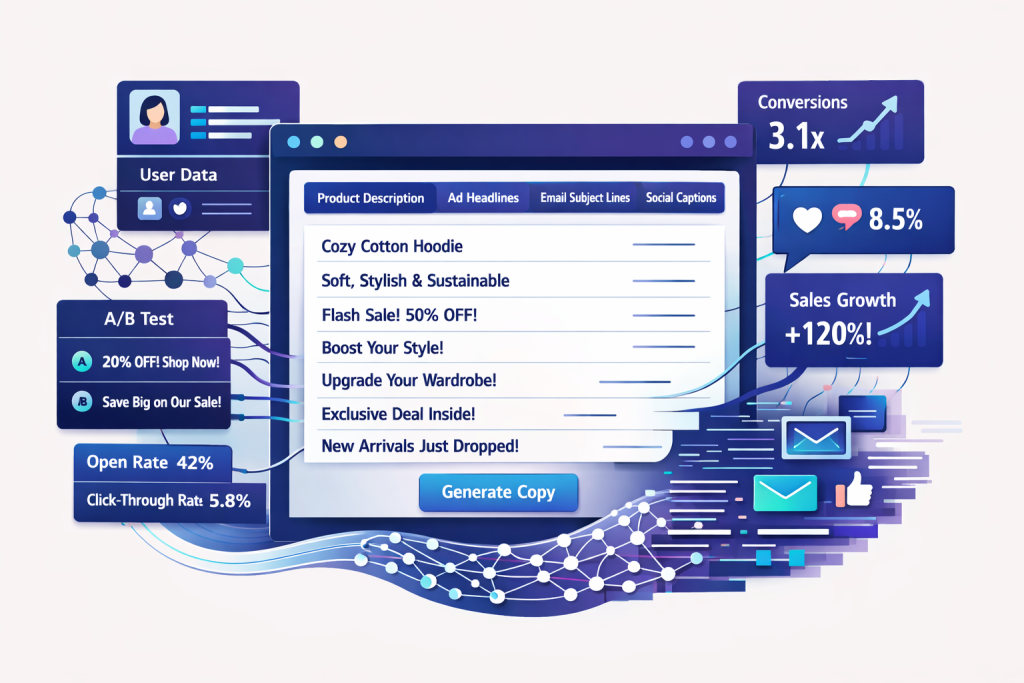
AI copywriting is already transforming the way D2C brands communicate with their audiences. Here are some practical use cases:
-
- Email Campaigns
AI-generated subject lines and body copy can improve open rates and click-through rates by tailoring content to customer preferences.
-
- Product Descriptions
Tools like Jasper AI can create engaging, SEO-optimized product descriptions in bulk, saving time for e-commerce brands.
-
- Social Media Posts
AI tools can craft compelling captions and hashtags for Instagram, Twitter. Facebook posts that resonate with diverse audiences.
-
- Chatbots and Customer Support
AI-powered chatbots equipped with pre-written conversational copy can enhance customer interactions while reducing support costs.
-
- Landing Pages
AI tools can optimize landing page copy to drive conversions by highlighting unique selling points and crafting persuasive calls-to-action (CTAs).
Challenges of AI Copywriting and How to Overcome Them
While AI copywriting offers immense potential, it does come with a few challenges:
-
- Lack of Creativity
AI tools can struggle to develop highly creative or emotional content. Brands can overcome this by using AI to generate drafts and then refining the content manually.
-
- Dependence on Data
AI tools rely heavily on data. If data inputs are low quality or biased, the results may be suboptimal. Ensuring quality data is key.
-
- Brand Authenticity
AI-generated content may lack the human touch that builds trust and relatability. Balancing AI-generated content with human oversight is essential.
-
- Plagiarism Concerns
Some AI tools might inadvertently generate content similar to existing material. Regularly checking content for originality is recommended.
By addressing these challenges, D2C brands can effectively integrate AI copywriting into their marketing strategies while maintaining creative control and authenticity.
Actionable Takeaways for D2C Brands
To make the most of AI copywriting for D2C brands, consider the following tips:
- Start small. Experiment with AI tools for specific tasks like generating email subject lines or social media captions before scaling.
- Combine AI with human creativity to ensure content aligns with your brand’s values and resonates with your audience.
- Monitor performance metrics like engagement rates and conversion rates to evaluate the effectiveness of AI-generated content.
- Continuously update your AI tools with fresh data and feedback to improve their performance over time.
Conclusion
Mastering AI copywriting strategies for D2C brands is no longer a futuristic ambition—it’s a present necessity that can redefine how brands connect with their audiences. As we’ve explored, leveraging AI tools to craft engaging and personalized messaging can significantly boost customer interactions. By combining AI’s precision in data analysis with your brand’s unique voice, you can create compelling narratives that resonate deeply with your audience.
For example, brands like Glossier have mastered personalized email campaigns powered by AI, sparking increased engagement and loyalty—proof that the right strategies yield measurable results. Remember, AI is most effective when aligned with human creativity and intuition. Experiment with tone and messaging, test variations. use AI insights to refine your approach systematically. Platforms like ChatGPT and Writesonic are great starting points. don’t overlook emerging trends in AI-driven customer segmentation and predictive analytics, which can further enhance your strategy. The real magic happens when you combine technology with genuine empathy for your customers’ needs.
As you implement these strategies, keep an open mind and embrace adaptability. AI evolves rapidly. staying updated on advancements in tools like generative AI will keep your brand ahead of the curve. The opportunities are endless when innovation meets intention. Take the leap, refine your skills. let AI become your partner in creating extraordinary connections.
More Articles
- Mastering AI Copywriting Strategies for D2C Brands to Boost Engagement
- Understanding the D2C Business Model and How It Benefits Your Brand
- D2C Marketing Trends 2026: Strategies That Drive Real Growth
- Why Mobile-First SEO Is Critical for Improving Website Performance
- 5-Step Guide to Creating Conversion-Driving Blog Posts with AI

FAQs
What is AI copywriting. how can it help D2C brands?
AI copywriting uses artificial intelligence to create text that resonates with your audience. For D2C brands, it helps generate engaging content, product descriptions. ad copies quickly while maintaining quality.
Can AI copywriting really boost engagement for my brand?
Yes! AI tools examine data to craft tailored messages that connect with your audience. This personalization can significantly increase customer engagement and conversion rates.
How do I make sure AI-generated content aligns with my brand voice?
Provide the AI tool with clear guidelines, brand tone preferences. examples of your previous content. Most AI systems allow customization so you can maintain consistency in your messaging.
Does AI copywriting work for every type of D2C brand?
AI copywriting can be versatile. success depends on how well the tool is trained to grasp your specific industry, audience. goals. It’s effective across industries but works best when tailored to your brand’s needs.
What kinds of content can AI help create for D2C brands?
AI can write product descriptions, email marketing campaigns, social media posts, blog articles, ad copy. more. It’s great for anything that needs to grab attention and drive engagement.
Will AI replace human copywriters in D2C marketing?
Not entirely. AI is a powerful tool for efficiency and idea generation. human creativity and strategy are still vital for crafting brand-specific, emotionally resonant content.
How do I start using AI copywriting for my D2C brand?
Start by researching AI tools designed for copywriting, such as Jasper or Writesonic. Experiment with free trials, set clear goals for your content. refine the AI output to match your brand’s style.
Are there any risks to using AI for my brand’s copywriting?
AI might generate text that feels generic or lacks emotional depth. It’s essential to review and tweak the output to ensure it fits your brand’s identity and truly connects with your audience.