AI decision-making has transformed how organisations make strategic choices, enabling leaders to analyze massive datasets, forecast outcomes, and act with unprecedented speed and accuracy. From retail forecasting to medical diagnosis, AI tools are becoming integral to modern business strategy and operational excellence.
AI decision making refers to using artificial intelligence systems, including machine learning, predictive analytics, and natural language processing, to analyse data, recognize patterns, and recommend or automate business decisions with accuracy and scalability beyond human capacity
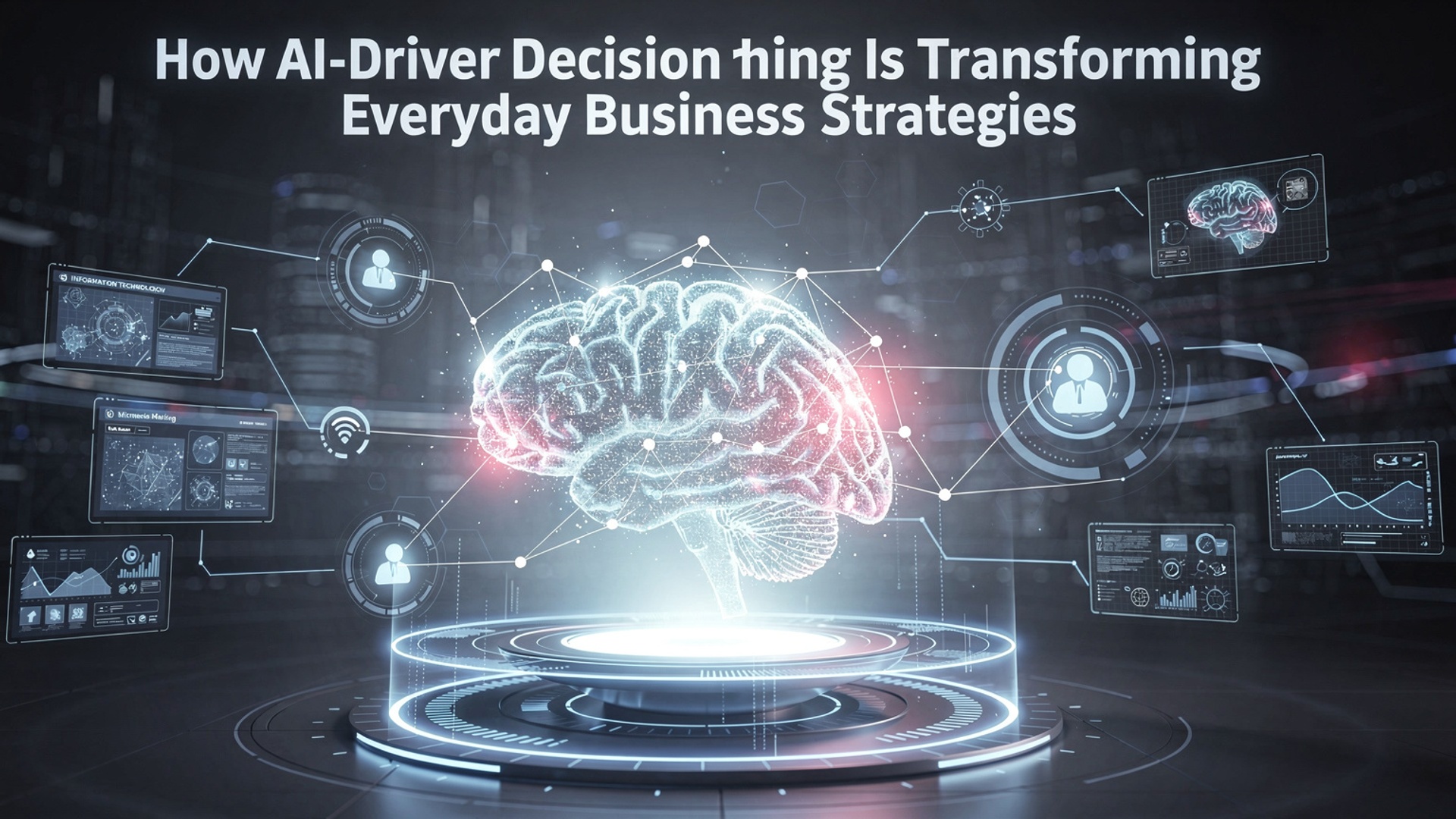
What Is AI-Driven Decision Making?
AI-driven decision making refers to the use of artificial intelligence systems to examine data, identify patterns, predict outcomes. aid in making informed business decisions. These systems leverage advanced technologies like machine learning, natural language processing (NLP). predictive analytics to process large datasets efficiently.
Key Benefits of AI Decision Making
AI-supported decisions offer several advantages:
-
Faster, Data-Backed Insights: AI processes large volumes of data quickly, helping organizations make timely decisions based on real patterns rather than intuition alone.
-
Enhanced Accuracy: Automated systems reduce human error and bias in analysis, improving consistency and reliability.
-
Scalability: From small firms to enterprises, AI tools scale to handle growing datasets without proportional increases in cost or time.
-
Predictive Power: AI can forecast trends and outcomes, boosting proactive decision making.
-
Operational Efficiency: Automation cuts down repetitive tasks, freeing teams to focus on strategic initiatives.
For more insight into how organizations are integrating AI into key business decisions, see this comprehensive industry guide by Simplilearn explaining different levels of AI-assisted decision processes.
How AI Decision Making Works
AI decision making typically follows these steps:
-
Data Collection: Gather structured and unstructured data from sources like CRM systems, sensors, user behavior logs, and social media.
-
Data Preparation: Clean and organize data for processing using analytics tools.
-
Model Training: Machine learning algorithms learn from historical trends and outcomes.
-
Decision Execution: AI outputs insights or automated actions to support or make decisions.
-
Continuous Improvement: Systems refine predictions as new data arrive.
Examples of AI Decision Making in Action
AI isn’t just theoretical—it’s driving real outcomes across sectors:
-
Finance: Machine learning models detect fraud and manage risk in real time.
-
Healthcare: Predictive models help personalize treatment plans and forecast patient outcomes.
-
Retail & Supply Chain: AI predicts demand, optimizes inventory, and improves customer segmentation.
-
Marketing: Businesses use analytics to tailor campaigns and boost engagement.
Challenges & How to Address Them
While powerful, AI decision making also presents challenges:
-
Data Privacy: Handling sensitive customer information requires strict compliance with regulations like GDPR.
-
Quality of Data: AI output is only as good as input data—poor datasets lead to flawed insights.
-
Algorithm Bias: Without careful monitoring, models can perpetuate unintended bias in decisions.
Investing in high-quality data infrastructure and transparent AI practices helps mitigate these issues and builds trust in automated decisions.
Conclusion
The integration of AI-driven decision-making into business strategies has fundamentally shifted the way organizations operate. By leveraging data insights, predictive analytics. machine learning, businesses are moving beyond intuition to make more precise, impactful decisions that drive growth and innovation.
From automating tedious tasks to identifying emerging trends with unparalleled accuracy, AI is proving to be a game-changer across industries. For instance, brands adopting AI-powered analytics are not only refining their customer segmentation but also optimizing product offerings to match consumer demands in real time—a capability once considered a futuristic ideal.
More Articles
Top AI-Powered Product Optimization Tactics for D2C Businesses
How AI-Driven SEO Is Revolutionizing Online Search Success
How to Use AI Tools to Create Engaging D2C Content Easily
How AI-Powered Product Optimization Can Boost Sales and Customer Satisfaction

FAQs
What is AI-driven decision making in business?
AI-driven decision making is the use of artificial intelligence tools and algorithms to examine data, identify patterns. make recommendations or decisions to improve business operations.
How can AI help businesses make better decisions?
AI can process huge amounts of data quickly, spot trends, predict outcomes. suggest actions, which helps businesses make more informed and accurate decisions.
What industries are using AI to transform their strategies?
AI is being used in industries like healthcare, finance, retail, manufacturing. logistics to optimize operations, personalize customer experiences. improve forecasting.
Is AI replacing human decision-making in businesses?
Not entirely. AI supports human decision-making by providing data-based insights. humans are still essential for context, creativity. ethical considerations.
Can small businesses benefit from AI-driven strategies?
Absolutely! Many AI tools are scalable and affordable, making it possible for small businesses to streamline operations, improve marketing. make smarter decisions.
What are some challenges businesses face when adopting AI for decision making?
Challenges include high implementation costs, lack of skilled personnel, data privacy concerns. the need for proper integration into existing systems.
How does AI improve customer experience in business strategies?
AI helps personalize recommendations, automate support, predict customer needs. improve response times, all of which enhance the customer experience.
Is AI-driven decision making only about data analysis?
No, it also includes predictive modeling, automation. optimizing processes to ensure businesses can adapt quickly to changes and stay competitive.