For modern direct-to-consumer operators, manual keyword research, repetitive meta tagging, and slow content production cycles have become unsustainable bottlenecks. As consumer search habits shift toward generative engines and multi-modal discovery, adopting ai seo has transformed from an experimental growth hack into a fundamental operational requirement for scaling stores.
The underlying shift is straightforward: search engines reward depth, topical authority, and technical precision at speeds that human teams alone cannot maintain. Brands integrating machine intelligence into their organic growth workflows are no longer just optimizing individual blog posts; they are orchestrating continuous site-wide optimizations across thousands of SKUs and search queries simultaneously.
This guide breaks down why leading brands rely on AI-driven search strategies, how algorithmic optimization transforms organic growth, and how you can implement a high-impact workflow for your own store.
The Evolution of Search: How AI and SEO Converged
The intersection of search engines and generative models has fundamentally altered how algorithms evaluate digital storefronts. Traditional search optimization historically focused on keyword density and static backlink acquisition, but modern search ecosystems prioritize comprehensive user intent fulfillment and semantic context.
1. Semantic Query Processing
Modern search engines interpret full contextual sentences rather than isolated phrases, matching user intent to solutions across your store catalog.
- Processes complex, natural-language conversational queries
- Surfaces deep product variants based on intent nuance rather than exact-match keywords
- Rewards comprehensive topical clusters over isolated keyword pages
2. Dynamic SERP Features
Search results pages now feature AI overviews, dynamic product grids, and contextual knowledge panels that demand highly structured, real-time data.
- Feeds structured product schema directly to generative search engines
- Optimizes for conversational query summaries and featured snippets
- Maintains accurate inventory and pricing metadata across organic surfaces
This evolution aligns closely with Search Engine Land’s search landscape reports, which emphasize that technical adaptability and semantic relevance now dictate organic market share.
3 Core Pillars of High-Performing AI for SEO Workflows
Deploying machine intelligence across your organic search channel requires a structured approach across content, technical infrastructure, and commercial data. Leading D2C brands concentrate their efforts across three operational pillars.
1. Automated Catalog Optimization
D2C catalogs frequently suffer from thin or duplicate copy on product detail pages (PDPs) and collection hubs. Automated workflows eliminate these coverage gaps instantly.
- Generates unique, conversion-optimized meta titles and descriptions across thousands of SKUs
- Enriches short product descriptions with key benefits, technical specs, and natural search terms
- Updates collection page header copy based on seasonal search demand
2. Programmatic Content Generation and Topic Clustering
Building real domain authority requires answering every relevant question in your category. AI accelerates the transition from seed concepts to comprehensive supporting content.
- Identifies high-value semantic content clusters and sub-topics
- Outlines long-form comparison guides and educational explainers
- Integrates natural internal link structures such as a foundational Shopify SEO framework across related articles
3. Real-Time Performance Auditing
Rather than running periodic manual audits, automated pipelines monitor indexation health, broken redirect chains, and decaying rankings continuously.
- Flags sudden drops in organic impressions across critical category pages
- Monitors structured data validity and schema compliance
- Suggests real-time internal linking adjustments to support underperforming URLs
Industry research from Gartner’s digital marketing research confirms that organizations leveraging continuous algorithmic content audits significantly outperform peers relying on static periodic reviews.
The Operational Workflow: How Modern Teams Automate Organic Growth
To understand how high-growth stores scale their catalog visibility without exploding headcount, consider how a modernized optimization pipeline functions from data intake to publication.
A standardized automated workflow follows these sequential stages:
- Continuous catalog monitoring detects newly published SKUs or legacy pages with thin content.
- The optimization engine cross-references the product attributes with trending search queries and buyer intent signals.
- Structured metadata, descriptive alt attributes, and intent-rich product copy are generated using brand-specific tone rules.
- Quality governance filters verify compliance with brand guidelines and technical schema validation.
- Approved optimizations are synced directly to your store platform alongside contextual internal links, connecting back to resources like automated product description optimization.
This structured mechanism reflects Shopify’s commerce trends analysis, which highlights that automating routine catalog tasks enables growth teams to focus directly on creative strategy and customer acquisition.
How to Implement AI SEO Successfully
Transitioning to an algorithmic organic search workflow does not require rebuilding your marketing tech stack from scratch. Follow this step-by-step roadmap to establish a reliable, high-output process.
1. Conduct a Baseline Content and Technical Audit
Identify existing gaps across your site, catalog pages, and blog architecture. Pinpoint which collection pages suffer from thin content, missing schema, or duplicate meta descriptions to establish your immediate optimization priorities.
2. Establish Strict Brand Voice and Quality Governance
Define clear prompt parameters, tone guidelines, and negative keyword lists. Providing precise style constraints ensures generated meta fields, category intros, and articles match your brand’s unique positioning seamlessly.
3. Automate On-Page Optimization Across Your Catalog
Deploy programmatic workflows to generate structured product titles, search-friendly image alt tags, and rich snippet schemas across your entire inventory, tying in strategies detailed in our guide on programmatic SEO for ecommerce.
4. Build Topic Clusters with Strategic Editorial Oversight
Generate high-intent top-of-funnel and middle-of-funnel content that answers buyer queries directly. Pair automated generation with subject matter expert review to verify factual accuracy and brand alignment before pushing updates live.
5. Monitor Search Visibility and Continuously Refine
Track indexation speeds, keyword rank velocity, and click-through rates within Google Search Console. Feed performance data back into your optimization loop to double down on high-converting semantic topics.
Common Challenges and How to Overcome Them
While scaling organic search with automation offers massive efficiency advantages, brands must navigate a few common pitfalls to maintain search engine trust and user engagement.
Hallucinations and Inaccurate Product Specifications
Generative models may occasionally invent sizing, material details, or compatibility specs if not grounded properly. Resolve this by grounding generation pipelines exclusively in structured catalog data and running automated validation rules prior to publishing.
Generic, Repetitive Content Outputs
Over-relying on basic prompts can produce homogenized copy that fails to convert discerning shoppers. Overcome this by supplying distinct brand guidelines, customer review insights, and proprietary product benefits within your content models.
Adhering to HubSpot’s search optimization methodology, maintain that human editorial review remains an essential component for sustaining distinctive brand equity and authority.
Conclusion
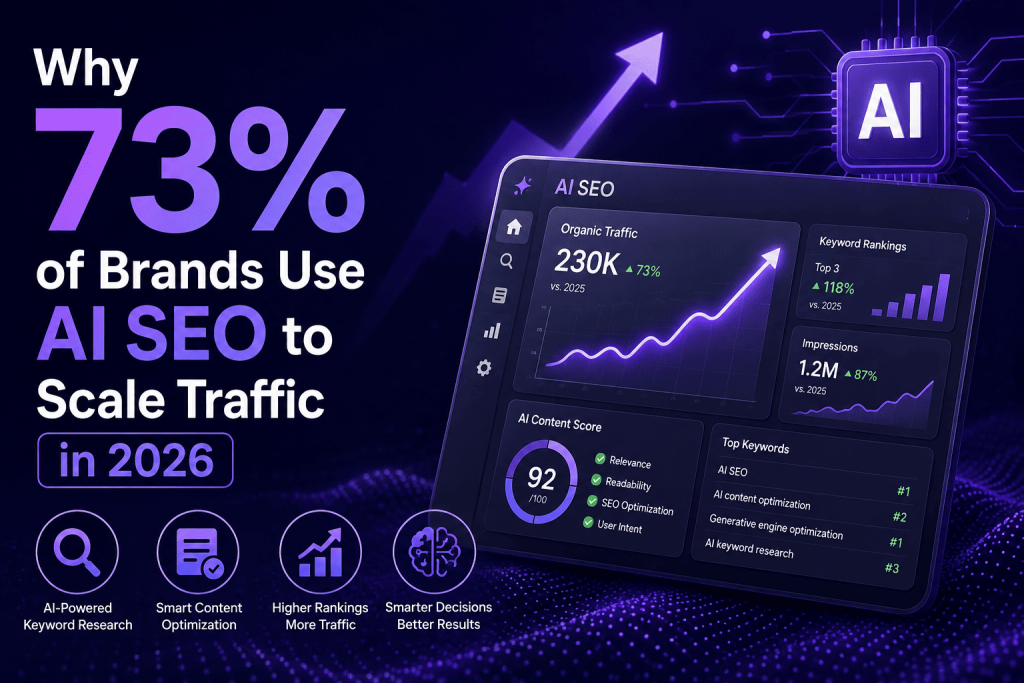
The widespread adoption of automated organic search reflects a permanent operational shift in ecommerce. When 73% of leading brands leverage machine intelligence to handle keyword clustering, catalog enrichment, and technical auditing, relying purely on manual optimization leaves your store at a severe competitive disadvantage.
In practice, the brands winning organic real estate today are not producing generic content in bulk; they are building precise, automated workflows that eliminate friction, keep catalogs perfectly optimized, and meet high-intent shoppers wherever they search.
Take time this week to audit your catalog’s metadata coverage, identify thin collection pages, and build an automated framework that scales alongside your inventory. If you want to streamline this entire process across your store automatically, you can get started with D2C Bot on Shopify.
FAQs
Sounds complicated. Is it hard to implement AI SEO on an existing store?
Not at all. Modern tools integrate directly with ecommerce platforms like Shopify, allowing you to optimize metadata, alt tags, and product copy automatically without writing custom code or rebuilding your site.
Will search engines penalize my store for using automated content?
No. Major search engines evaluate content based on its quality, accuracy, and helpfulness to the user, not how it was created. As long as your content is accurate, well-structured, and helpful, automation is fully supported.
How does AI improve product detail page (PDP) rankings?
It systematically resolves thin content issues by writing comprehensive descriptions, adding accurate structured schema markup, and optimizing meta titles based on high-intent transactional search queries.
Can AI handle technical SEO tasks like schema markup?
Yes. Automated tools can dynamically generate and insert JSON-LD structured data for products, FAQs, reviews, and breadcrumbs, ensuring search engines understand your catalog data effortlessly.
Do I still need a human copywriter or SEO manager?
Yes. Automation handles the heavy lifting of scale and repetitive optimization, but human strategists are critical for brand tone oversight, creative direction, and overarching marketing strategy.