Introduction
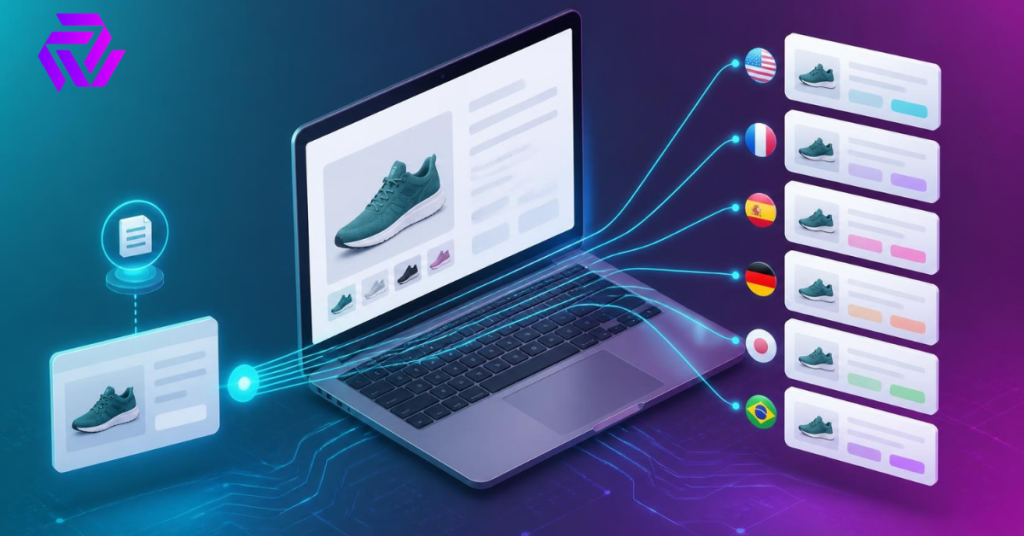
Translating a product description word for word is not the same as localizing it, and the difference shows up directly in conversion rate. Generic translation tools like DeepL or Google Translate convert language but not tone, idiom, or local search behavior. D2C Bot generates 14+ localized product description variants from one source in a single pass, built for brand voice consistency and market-specific keyword targeting rather than literal word-for-word conversion. This guide covers why that distinction matters, what good AI localization looks like for ecommerce specifically, and the common pitfalls that undercut a multilingual product catalog.
Why Localized Copy Matters More Than Literal Translation
A product description that reads naturally and persuasively in English often turns stiff, overly formal, or slightly off when someone translates it word for word into another language.
This mismatch doesn’t come from a translation error. It happens because one language structures sentences for persuasion differently than another, and the same intent expresses itself more naturally in the target language.
Research found that 76% of online shoppers prefer to buy products with information in their own language, and when choosing between two similar products, most pick the one written in their native language, according to CSA Research’s official survey findings.
A technically accurate but awkward literal translation never satisfies that preference. Copy satisfies it only when it reads as if someone wrote it for that market from the start, not when someone converts it after the fact.
What Good AI Localization Looks Like for Ecommerce
The gap between a generic translation tool and an ecommerce-specific localization workflow comes down to three things. First, brand voice consistency: a playful, casual English tone should stay playful and casual in Spanish or Portuguese, not flatten into a generic, neutral register the way literal translation often does. Second, market-specific SEO: the keyword a French shopper actually types into a search bar often isn’t the direct translation of the English keyword, and a good localization workflow targets the real local search term, not a literal conversion of the English one. Third, correct handling of measurements, currency, and sizing conventions, since a size chart or unit system that makes sense in one market can confuse or mislead a shopper in another.
Generic translation tools handle the first layer, converting words, reasonably well. They generally do not handle the second and third layers at all, since that requires understanding ecommerce context, not just language conversion.
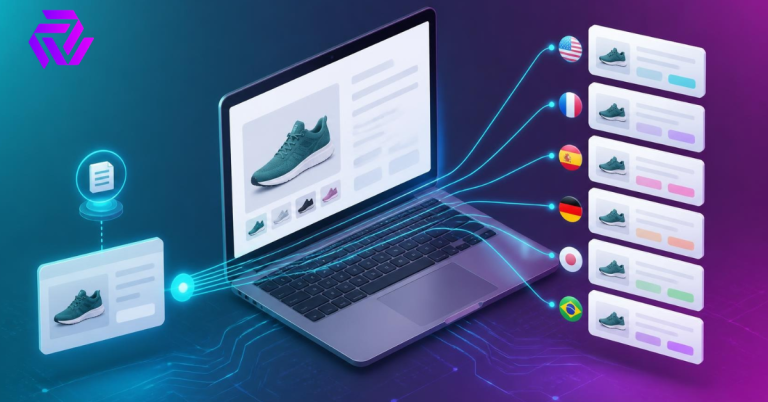
Generating 14 Localized Variants in One Pass
Here’s what the actual workflow looks like with D2C Bot.
- Start with a product already live on your Shopify catalog, with its English title, description, and key attributes in place.
- Run D2C Bot’s generation against that product and select the target languages needed for your markets, whether that’s three languages for an initial regional expansion or the full set for a broader multi-market launch.
- D2C Bot generates each language version from the product’s underlying attributes directly, not from a literal translation of the English text.
This means a Hindi description and a German description can each read naturally in their own market’s tone and phrasing, while still describing the exact same product accurately. Review the batch for accuracy and brand fit, ideally with a native speaker’s quick pass where possible, then publish directly to your Shopify storefront’s language variants.
Common Pitfalls to Avoid
A few mistakes show up repeatedly in multilingual Shopify catalogs.
- Relying on literal translation and losing the persuasive intent behind the original copy entirely is the most common mistake. A call-to-action that works well in English through urgency or excitement can read as pushy or strange when translated word for word into a market where sales copy conventions are more understated.
- Missing local search-term equivalents is another frequent issue. A brand might rank well for its English keyword but rank nowhere for the actual term local shoppers search, simply because the localized page used a direct translation of the English keyword instead of researching what people in that market actually type.
- Inconsistent brand terminology across languages rounds out the most common problems. If your English pages call a product feature one thing and your French pages call the same feature something slightly different due to inconsistent translation choices, it creates confusion for any shopper who compares pages or for a support team fielding relevant questions across languages.
Comparing Localization Approaches
| Approach | Handles Tone and Voice | Market-Specific SEO | Correct Units and Sizing | Native Shopify Integration |
|---|---|---|---|---|
| D2C Bot | Yes | Yes | Yes | Yes |
| DeepL / Google Translate | No, literal conversion | No | No | No, requires manual integration |
| Freelance translators per language | Yes, if well-briefed | Depends on translator’s SEO knowledge | Yes, if briefed correctly | No, manual publishing required |
| Weglot / similar translation apps | Partial, still largely literal | Limited | No, translates existing content only | Yes, as an add-on |
Generic translation apps and plugins solve the mechanical problem of getting foreign-language text onto your storefront, which matters and shouldn’t be dismissed. Where they fall short is the ecommerce-specific layer: tone, market-specific keywords, and correct handling of measurement and sizing conventions that a literal translation simply carries over unchanged from the source language.
Tips on Getting Started With a Small Batch First
Rather than localizing an entire catalog at once, start with your ten to twenty best-selling products in the languages tied to your clearest expansion markets. Review that batch carefully, ideally with a native speaker’s input, before scaling up to the rest of the catalog. This gives you a chance to catch tone or terminology issues early, on a manageable batch, rather than discovering a systemic problem after localizing hundreds of listings.
Conclusion
Selling into a new language market takes more than running your existing product copy through a translation tool. It takes copy that reads like it was written for that market’s tone, search behavior, and conventions from the start.
D2C Bot generates that kind of localized content directly from your product’s real attributes across 14+ languages in one pass, rather than converting your English copy line by line.
Install D2C Bot from the Shopify App Store for a free trial and localize your best-selling products before your next market expansion.
More Articles
- AI product description generator for high-converting copy
- AI product title generator for CTR-first titles
- AI FAQ generator for Shopify products
- How to master content optimization in SEO for better rankings
FAQs
Which languages does D2C Bot support for product descriptions?
D2C Bot generates content across 14+ languages, including English, Hindi, Spanish, French, German, Portuguese, Japanese, Italian, Dutch, Arabic, Chinese, Korean, and Russian.
Is AI-generated multilingual content the same as machine translation?
No. D2C Bot generates each language version from the product’s real attributes, aiming for natural, market-appropriate tone and locally relevant keywords rather than a literal, word-for-word translation of the English copy.
Do I still need a native speaker to review localized content?
A quick native-speaker review is still good practice, especially for tone and any market-specific terminology, even though D2C Bot’s output starts from a much stronger baseline than literal translation.
Should I localize my entire catalog at once?
No. Start with your top-selling products in your clearest expansion markets, review that batch carefully, then scale up to the rest of the catalog once you’ve confirmed the tone and terminology work well for each market.