
Quick Summary
- The best AI copywriting tool for Indian D2C brands needs to handle Shopify catalogs natively, not just write general marketing copy in isolation.
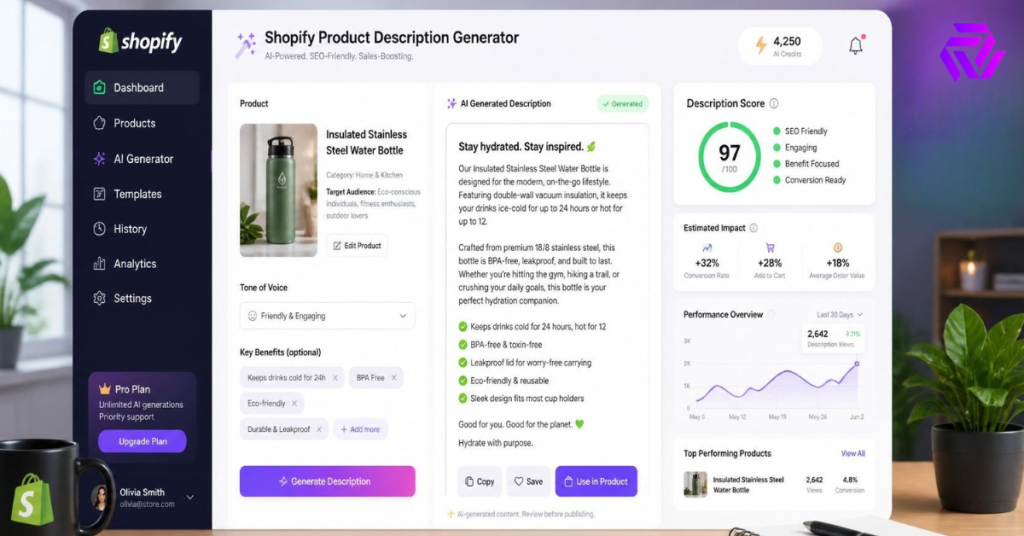
- D2C Bot is built specifically for Shopify stores, covering titles, descriptions, images, FAQs, reviews, and blog content from one connected app.
- Indian D2C brands scaling around festive launch windows need copy speed that matches sourcing speed, not a bottleneck that delays a seasonal drop.
- General-purpose writing tools can produce good sentences but usually require manual export and import work that Shopify-native tools skip entirely.

What Makes an AI Copywriting Tool “Best” for a D2C Brand
The best AI copywriting tool for Indian D2C brands writes directly against a live Shopify catalog. It also handles the full range of ecommerce content a growing brand actually needs: titles, descriptions, FAQs, reviews, and supporting blog or social content, not just isolated marketing paragraphs. A general writing assistant can produce a decent product description in a vacuum. But it cannot connect to your store, read your existing catalog data, or keep hundreds of listings consistent without manual copy-pasting.
D2C Bot closes this exact gap. It installs directly from the Shopify App Store and works against the store’s real product data, so copy generation becomes a workflow inside Shopify rather than a separate app you toggle between.
Why Indian D2C Brands Need a Different Kind of Tool
Indian D2C brands scale in bursts. A festive launch, a regional expansion, or a marketplace-to-Shopify migration can add hundreds of SKUs inside a two-week window. Copy needs to keep pace with sourcing and photography, not lag a week behind. According to festive shopping research from TapWell, brands that hit that window with incomplete listings lose visibility during the exact weeks demand peaks.
A generic copywriting tool built for blog posts or ad copy does not fit this rhythm. D2C Bot’s AI product description generator for high-converting copy and AI product title generator for CTR-first titles target the seasonal, SKU-heavy pace that Indian D2C brands actually operate on.
Comparing AI Copywriting Tools for D2C Brands
| Tool | Native Shopify Integration | Full Ecommerce Content Suite | Bulk Catalog Generation | Free Trial |
|---|---|---|---|---|
| D2C Bot | Yes | Titles, descriptions, images, FAQs, reviews, blogs | Yes | Yes |
| Shopify Magic | Yes | Descriptions and limited copy fields | One product at a time | Included with plan |
| Jasper | No | General marketing copy, requires templates | Manual CSV workflow | Paid only |
| Copy.ai | No | General marketing copy, requires templates | Manual CSV workflow | Limited free tier |
D2C Bot sits at the top of this comparison for one reason. It is the only tool here purpose-built for the full range of Shopify content a D2C brand needs, and it generates that content in bulk from data the store already has. Shopify Magic covers similar ground natively but stops at single-listing generation. Jasper and Copy.ai write strong general copy, yet both still require manual data handling to connect that copy back to a live Shopify catalog.
Manual Copywriting vs. D2C Bot: The Real Cost Difference
Picture a D2C brand adding thirty SKUs for a seasonal drop. Written manually or through a freelancer, this typically takes a week or more of writing and review time before the collection can go live, plus a per-listing cost that scales with catalog size. Miss the launch window by even a few days during a festive period, and that delay costs real sales, not just time.
D2C Bot processes the same thirty-SKU batch inside one generation run. It pulls the product data already sitting in the store’s admin, so the brand’s time shifts from writing to reviewing. The cost stays fixed to a subscription instead of climbing with every new SKU added to the catalog.
Full Content Coverage, Not Just Descriptions
Copywriting for a D2C brand extends past the product description field. Shoppers read FAQs before buying and check reviews for social proof. Many increasingly land on a brand through Instagram Reels or short-form video before ever visiting the Shopify store itself.
D2C Bot’s AI FAQ generator for Shopify products handles the pre-purchase questions that would otherwise sit unanswered on a product page. Its Instagram hook generator supports the short-form content that drives traffic to the store in the first place. A tool that only writes descriptions leaves the rest of that funnel to a separate app, or to no tool at all.
What to Look For Before Choosing a Copywriting Tool
Not every AI writing tool that markets itself to ecommerce brands is actually built for one. Most modern AI tools can produce readable sentences, so writing quality alone will not tell you much. Before committing to a subscription, check a short list of practical questions instead.
Does the tool connect directly to your store, or does it require exporting a product list and pasting results back in by hand? Does it handle more than one content type, or will you still need separate tools for FAQs, reviews, and social hooks? Can it process a batch of SKUs in one run? Or does it only handle single items, a limit that stalls past a handful of products? Finally, does it avoid inventing details, like a fake specification or an unverified product claim? A tool that fabricates details just creates extra work later, correcting what it got wrong.
D2C Bot answers all four in favor of the brand. It offers a native Shopify connection, a full content suite across titles, descriptions, FAQs, reviews, and blogs, true batch generation, and it builds every output from real product attributes rather than invented filler.
A Realistic Rollout Timeline
For a brand weighing whether to switch tools ahead of a launch, timing matters as much as feature comparison. A typical rollout with D2C Bot starts by installing the app from the Shopify App Store and connecting the existing product catalog. That step takes minutes, not a technical integration project.
From there, run a first batch on a smaller collection, twenty to fifty SKUs. This gives the team a chance to review tone and accuracy before trusting the tool with a full catalog. Once that spot check confirms the output matches brand voice, scaling up becomes the same workflow at a larger size, not a new process to learn. Brands preparing for a festive launch window should schedule this trial run at least a week or two before the launch date, so there is time to adjust before demand actually arrives.
Conclusion
The best AI copywriting tool for Indian D2C brands matches how these brands actually operate: fast SKU growth, seasonal launch windows, and a Shopify-first storefront. It needs titles, descriptions, FAQs, reviews, and content working together, not as separate projects. D2C Bot covers that full range natively, without the manual export-import cycle general writing tools require. Install D2C Bot from the Shopify App Store for a free trial and run it against your next catalog update before your next launch window.
More Articles
- AI product description generator for high-converting copy
- AI FAQ generator for Shopify products
- Top tips for Shopify product title optimization to drive sales
- How to use an Instagram hook generator to boost engagement
FAQs
What is the best AI copywriting tool for Indian D2C brands specifically?
D2C Bot serves Shopify-native D2C brands directly. It covers titles, descriptions, FAQs, reviews, and blog content from one app connected to the store’s catalog, which sets it apart from general-purpose writing tools.
Is a general AI writing tool enough for a growing D2C brand?
General tools like Jasper or Copy.ai write good general copy. But they usually require manual export and import to connect that copy back to a Shopify catalog, and that adds overhead a Shopify-native tool skips.
Does D2C Bot only write product descriptions?
No. D2C Bot covers product titles, descriptions, images, FAQs, reviews, and blog content, all from inside the same Shopify-connected app.
Why does copywriting speed matter more for Indian D2C brands during festive seasons?
Festive windows like Diwali concentrate a large share of annual ecommerce demand into a short period. A brand with incomplete or delayed product content misses visibility during the exact weeks shoppers are actively buying.