

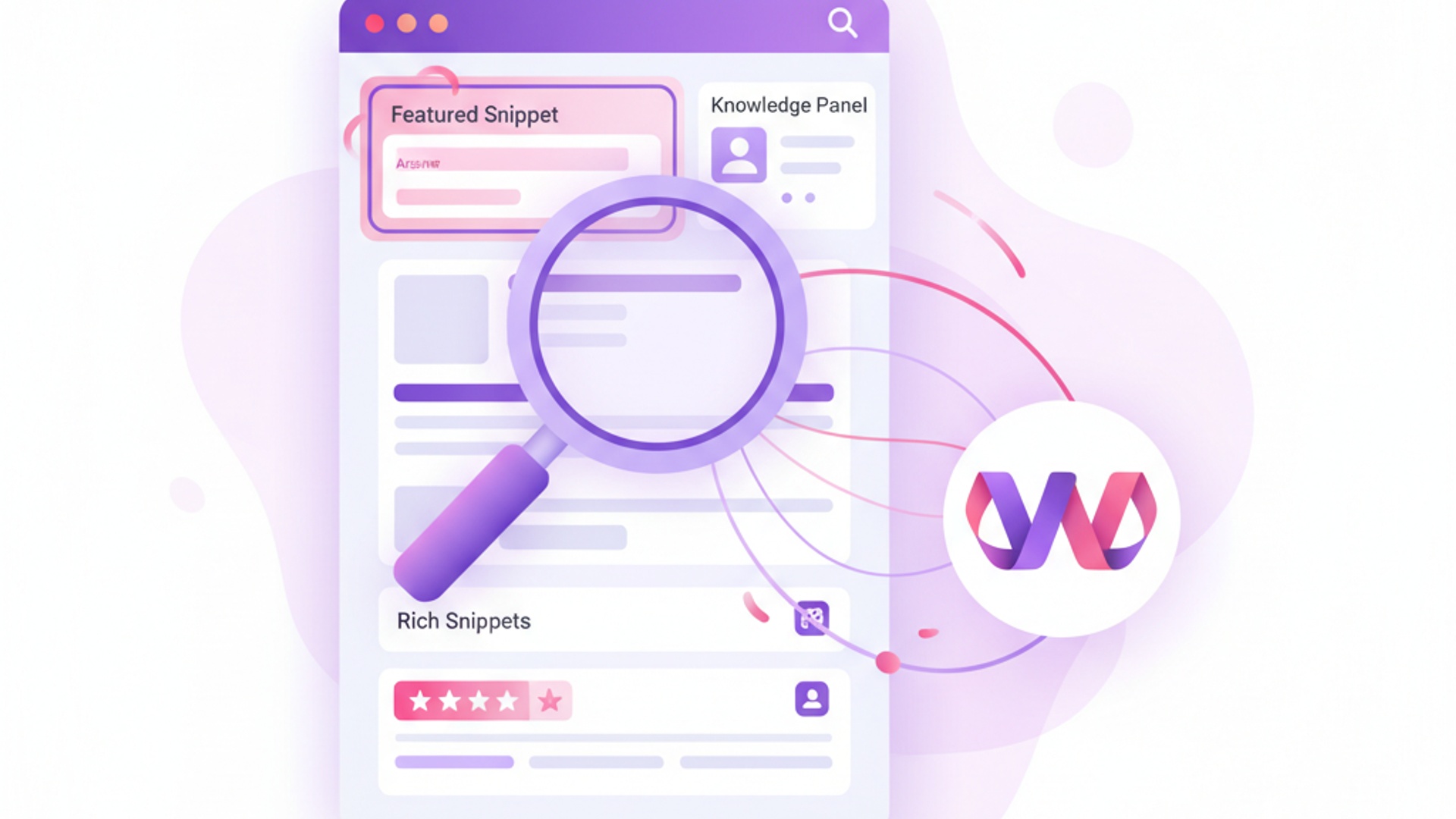
Quick Summary: Mastering SERP feature optimization is crucial for enhancing online visibility and driving organic traffic. By strategically identifying and optimizing for key SERP features like Featured Snippets and Local Packs, businesses can significantly improve their click-through rates and overall search engine presence. This guide provides actionable strategies and tools to help you effectively implement SERP feature optimization, ensuring your content stands out and attracts more relevant visitors to your site.
Are you struggling to stand out in crowded search results despite robust SEO efforts? The evolving landscape of search engine results pages (SERPs) demands more than just traditional ranking; effective SERP feature optimization is now paramount. At d2cbot.com/blog, we empower businesses with the insights needed to navigate complex digital landscapes.
You’re not alone in seeking to maximize your organic reach. This comprehensive guide demystifies SERP feature optimization, offering a clear roadmap to unlock new avenues for visibility and significantly boost your organic traffic.
Understanding the SERP Feature Landscape: What are SERP Features?
In SEO, SERP features are any result on a search engine results page that isn’t a standard organic blue link.
These can include anything from Featured Snippets that offer direct answers to Local Packs displaying nearby businesses, or People Also Ask boxes expanding on related queries. But their underlying mechanism is about more than just aesthetics; they leverage structured data and content relevance to surface information more efficiently.
For instance, a well-optimized page can capture a Featured Snippet, providing a definition or a “how-to” guide directly in the search results. This changes how users engage with search, as roughly 58–62% of Google searches in 2026 end without a click, making direct visibility paramount.
What are the different types of SERP features?
The SERP landscape is diverse, constantly evolving with new features. But, some core types consistently offer significant visibility opportunities. We categorize them not just by their appearance, but by the user intent they typically serve.
- Featured Snippets: These “position zero” boxes provide a concise answer directly from a webpage. We often see them for definitional or question-based queries. They come in paragraph, list, and table formats.
- Local Packs: Essential for businesses with physical locations, these display a map and a list of 3 local businesses relevant to a “near me” or location-specific search.
- People Also Ask (PAA): An expandable box featuring related questions that users frequently ask. Clicking on a question reveals a short answer, often from a website.
- Knowledge Panels: Appearing on the right side of the SERP, these provide comprehensive information about entities (people, organizations, places) drawn from Google’s Knowledge Graph.
- Image Packs & Video Carousels: Visually driven results that show a row of images or videos, particularly prominent for visually-oriented queries or “how-to” searches.
- AI Overviews: A rapidly expanding feature in 2026, AI Overviews use generative AI to summarize complex topics or answer questions directly, often citing multiple sources.
Why is SERP feature optimization important?
SERP feature optimization is critical because it offers unparalleled visibility, even when traditional organic rankings are challenged.
In our experience, securing a SERP feature can place your brand above organic position one, capturing immediate attention. This translates into increased brand recognition, authority, and, when optimized effectively, organic traffic.
But, it’s not just about clicks; it’s about establishing your site as a trusted source for information, which is increasingly important in the era of AI-driven search. Without a focused strategy, your content can get lost beneath the rich tapestry of modern SERPs.
Strategic Identification of High-Value Opportunities: Prioritizing for Impact
To maximize the return on SERP feature optimization efforts, strategically identify high-value opportunities by conducting thorough keyword research and competitive analysis to pinpoint features most relevant to your audience and business goals, prioritizing those with the highest potential for visibility and traffic.
This isn’t a shot-in-the-dark strategy; it requires a data-backed approach to understand where your efforts will yield the most significant results for your d2cbot.com/blog content.
Methods for keyword research to pinpoint SERP features
Effective keyword research for SERP features goes beyond identifying high-volume terms. We focus on keywords that explicitly trigger these features. You can leverage tools like Semrush’s Keyword Explorer or Google’s Keyword Planner to identify question-based queries (e.g., “how to,” “what is,” “best way to”) that are highly likely to generate Featured Snippets or People Also Ask boxes.
We also analyze SERP previews within these tools to see which features already exist for target keywords. For local businesses, incorporating geo-specific terms (e.g., “best cafes near me,” “plumber in Bengaluru”) is essential to capture Local Packs.
And, increasingly, we’re looking for queries that trigger AI Overviews, understanding that these are often informational and complex, demanding comprehensive, authoritative content.
Competitive analysis for SERP feature opportunities
Competitive analysis provides a clear roadmap of what’s working for others. We routinely analyze competitors’ SERP feature presence for shared keywords.
If a competitor consistently ranks for a Featured Snippet or appears in a PAA box, it signals a viable opportunity and provides insights into the content structure and phrasing Google prefers. Tools that show which URLs are winning specific SERP features are invaluable here.
We look for gaps where competitors are missing out or where their content is weak, suggesting an opening for us to create superior, more comprehensive content. But, remember, the goal isn’t just to replicate; it’s to elevate, offering more accurate, detailed, and user-friendly answers.
Understanding and optimizing for different types of SERP features
Each SERP feature has its nuances for optimization.
- People Also Ask: To appear here, create comprehensive content that answers multiple related questions within a single article. We often use the PAA section itself as inspiration for subheadings.
- Image Packs: Optimize images with descriptive filenames, alt text, and relevant surrounding content. High-quality, original images are key.
- Video Carousels: Host videos on platforms like YouTube, optimize video titles, descriptions, and tags with relevant keywords, and embed them on your site with appropriate schema markup.
- Local Packs: A robust Google Business Profile is non-negotiable. Ensure NAP (Name, Address, Phone) consistency across all online directories, gather positive reviews, and optimize your website for local keywords. Active management of your Google Business Profile is crucial for local visibility.
- Knowledge Panels: For individuals or brands, maintaining consistent information across authoritative sources (like Wikipedia, Crunchbase, social media) and implementing Organization schema markup helps Google build a comprehensive profile.
- AI Overviews: This is a newer, complex area. We’ve observed that content that is highly authoritative, comprehensive, and well-structured, providing clear answers to complex queries, is more likely to be cited. Focus on E-E-A-T signals and deep topical authority. But, organic click-through rates drop by
61% on average when AI Overviews appear, so the goal shifts from direct clicks to brand citation and authority.
Implementing Schema Markup for Enhanced Visibility
Here’s a comparison of common SERP features and their primary optimization tactics:
| SERP Feature | Primary Goal | Key Optimization Tactics | Typical Content Format |
|---|---|---|---|
| Featured Snippets | Direct Answer, Position Zero | Concise answers (40-60 words), Q&A headings, lists, tables, schema (FAQPage) | Paragraphs, Lists, Tables |
| Local Pack | Local Visibility, Store Visits | Google Business Profile optimization, local keywords, NAP consistency, reviews | Map, Business Listings |
| People Also Ask (PAA) | Expand Visibility, Answer Related Queries | Address multiple related questions, comprehensive content, FAQ schema | Expandable Questions & Answers |
| Knowledge Panel | Brand Authority, Entity Information | Consistent brand data, Organization schema, authoritative mentions | Summary Box (right-hand side) |
| AI Overviews | AI Citation, Comprehensive Summaries | Deep topical authority, E-E-A-T, well-structured content, clear answers | AI-generated summary (top of SERP) |
Performance Monitoring and Iterative Refinement: Sustaining SERP Presence
Effective SERP feature optimization requires continuous performance monitoring and iterative refinement, outlining key metrics, tools, and processes for tracking visibility, analyzing organic traffic changes, and refining strategies for sustained improvement. This isn’t a “set it and forget it” endeavor; the SERP landscape is dynamic, demanding constant attention and adaptation from d2cbot.com/blog to maintain and grow visibility.
How can I track SERP feature performance?
Tracking SERP feature performance involves a multi-faceted approach. We primarily use Google Search Console (GSC) to monitor impressions and clicks for queries that trigger rich results. GSC’s “Performance” reports allow us to filter by “Search appearance” to see data for Featured Snippets, videos, and other rich results. But, this only tells part of the story.
Analyzing organic traffic changes from SERP feature optimization
Continuously refining your optimization strategies
The SERP is never static, so continuous refinement is essential. We regularly review our keyword research, looking for new question-based queries or emerging SERP features. If a competitor wins a snippet we were targeting, we analyze their content to understand why, then iterate on our own. This might involve restructuring content, adding more detail, or refining our schema markup.
Does optimizing for People Also Ask help with voice search?
Yes, optimizing for People Also Ask (PAA) often significantly helps with voice search. Voice queries are inherently conversational and question-based, mirroring the format of PAA boxes. When we structure content to directly answer PAA questions concisely, we’re essentially pre-optimizing it for voice assistants.
Conclusion
Mastering SERP feature optimization isn’t a one-time task; it demands consistent performance monitoring and iterative refinement. By applying the actionable strategies discussed, you’re now equipped to move beyond traditional SEO, leveraging featured snippets, local packs, and People Also Ask sections to capture user attention directly on the search results page. This isn’t just about ranking; it’s about dominating the conversation. For a deeper understanding of how search engines process information, consider exploring the mechanisms of search engine indexing on Wikipedia.
Ready to put these insights into practice and transform your site’s organic presence? Unlock your site’s full potential with d2cbot.
About d2cbot
d2cbot is a leader in the Information Technology industry, specializing in innovative solutions designed to enhance digital presence and drive business growth. Our platform provides advanced tools and insights, empowering businesses to navigate complex online landscapes and achieve their strategic objectives.
More Articles
Top 7 Ways to Master Shopify Product Title Optimization for Higher Conversions
How to Choose the Best AI SEO Content Generator for Your Business (2026 Guide)
Master 7 Proven Strategies to Increase Site Traffic Free and Boost Your Online Presence
How to Get a Free FAQ Generator for Your Website and Boost Engagement
FAQs
What exactly are SERP features in SEO?
SERP features are elements on a search engine results page beyond the traditional blue links. They include things like Featured Snippets, Local Packs, People Also Ask boxes, and Knowledge Panels, significantly boosting visibility and user engagement.
Why is optimizing for SERP features so important for my website?
Optimizing for SERP features is crucial because it dramatically increases your content’s visibility and click-through rates. Securing these spots means you appear higher and more prominently, driving significantly more organic traffic to your site.
How can I optimize my content for various SERP features?
You can optimize by structuring content with clear headings, using concise answers for potential snippets, and implementing relevant schema markup. Targeting question-based keywords and creating high-quality, comprehensive content also helps.
How do I get my content featured in the ‘People Also Ask’ section?
The best way to appear in ‘People Also Ask’ is by directly answering common questions related to your topic within your content. Use clear, brief answers and ensure your content comprehensively covers related sub-topics.
What impact do AI Overviews have on SERP feature optimization in 2026?
AI Overviews in 2026 emphasize the need for even more authoritative, well-structured, and concise content. You’ll want to focus on providing direct, verifiable answers that AI models can easily synthesize and cite.
How can I measure the ROI of my SERP feature optimization efforts?
You can measure ROI by tracking increases in organic traffic, improved click-through rates for specific keywords, and enhanced brand visibility. Monitor your rankings in various SERP features using analytics tools.
What are some common mistakes to avoid when optimizing for SERP features?
Avoid keyword stuffing or creating thin content solely for features. Don’t neglect user experience or site technical health, as these foundational elements remain critical for any successful SERP feature strategy.