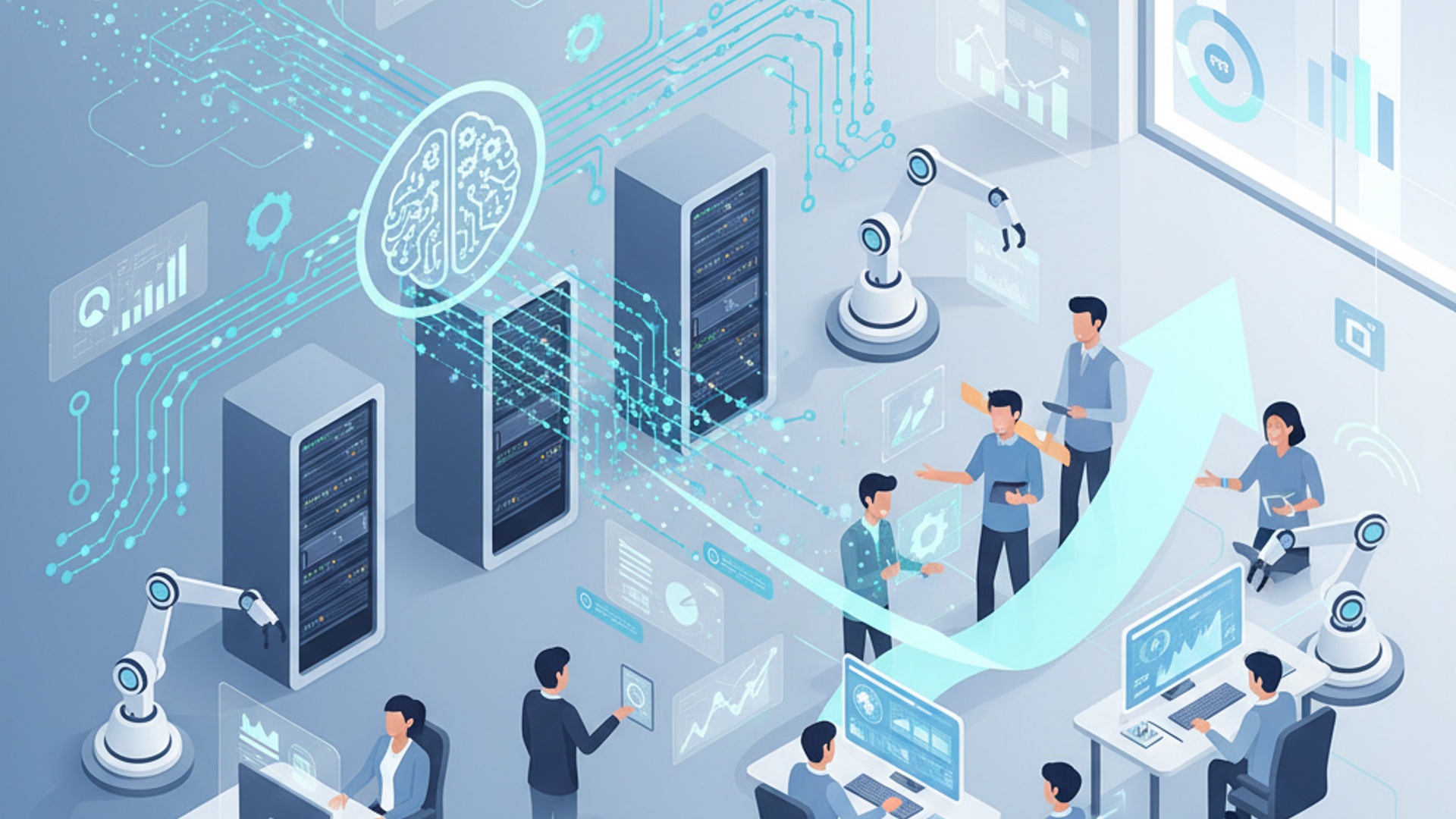
Are your operational efficiencies stagnant, or do your teams constantly handle repetitive tasks that limit productivity? Many businesses today are realizing that unlocking AI automation benefits is no longer optional but essential for growth.
AI automation goes beyond basic task execution. It reshapes how businesses operate, make decisions, and engage with customers. By leveraging these capabilities, organizations can improve efficiency, reduce costs, and scale effectively while focusing on strategic initiatives.
Automated Task Management and Operational Efficiency
One of the most immediate AI automation benefits is the ability to handle repetitive, rule-based tasks with speed and accuracy.
Tasks such as data entry, invoice processing, and customer query handling often consume significant time. AI systems powered by machine learning and natural language processing can perform these tasks faster and with fewer errors.
Businesses using automation report significant improvements in efficiency due to reduced manual workload and increased processing speed. AI operates continuously without downtime, ensuring consistent performance.
This shift allows teams to focus on higher-value work such as strategy, innovation, and problem-solving instead of routine operations.
Types of Tasks AI Can Automate
Understanding where AI automation benefits apply helps businesses identify opportunities for improvement.
AI can automate a wide range of functions, including:
- Data entry and report generation
- Customer support through chatbots
- Financial processes such as invoice reconciliation
- HR onboarding and documentation
- IT system monitoring and issue resolution
- Marketing automation and campaign optimization
These applications reduce operational bottlenecks and improve overall productivity.
Enhanced Data Analysis and Strategic Decision-Making
Another major advantage of AI automation benefits is improved data analysis.
Businesses generate large volumes of data but often struggle to extract actionable insights. AI can process complex datasets quickly, identifying patterns and trends that are difficult to detect manually.
Predictive analytics enables organizations to forecast demand, understand customer behavior, and anticipate market changes. This allows decision-makers to act with greater accuracy and confidence.
AI-driven insights shift businesses from reactive decision-making to proactive strategy development.
Improved Customer Experience and Personalization
Delivering personalized experiences is one of the most impactful AI automation benefits.
AI systems analyze customer interactions, preferences, and behavior to deliver tailored recommendations and responses. Chatbots provide instant support, reducing wait times and improving satisfaction.
Marketing campaigns can also be personalized at scale, ensuring that users receive relevant content and offers.
This level of personalization strengthens customer relationships and increases engagement.
Scalability and Cost Optimization
Scalability is a key reason businesses invest in AI automation benefits.
As demand increases, AI systems can handle larger workloads without significant additional costs. This allows businesses to grow without expanding resources at the same rate.
Automation reduces labor costs, minimizes errors, and improves efficiency. Cloud-based AI solutions further optimize infrastructure expenses.
These factors contribute to better resource utilization and higher return on investment.
Measuring ROI of AI Automation
To fully understand AI automation benefits, businesses must measure their return on investment.
Key metrics include:
- Reduction in operational costs
- Increase in productivity
- Revenue growth from improved performance
- Risk reduction and compliance improvements
Evaluating these factors provides a clear picture of the impact of automation.
Workforce Transformation and Reskilling
While AI automation benefits improve efficiency, they also change workforce dynamics.
Automation shifts employee roles from repetitive tasks to strategic and creative functions. This requires investment in reskilling and training programs.
Organizations should focus on developing skills such as data analysis, problem-solving, and system management. Encouraging continuous learning ensures teams remain adaptable.
A balanced approach helps businesses maximize automation while supporting workforce growth.
Ethical Considerations in AI Automation
Responsible implementation is an important aspect of AI automation benefits.
Businesses must ensure fairness, transparency, and accountability in AI systems. This includes avoiding bias, protecting user data, and maintaining human oversight.
Ethical practices build trust with customers and ensure long-term sustainability of AI initiatives.
How to Implement AI Automation Successfully
To maximize AI automation benefits, businesses should follow a structured approach.
Start by identifying repetitive tasks and high-impact areas for automation. Choose tools that align with business needs and integrate well with existing systems.
Test solutions through pilot programs before scaling implementation. Monitor performance continuously and refine strategies based on results.
Investing in both technology and workforce adaptation ensures successful adoption.
Conclusion
Understanding AI automation benefits allows businesses to unlock new levels of efficiency, scalability, and innovation.
From task automation and data analysis to customer experience and cost optimization, AI provides a strong foundation for growth.
By implementing AI strategically and responsibly, organizations can transform operations and stay competitive in an evolving digital landscape.