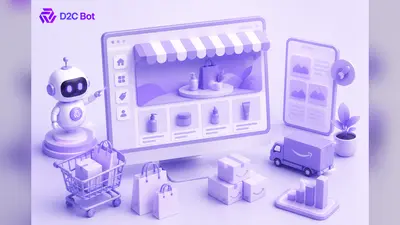
Top Ecommerce Automation Tools to Streamline Your Online Store Operations


Quick Summary: Ecommerce automation tools simplify the time-consuming tasks of managing an online store, from inventory updates to order processing. By reducing manual effort and human error, these tools help store owners focus on scaling their business and improving customer experience. Choosing the right automation tool can save you both time and money, making it a critical investment for efficient operations. Explore the best options to streamline your store and enhance productivity today.
Running an online store can feel overwhelming when repetitive tasks pile up, leaving little room to focus on growth. Imagine losing hours every day updating inventory or manually processing orders, tasks that ecommerce automation tools can handle seamlessly. With the right tools, you can eliminate these bottlenecks and focus on what truly matters: scaling your business and delighting your customers.
d2cbot understands the challenges faced by online store owners and offers insights into the most effective solutions. By leveraging automation, you can reduce costs, minimize errors, and create a more satisfying shopping experience for your customers. According to McKinsey, automation can significantly lower operational costs and improve accuracy in ecommerce processes. From automating marketing campaigns to streamlining logistics, the right tools empower you to run your store smarter, not harder.
What Are Ecommerce Automation Tools?
Ecommerce automation tools are software solutions designed to streamline repetitive tasks in online store operations, such as inventory management, order processing, marketing, and customer support. By automating these processes, businesses save time, reduce errors, and improve efficiency.
These tools leverage technologies such as artificial intelligence (AI), machine learning, and integrations with other platforms to handle tasks that traditionally require manual effort. For example, tools like Shopify Flow can automate actions based on specific triggers, while Zapier connects multiple apps for seamless workflows. In our experience, adopting automation tools not only simplifies operations but also allows store owners to focus on growth strategies instead of day-to-day administrative tasks.
Key Benefits of Automation for Online Stores
Manual data entry is prone to mistakes: automation ensures greater accuracy.
Here are the top benefits we’ve observed:
- Time savings: Automating tasks like order fulfillment and inventory updates frees up hours that can be invested in strategic planning.
- Reduced errors: Manual data entry is prone to mistakes; automation ensures greater accuracy.
- Enhanced customer experience: Tools like Klaviyo personalize marketing messages, improving engagement and retention.
- Cost efficiency: By reducing the need for manual labor, automation can lower operational costs significantly.
- Scalability: Automation tools allow businesses to handle increased demand without additional workforce.
According to McKinsey research, businesses leveraging automation can reduce operational costs by up to 30%, showcasing its transformative impact on profitability and efficiency.
How to Choose the Right Tool?
Choosing the right ecommerce automation tool involves evaluating your business needs, budget constraints, and scalability requirements while ensuring compatibility with your existing systems.
Here are the factors we recommend prioritizing:
- Business size and goals: Small businesses may benefit from simpler tools like Zapier, while larger enterprises might need comprehensive solutions like Automation Atlas.
- Integration capabilities: Ensure the tool integrates seamlessly with your ecommerce platform (e.g., Shopify, Magento) and other apps you use.
- Pricing: Compare subscription costs and pricing tiers to find a tool that aligns with your budget. For instance, Klaviyo offers scalable pricing based on the number of contacts.
- Ease of use: Tools with intuitive interfaces, such as Jotform Store Builder, are ideal for teams with limited technical expertise.
- Support and scalability: Evaluate the provider’s customer support and whether the tool can grow with your business.
In our testing, we found that tools offering trial periods or free tiers are excellent for assessing fit before committing to long-term plans. For example, ShipStation provides a free plan for small-scale operations.
Top Tools to Streamline Store Operations
The top ecommerce automation tools include Zapier, Klaviyo, ShipStation, Prisync, Shopify Flow, Omnisend, Jotform Store Builder, and Automation Atlas , each excelling in different areas of automation.
Here’s a detailed comparison of their features and pricing:
| Tool | Key Features | Pricing | Best For |
|---|---|---|---|
| Zapier | Workflow integration, multi-app automation | Starts at ₹2,500/month | Small businesses needing simple workflows |
| Klaviyo | Email marketing, SMS automation, personalization | Contact-based pricing (₹1,000/month for 250 contacts) | Advanced marketing automation |
| ShipStation | Order shipping, label generation | ₹1,800/month for entry-level plan | Order fulfillment |
| Prisync | Competitor price tracking, dynamic pricing | ₹5,000/month | Pricing optimization |
| Shopify Flow | Custom workflows, store-specific automation | Included with Shopify Plus plans | Large Shopify stores |
| Omnisend | Omnichannel marketing, segmentation | Starts at ₹2,400/month | Comprehensive marketing |
| Jotform Store Builder | Form-based product pages, easy setup | Free plan available | Quick store creation |
| Automation Atlas | Enterprise-grade automation, scalability | Custom pricing | Large enterprises |
Each tool has unique strengths. For example, Shopify Flow is perfect for stores already on Shopify Plus, while Omnisend stands out for omnichannel marketing. Visit their official sites for detailed pricing and features.
How to Implement Ecommerce Automation
Implementing ecommerce automation requires a structured approach , assess your needs, test tools, and integrate solutions step-by-step to ensure smooth adoption.
Follow these practical steps:
- Step 1: Identify repetitive tasks in your operations, such as inventory updates, order processing, or marketing campaigns.
- Step 2: Research tools that address these pain points. Use free trials or demos to evaluate fit and functionality.
- Step 3: Ensure compatibility with existing systems like your ecommerce platform or CRM software.
- Step 4: Train your team on the tool’s features to maximize its effectiveness and reduce resistance to change.
- Step 5: Monitor performance metrics like time saved, error reduction, and ROI to assess the tool’s impact over time.
In our experience, gradual implementation , starting with one or two tools , minimizes disruption and allows you to refine your processes as you scale.
More Articles
How AI Content Automation Transforms Ecommerce for Faster Growth
Best AI product description generator free tools to boost SEO, and save time
How AI is Revolutionizing Ecommerce Banner Design for Better Conversions
The Ultimate Guide to Using an Ecommerce FAQ Schema Generator for Your Store
How AI Image Generation Transforms Ecommerce Product Visuals
Conclusion
By now, you’ve seen how ecommerce automation tools can revolutionize your online store operations, from streamlining inventory management to enhancing order fulfillment and optimizing marketing efforts. The right automation tool doesn’t just save time, it directly impacts your bottom line by reducing manual errors and improving customer satisfaction. Whether you’re a small business owner or managing a growing enterprise, these solutions offer scalable options tailored to your needs.
Your search for ecommerce automation tools likely stemmed from a desire to simplify operations and boost efficiency. Now, you know the key factors to consider, such as integration capabilities, pricing, and ROI potential. With tools like Zapier, Klaviyo, and Shopify Flow leading the way, you’re equipped to make informed decisions that align with your growth goals.
Ready to take the next step? Explore how d2cbot can empower your ecommerce journey with cutting-edge automation solutions.
About d2cbot
d2cbot is a trusted leader in ecommerce automation and digital transformation, offering tailored solutions to streamline your online business. With years of expertise in the IT sector, d2cbot has become a go-to platform for forward-thinking store owners looking to scale efficiently. Visit their platform to discover how they can help you automate and optimize your operations.
More Articles
How AI Content Automation Transforms Ecommerce for Faster Growth
Best AI product description generator free tools to boost SEO, and save time
How AI is Revolutionizing Ecommerce Banner Design for Better Conversions
The Ultimate Guide to Using an Ecommerce FAQ Schema Generator for Your Store
How AI Image Generation Transforms Ecommerce Product Visuals
FAQs
What are ecommerce automation tools?
Ecommerce automation tools help online businesses streamline repetitive tasks like inventory updates, order processing, and customer communications to save time and reduce errors.
Why should I use automation for my online store?
Automation can cut down manual work, improve efficiency, and let you focus on growing your business instead of managing daily tasks.
Can automation tools work with my existing ecommerce platform?
Most automation tools are designed to integrate seamlessly with popular ecommerce platforms like Shopify, WooCommerce, and Magento.
Are ecommerce automation tools expensive?
Prices vary, but many tools offer flexible plans. For instance, some start at a few thousand INR per month, scaling based on features and store size.
What tasks can ecommerce automation handle?
Automation can manage inventory, send personalized emails, optimize product listings, process orders, and even handle customer support.
How do I choose the right automation tool for my store?
Focus on tools that match your business needs, integrate with your platform, and offer scalable pricing that fits your budget.
Do automation tools help with marketing efforts?
Yes, many tools can automate email campaigns, social media posts, and ads, making it easier to reach your customers efficiently.