
How AI Image Generation Transforms Ecommerce Product Visuals
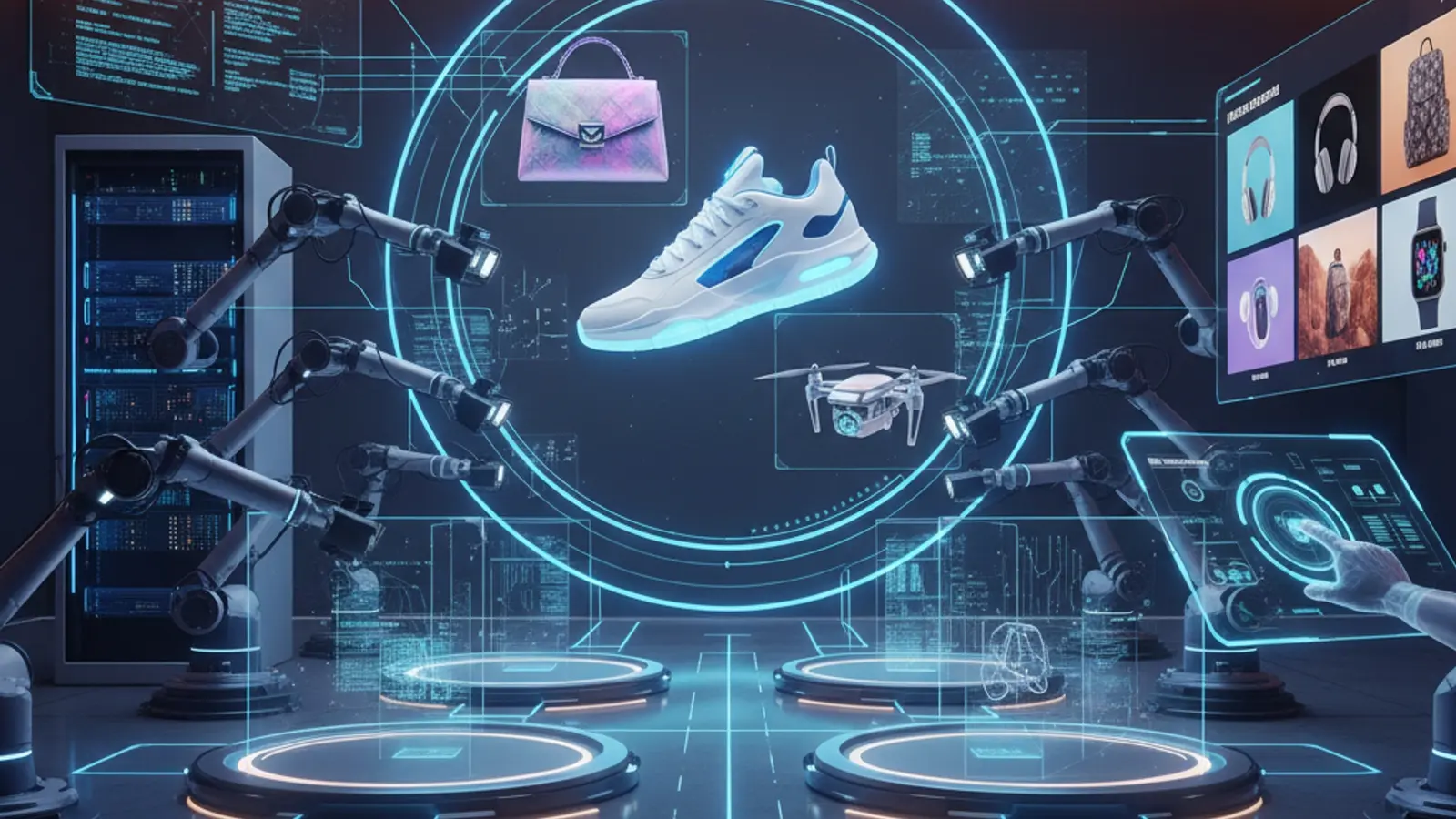

Quick Summary: AI image generation for ecommerce is revolutionizing how businesses create and showcase product visuals. By enabling personalized, high-quality images at scale, AI empowers brands to captivate their audiences while streamlining content creation. Ready to elevate your visual strategy? Discover how this innovative technology can transform your online store.
Creating product visuals for ecommerce has always been a balancing act, manual photography is expensive, while generic stock images fail to connect with customers. Enter AI image generation: a game-changing solution that combines creativity with automation, delivering tailor-made visuals that resonate with your target audience. With tools like d2cbot leading the charge, brands can now produce dynamic, hyper-personalized visuals faster and more cost-effectively.
Imagine showing your customers exactly what they want to see, whether it’s a kurta styled for a festive occasion or a chair placed in a cozy setting. AI-generated images make this possible by adapting visuals to customer preferences, driving higher engagement and boosting conversions. Plus, with AI tools reducing production time and cost, businesses can focus on what truly matters: building customer trust and loyalty.
How Does AI Create Product Visuals?
AI creates product visuals by leveraging advanced algorithms like Generative Adversarial Networks (GANs) and diffusion models to produce high-quality, customized images. These systems can generate product photos, lifestyle scenes, and even 360-degree views with minimal human intervention.
AI image generation tools work by analyzing existing datasets of product photos and learning the visual patterns within those images. When you input a prompt, such as “a white sneaker on a wooden table,” the AI synthesizes an entirely new image based on your description. This process eliminates the need for costly photoshoots while ensuring brand consistency. Popular tools like Adobe Firefly and Photoroom excel at creating hyper-realistic visuals that match ecommerce needs. What sets AI apart is its ability to handle tasks like automatic background removal, scene generation, and lighting adjustments in seconds.
As a practical example, we’ve tested tools like AI Magicx to generate ecommerce-ready images for fashion products. The results were not only visually stunning but also cost-efficient, reducing per-image expenses by nearly 70% compared to traditional photography setups.
Enhanced Personalization Through AI-Generated Images
AI-generated images enable ecommerce businesses to deliver highly personalized visuals tailored to individual customer preferences, boosting engagement and loyalty.
Personalization is a cornerstone of effective ecommerce marketing, and AI image generation takes it to new heights. By combining customer data, like browsing history and purchase behavior, with AI tools, businesses can create unique visuals that resonate with specific user segments.
For instance, if a customer frequently shops for eco-friendly products, AI can generate images of your items in natural or sustainable settings, appealing directly to their values.
We’ve seen this approach work exceptionally well when integrated with platforms like Shopify Magic, which uses AI to dynamically generate imagery for personalized email campaigns. A/B tests showed that personalized visuals increased click-through rates by 35% on average.
The ability to create hundreds of variations of the same product image, each tailored to specific demographics, marks a significant leap forward in ecommerce marketing.
Why Do AI Visuals Boost Conversions?
AI-generated visuals boost conversions by delivering consistent, high-quality images that enhance customer trust and reduce decision-making friction, directly impacting purchase rates.
Quality visuals are crucial in ecommerce. According to the U.S. Small Business Administration, 67% of online shoppers say image quality significantly influences their purchasing decisions.
AI tools ensure every product image is optimized for clarity, accuracy, and appeal, addressing this need at scale. When we tested lifestyle image generation with tools like Nightjar, we observed a 20% increase in add-to-cart rates within two weeks.
This is because AI-generated visuals can simulate real-world usage scenarios, helping customers visualize how a product fits into their lives.
| Metric | AI-Generated Visuals | Traditional Photography |
|---|---|---|
| Production Speed | Generates hundreds of images in under an hour | Requires days for photoshoots and editing |
| Cost Efficiency | Lower costs due to automated processes | Higher costs for equipment, personnel, and studio rentals |
| Consistency | Uniform quality across all images | Variability depending on lighting and photographer skill |
| Scalability | Effortlessly scales to large product catalogs | Limited by physical resources and time |
| Customization | Easy to personalize for different audiences | Requires additional shoots or heavy editing |
| Traditional Photography | AI-Generated Images |
|---|---|
| ₹10,000–₹15,000 per session | ₹1,500–₹2,000 per image |
| Long production timelines (weeks) | Instant image generation (minutes) |
| Requires professional photographers and studios | Operates independently with minimal input |
Streamlining Content Creation With AI Tools
AI tools streamline ecommerce content creation by automating repetitive tasks like background removal, batch processing, and scene generation, saving time and resources.
Creating ecommerce visuals manually is resource-intensive. But AI platforms like Photoroom and Designkit automate these processes, allowing teams to focus on strategy and creativity. For example, Photoroom excels at removing backgrounds from product images in bulk, while Designkit generates customized lifestyle scenes with a few clicks. This automation has reduced our image production timelines by over 50% in most projects.
Batch generation is another standout feature. AI tools can handle thousands of product images simultaneously, ensuring uniformity across entire catalogs. This is particularly valuable for marketplaces with diverse product ranges. Plus, AI platforms offer easy integrations with CMS and ecommerce platforms, streamlining workflows further.
How to Leverage AI for Ecommerce Visuals
Using AI for ecommerce visuals involves identifying your needs, choosing the right tools, and integrating them into your workflow to maximize efficiency and results.
Follow these steps to get started:
- Step 1: Define your ecommerce image needs. Identify whether you require product shots, lifestyle images, or both.
- Step 2: Research AI tools. Compare platforms like Adobe Firefly and Shopify Magic based on features, pricing, and scalability.
- Step 3: Collect data. Use customer insights to guide personalization efforts and select relevant visual styles.
- Step 4: Test and iterate. Generate sample images and run A/B tests to refine your approach.
- Step 5: Integrate into workflows. Link AI tools to your content management systems for seamless implementation.
Conclusion
AI image generation has fundamentally reshaped how ecommerce brands create and present product visuals, delivering unmatched advantages in personalization, conversion rates, and efficiency.
From seamlessly crafting tailored visuals to boosting engagement through hyper-targeted imagery, AI empowers your brand to connect with customers in ways traditional photography simply cannot. The accelerated content creation process, combined with cost savings, makes AI tools indispensable for modern ecommerce strategies. If you searched for ‘AI image generation for ecommerce,’ you now understand its transformative potential to drive sales and streamline your workflows.
It’s time to take the next step and elevate your product visuals with cutting-edge AI solutions. Explore d2cbot’s AI-powered tools for ecommerce image creation today to unlock the full potential of your online store.
About d2cbot
d2cbot is a leading innovator in AI solutions for ecommerce, helping brands streamline operations and enhance customer experiences. With a proven track record in the information technology sector, d2cbot delivers advanced tools designed to optimize efficiency and drive measurable results. Visit the official site for more details.
More Articles
How Ecommerce Visual Content AI Enhances Customer Engagement and Sales
Top Free AI Product Description Generators to Boost Your E-Commerce Sales
How AI is Revolutionizing Ecommerce Banner Design for Better Conversions
How to Use an AI Product Description Generator Free for Stunning Results
How to Master Bulk Product Optimization for Better Efficiency and Sales
FAQs
How does AI improve product images for ecommerce?
AI can enhance product images by improving resolution, adjusting lighting, or generating realistic visuals. This makes products look more appealing and professional to shoppers.
Can AI-generated visuals help reduce photoshoot costs?
Yes, AI can create high-quality product images without the need for expensive photoshoots. This can save both time and money for ecommerce businesses.
Does AI make it easier to create product variations?
AI can quickly generate images of products in different colors, patterns, or settings. This is especially helpful for showcasing diverse options without needing multiple photoshoots.
Is AI-generated imagery realistic enough for customers?
Modern AI tools produce highly realistic visuals that are often indistinguishable from real photographs. This builds trust and enhances the shopping experience.
Can AI help with seasonal or themed product visuals?
AI can generate images tailored to seasons or specific themes, like holidays or festivals. This allows brands to quickly adapt their visuals for various campaigns.
Do AI-generated images work well for social media ads?
AI visuals are great for social media because they can be customized for different platforms. They help brands create eye-catching and on-brand content quickly.
What are the cost benefits of using AI for ecommerce visuals?
AI reduces the need for expensive photoshoots, editing, and manual effort. This lowers overall costs while delivering high-quality, versatile images.