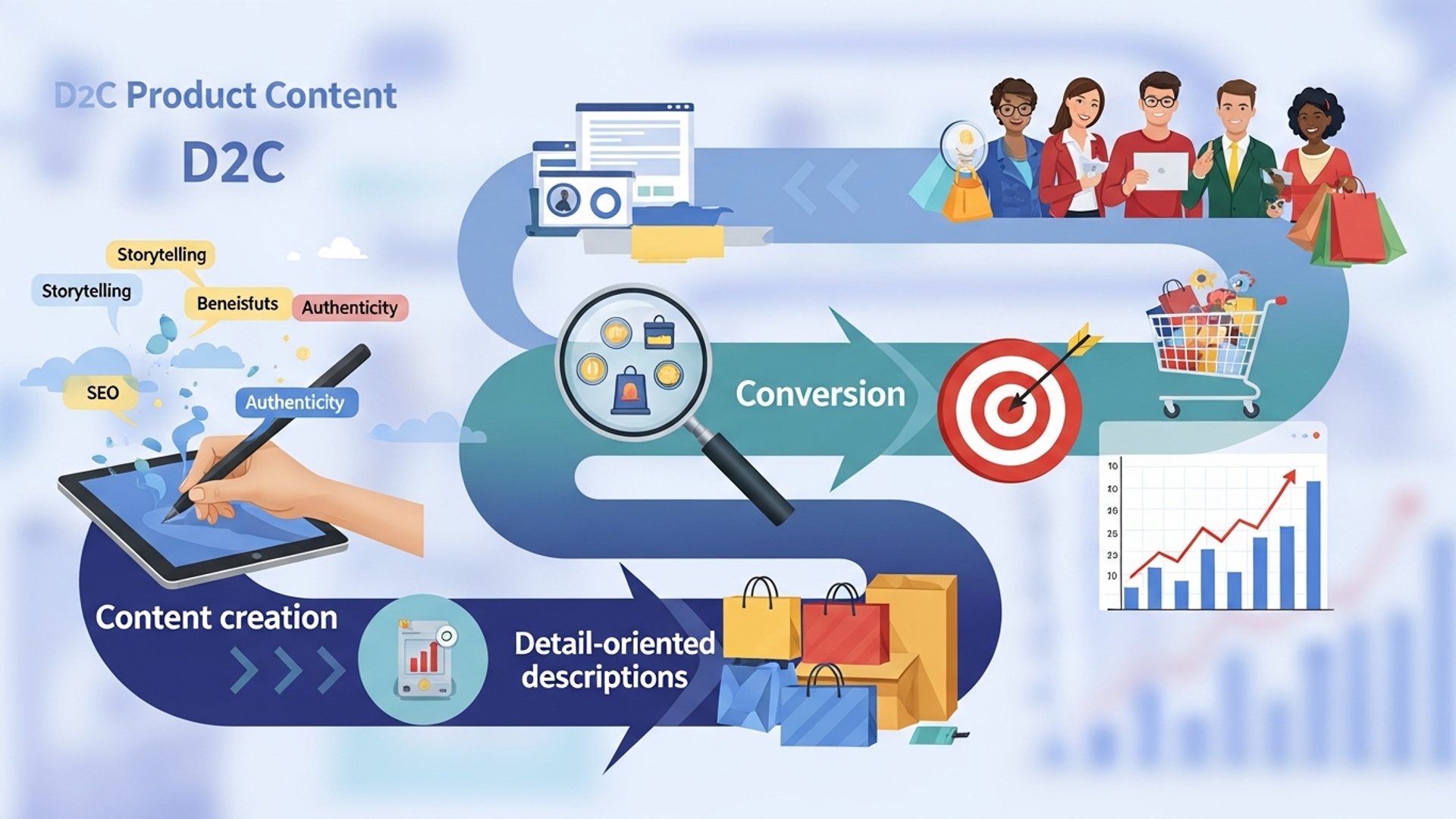
Product content is more than a description. It acts as a digital salesperson that communicates value, solves customer problems, and builds trust. Every headline, image, review, and product description contributes to how customers perceive your brand.
Strong product content helps D2C brands do three essential things:
-
communicate product value clearly
-
create emotional connections with customers
-
guide visitors toward purchase decisions
Brands that invest in high quality d2c product content often see stronger engagement, higher conversion rates, and better customer loyalty.
For example, many successful D2C companies focus on storytelling and lifestyle positioning rather than simply listing product specifications. This strategy transforms ordinary products into meaningful experiences that resonate with modern consumers.
Understanding Your D2C Customer Before Creating Content
Before writing any product content, the most important step is understanding the customer. Effective d2c product content begins with a clear understanding of who your audience is and what motivates them to buy.
Many brands make the mistake of writing generic product descriptions that could apply to almost anyone. In reality, the best performing product content speaks directly to a specific audience.
Create detailed customer personas
Customer personas help you understand your audience beyond basic demographics.
Consider questions such as:
-
What are their daily habits and routines
-
What problems do they want solved
-
What values influence their purchasing decisions
-
What type of lifestyle do they aspire to
For example, a sustainable fashion brand might focus on environmentally conscious shoppers who value ethical sourcing and eco friendly materials.
Identify key customer pain points
Customers purchase products because they want solutions.
Your product content should clearly address the problems your product solves.
Examples include:
-
skincare products solving acne concerns
-
ergonomic chairs reducing back pain
-
smart home devices simplifying daily routines
By focusing on solutions rather than features, your d2c product content becomes far more persuasive.
Understand emotional motivations
Purchases are often driven by emotions rather than logic.
Customers may buy products to feel:
Strong product content taps into these emotional drivers while still providing practical information.
Key Elements of High Converting D2C Product Content
Effective product pages combine multiple elements that work together to persuade the customer. Each element plays a specific role in building trust and guiding the shopper toward a purchase.
Compelling product headlines
Your headline is often the first piece of content a visitor reads.
Instead of using basic product names, highlight a clear benefit.
Example:
Basic headline
Reusable Water Bottle
Optimized headline
Eco Friendly Stainless Steel Water Bottle for Everyday Hydration
Including keywords in headlines also improves search visibility.
Benefit focused product descriptions
Product descriptions should focus on outcomes rather than technical features.
A helpful method is the features advantages benefits framework.
Example:
Feature
Organic cotton fabric
Advantage
Breathable and soft material
Benefit
Provides all day comfort while being gentle on sensitive skin
Using this approach ensures your d2c product content highlights the real value of the product.
High quality product visuals
Visual content is essential in ecommerce.
Customers rely on images and videos to understand how a product looks and functions.
Effective product visuals may include:
These visuals help shoppers imagine themselves using the product.
Customer reviews and social proof
Reviews are one of the most powerful trust signals in ecommerce.
Shoppers often look for validation from other customers before making a purchase.
Strong d2c product content includes:
Displaying authentic feedback helps reduce hesitation and build credibility.
Clear product specifications
While storytelling drives emotion, technical details provide reassurance.
Important information may include:
-
product dimensions
-
materials used
-
compatibility details
-
warranty information
-
care instructions
Presenting this information in an organized format improves readability and customer confidence.
Using Storytelling to Strengthen D2C Product Content
One advantage of the direct to consumer model is the ability to communicate brand stories directly to customers.
Storytelling transforms ordinary product pages into engaging experiences.
Share your brand origin story
Customers appreciate brands with a meaningful mission.
Explaining why your brand exists helps humanize your business and build emotional connections.
For example, a coffee brand might explain how it sources beans directly from small farms to support sustainable agriculture.
Connect products to lifestyle experiences
Instead of focusing solely on functionality, describe how the product fits into the customer’s life.
For example, rather than saying a blanket is warm, describe the comfort of relaxing under it during a quiet evening at home.
This approach helps customers imagine using the product.
Maintain a consistent brand voice
Your brand voice should remain consistent across every piece of d2c product content.
Your tone may be:
-
friendly and conversational
-
premium and sophisticated
-
energetic and motivational
Consistency helps reinforce brand identity and build familiarity.
Optimizing D2C Product Content for SEO
Creating engaging product content is important, but it also needs to be discoverable through search engines.
Search optimized d2c product content helps attract organic traffic from potential customers searching online.
Use relevant keywords naturally
Keyword research helps identify phrases customers use when searching for products.
These keywords should appear naturally in:
-
product titles
-
headings
-
descriptions
-
image alt text
Avoid excessive repetition because keyword stuffing can harm SEO performance.
Optimize product images
Images should include descriptive alt text that explains the image content.
This helps search engines understand visual content and improves accessibility.
Example alt text:
organic cotton yoga leggings for women
Use structured product information
Structured data such as product schema helps search engines display rich results including:
-
product ratings
-
price information
-
availability status
These enhanced listings often increase click through rates.
Internal linking suggestion:
Link to content such as:
-
ecommerce FAQ schema generator tool
-
ecommerce conversion strategies
-
AI ecommerce banner generator
Internal links strengthen topic authority and improve site navigation.
Improving Conversions With Continuous Content Testing
Even well written product pages can benefit from ongoing improvements.
Successful brands regularly test and refine their d2c product content.
Test different headlines
Small headline changes can impact click rates and conversions.
Testing variations allows brands to identify which messaging resonates best.
Experiment with call to action buttons
Common call to action phrases include:
-
add to cart
-
shop now
-
get yours today
-
discover the collection
Testing different phrases and placements can improve purchase rates.
Analyze customer behavior data
Analytics tools help identify areas where customers drop off during the shopping journey.
Metrics to monitor include:
-
time on product page
-
scroll depth
-
conversion rate
-
bounce rate
These insights reveal which sections of your product content may need improvement.
Leveraging User Generated Content
User generated content has become a powerful component of modern ecommerce.
Customers trust real experiences more than brand messaging.
Encourage shoppers to share photos or videos of your products through:
-
social media posts
-
product review sections
-
community hashtags
Displaying this content directly on product pages strengthens authenticity and builds community around your brand.
Conclusion
Strong d2c product content is one of the most valuable assets a direct to consumer brand can develop. It bridges the gap between a product and the customer by clearly communicating value, solving problems, and building emotional connections.
When product pages combine storytelling, persuasive descriptions, high quality visuals, and customer proof, they become powerful conversion tools.
Brands that continuously refine and optimize their product content often see improvements in search visibility, engagement, and sales.
By understanding your audience, focusing on benefits, and creating authentic content experiences, your product pages can do far more than display products. They can inspire trust, create desire, and guide customers toward confident purchasing decisions.