In today’s dynamic marketplace, the ability of D2C brands to thrive hinges on their commitment to continuous D2C product innovation strategies. Unlike traditional retail, the direct-to-consumer model inherently fosters an agile environment where brands can rapidly iterate and refine offerings, leveraging an unfiltered, real-time feedback loop from their customer base.
This direct connection empowers businesses to identify emerging needs, personalize experiences. swiftly launch enhanced or entirely new products that resonate deeply with their target audience.
From subscription box customization to AI-driven product recommendations and community co-creation, successful D2C brands master this iterative process, transforming consumer insights into tangible market advantages and fueling exponential growth.
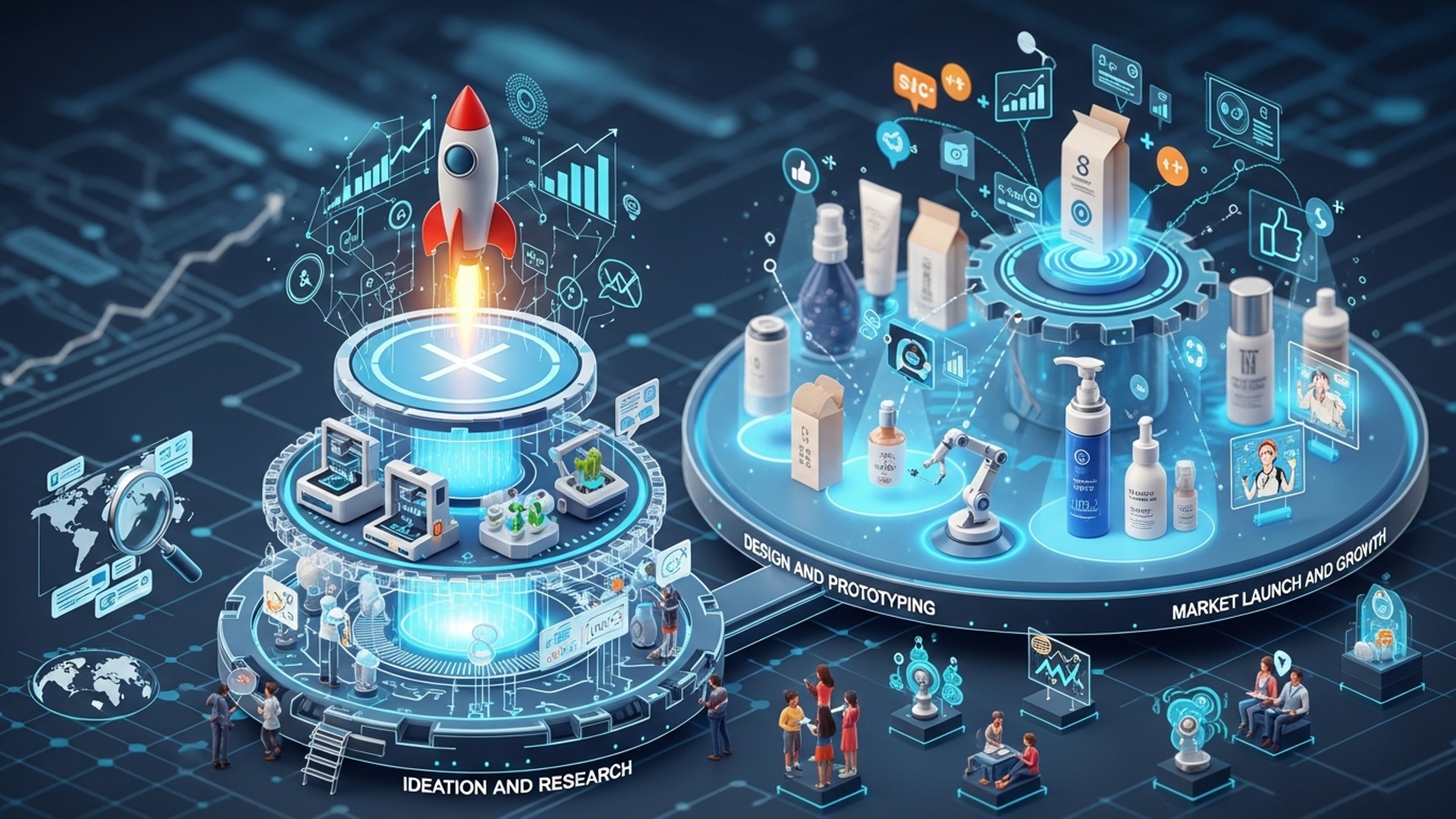
The direct-to-consumer (D2C) model has fundamentally reshaped the retail landscape, giving brands an unparalleled opportunity to connect directly with their customers.
This direct relationship is not merely a sales channel. It is a powerful engine for D2C product innovation, allowing brands to develop, refine, and launch products that truly resonate with their audience.
Unlike traditional retail, where multiple intermediaries separate brands from end users, D2C companies gain immediate and unfiltered insights into consumer needs, preferences, and pain points. This proximity creates an environment primed for continuous improvement and disruptive creativity.
Because D2C brands control every stage of the customer journey, from manufacturing to delivery and post-purchase support, they gain a holistic view of behavior and intent. When supported by structured systems such as customer feedback automation, this visibility transforms into actionable innovation.
It is an exciting time for D2C brands. Their agility and customer-centricity enable them to redefine categories and set new standards for product excellence and market success.
Leveraging Direct Customer Feedback and Data for Breakthroughs
One of the most powerful differentiators of D2C product innovation is direct access to customer data.
Brands operating in the D2C space do not rely on retailers to relay trends or consumer sentiment. They gather intelligence firsthand.
Research from McKinsey shows that companies effectively using customer insights significantly outperform their peers.
This direct channel manifests in several ways.
Surveys and Polls
D2C brands regularly engage customers through surveys, polls, and feedback forms embedded in websites, post-purchase emails, or social media.
These insights help brands understand desired features, pricing expectations, and product limitations.
When this process is structured through centralized systems such as a D2C analytics dashboard, feedback becomes measurable rather than anecdotal.
For example, a beauty brand polling customers about ingredient preferences can directly inform product formulation decisions.
Social Listening and Community Engagement
Social platforms are not just marketing channels. They are research environments.
Brands actively monitor conversations, reviews, and discussions to identify emerging trends and unmet needs. Insights from HubSpot’s marketing research consistently show that brands deeply engaged with their communities experience stronger retention and advocacy.
When paired with structured tools like AI-powered D2C automation, recurring themes across platforms can be categorized and prioritized for product development.
A D2C apparel brand observing increased conversations around sustainability, for instance, may introduce eco-friendly materials into its next collection.
Website Analytics and Behavioral Data
Every click, scroll, and purchase provides insight.
By analyzing product views, cart abandonment rates, search behavior, and conversion paths, brands can uncover demand signals. Industry data from Statista shows that data-driven eCommerce brands consistently outperform intuition-driven competitors.
Tools such as D2C performance analytics systems allow brands to detect patterns early.
If customers repeatedly search for vegan protein on a supplement website, that behavior signals clear demand.
Post-Purchase Reviews and Customer Support Insights
Reviews provide unfiltered feedback on performance and usability.
Customer support tickets often reveal recurring issues or feature requests that can inform product iteration.
Companies like Amazon have long leveraged customer reviews as part of their continuous improvement strategy.
D2C brands can apply similar discipline by structuring qualitative data rather than treating support interactions as isolated incidents.
The D2C Product Innovation Playbook: Agile Development and Rapid Prototyping
The agility inherent in the D2C model accelerates innovation.
Without complex retail distribution channels, brands can embrace agile methodologies and rapid prototyping to reduce time to market.
This approach contrasts sharply with slower, traditional product cycles often discussed in executive case studies featured in Forbes.
Small, Focused Teams
D2C brands often rely on multidisciplinary teams that can ideate, test, and refine products quickly. This reduces bureaucratic delays and enhances responsiveness.
Iterative Design Sprints
Products are developed in short cycles where a minimum viable product is tested with a segment of the audience and refined based on feedback.
When these iterations are tracked through centralized platforms rather than disconnected tools, learning compounds faster.
Flexibility and Adaptability
The ability to pivot quickly is essential.
If testing reveals a flaw or a shift in consumer preference, D2C brands can adjust designs before committing to large-scale production.
Rapid prototyping technologies, including 3D printing and digital modeling, further accelerate this process. A footwear brand testing sole variations with loyal customers before mass production reduces risk while improving relevance.
This lean approach enhances product-market fit before full launch.
Personalization and Community as Core Innovation Drivers
D2C product innovation thrives on personalization and community engagement.
These are not marketing tactics. They are structural advantages.
Personalization: From Segment to Individual
Because D2C brands own their customer data, they can deliver tailored experiences.
McKinsey research highlights that most consumers now expect personalized interactions. Brands that integrate structured systems like AI-driven automation for D2C can analyze preferences and anticipate needs rather than reacting to them.
Customizable products, personalized subscriptions, and predictive recommendations become scalable rather than manual.
Community Building and Co-Creation
D2C brands cultivate engaged communities around shared values and products.
Brands like Olipop continuously refine flavors using customer insight.
Similarly, Saatva disrupted the mattress industry by aligning premium materials with direct consumer transparency.
Community-driven feedback loops generate highly relevant products while strengthening loyalty.
Scaling D2C Product Innovation Without Losing Agility
As D2C brands grow, maintaining agility becomes more complex.
Scaling innovation requires infrastructure.
Implementing robust CRM systems, analytics platforms, and structured feedback tools ensures insights remain actionable at scale. When integrated into a centralized system rather than fragmented tools, data becomes a strategic asset.
Successful brands also preserve experimentation by empowering small innovation squads within larger organizations. This prevents bureaucracy from stifling creativity.
Strategic partnerships further unlock new capabilities, from sustainable packaging innovation to smart technology integration.
Most importantly, the customer voice must remain central. Even at scale, continuous dialogue through structured systems ensures that product decisions remain customer-driven.
Conclusion
D2C brands thrive not merely by launching products, but by embedding innovation into their operational DNA.
True market success stems from:
-
Deep customer understanding
-
Structured feedback loops
-
Agile development
-
Data-informed iteration
Brands like Olipop and Saatva demonstrate that sustained innovation, rooted in direct consumer insight, creates category leadership.
The lesson is simple.
Keep listening.
Keep refining.
Systemize innovation.
That is how D2C brands lead markets.
More Articles
Unlocking D2C Growth with Smart Product Innovation Strategies
How AI Boosts Product Page Conversions for eCommerce Success
How AI product description tool helps D2C brands write better product copy
Leveraging Product Page Optimization AI to Boost Your E-commerce Sales
AI Ecommerce Visual Content Strategy to Boost Engagement and Sales

FAQs
How do D2C brands figure out what new products customers actually want?
D2C brands have a huge advantage because they talk directly to their customers. They use a lot of methods like social media listening, analyzing website data, running surveys. even engaging directly in online communities to comprehend pain points, unmet needs. emerging trends. This direct feedback loop is crucial for spotting opportunities.
What makes D2C product innovation different from how traditional companies do it?
The main difference is speed and directness. Traditional brands often rely on intermediaries and longer development cycles. D2C brands can quickly pivot, test products in smaller batches with real customers. iterate based on immediate feedback. They’re more agile and less risk-averse, often launching ‘minimum viable products’ to gauge interest before full-scale production.
How do D2C companies test new product ideas without spending a fortune?
They employ lean testing methodologies. This often involves pre-orders, crowdfunding, limited-edition runs, or even digital mock-ups to gauge interest before committing to large-scale manufacturing. They might also use A/B testing on their website or social media to see which concepts resonate most with their audience, minimizing financial risk.
After a D2C product launches, how do they keep making it better?
Innovation doesn’t stop at launch. D2C brands are constantly collecting post-purchase reviews, customer service feedback. usage data. They use this data for continuous improvement, whether it’s tweaking ingredients, refining features, improving packaging, or even developing new variations of a popular product. It’s an ongoing cycle of listening and refining.
What’s the role of customer data in driving D2C product innovation and growth?
Customer data is the backbone. D2C brands review everything from purchase history and browsing behavior to demographic data and feedback. This data helps them personalize product recommendations, identify gaps in their offerings, predict future trends. tailor marketing messages, all of which fuel both innovation and sustainable growth.
Do D2C brands involve their community in creating new products?
Absolutely! Many D2C brands actively engage their communities in co-creation. This could mean polling customers on new flavors or designs, inviting them to beta-test products, or even sourcing ideas directly from their most loyal fans. This not only ensures products meet demand but also builds a stronger sense of loyalty and ownership among customers.
How do innovative products actually translate into growth for D2C brands?
Innovative products drive growth by attracting new customers, increasing customer loyalty and repeat purchases. allowing brands to expand into new markets or product categories. A unique, high-quality product generates buzz, word-of-mouth marketing. positive reviews, all of which contribute to a strong brand reputation and a growing customer base, leading to increased revenue and market share.