The digital storefront thrives on compelling imagery. In today’s highly competitive landscape, the ability to generate and optimize visuals at scale is paramount. The advent of ecommerce visual content AI marks a pivotal shift, moving beyond traditional photography constraints to unlock unprecedented creative potential and operational efficiency.
This technology is not merely a tool for automation; it is a strategic asset that allows businesses to create more engaging, personalized, and conversion-driving visual experiences for their customers. As the AI Image Generation category continues its rapid evolution, understanding how to harness these advanced capabilities becomes a differentiator for any online retailer aiming for higher engagement and superior customer journeys.
Understanding Generative AI for E-commerce
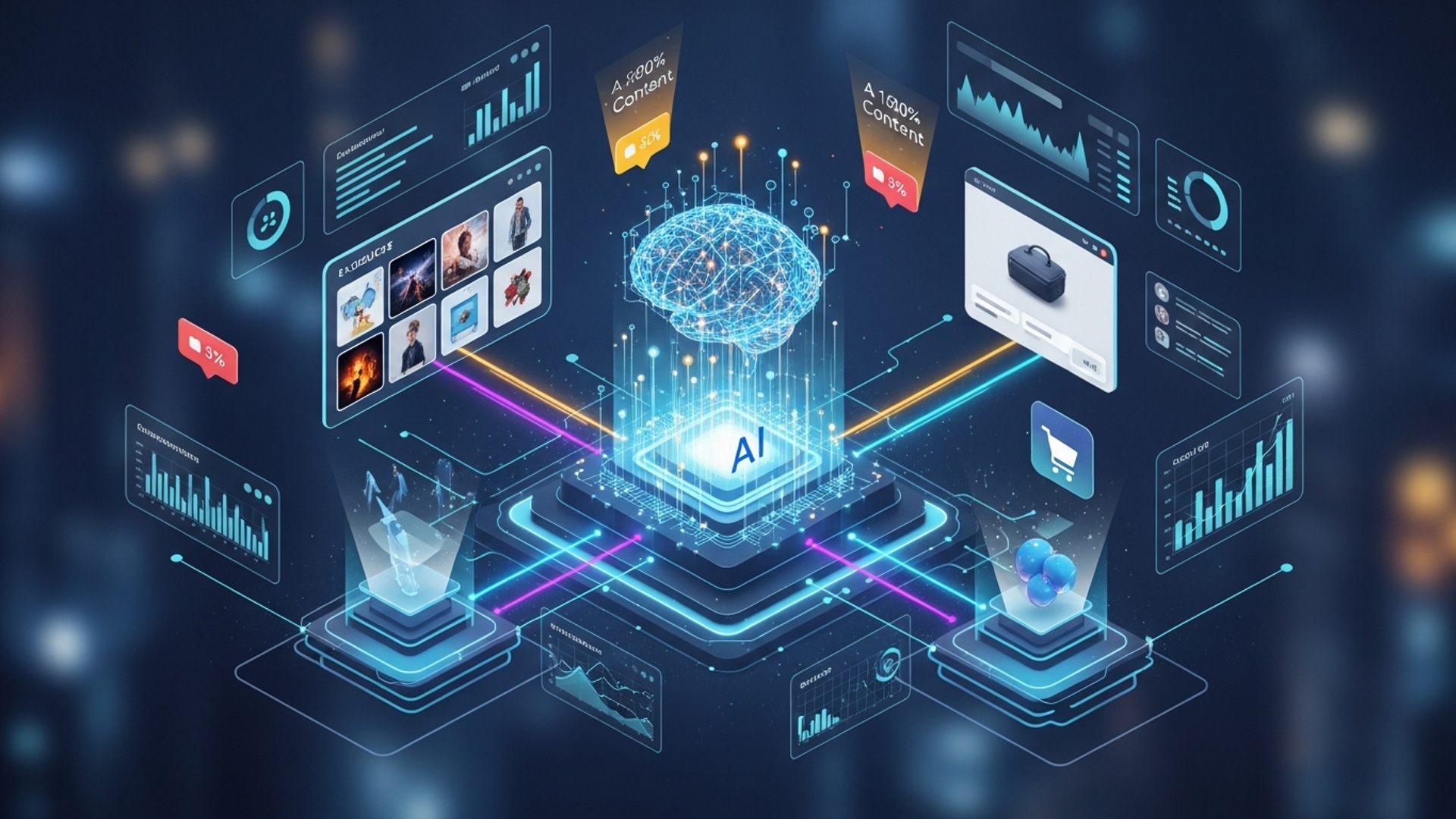
At its core, generative AI, particularly in the realm of image generation, refers to artificial intelligence systems capable of producing novel content, such as images, from textual descriptions or existing data. For e-commerce, this translates into the ability to create product photos, lifestyle images, background scenes, and even entire virtual showrooms without the need for physical sets, models, or extensive photoshoots. The foundational technologies driving this revolution include:
Generative Adversarial Networks (GANs)
These consist of two neural networks, a generator and a discriminator, pitted against each other. The generator creates images, while the discriminator tries to determine if they are real or fake. Through this adversarial process, the generator learns to produce increasingly realistic images.
Diffusion Models
These models work by gradually adding noise to an image until it becomes pure noise, then learning to reverse this process to reconstruct a clean image from noise. This iterative refinement allows for highly detailed and coherent image generation, often excelling in realism and creative control.
Transformers
While often associated with natural language processing, transformer architectures are also applied in vision tasks, enabling AI to grasp complex visual contexts and relationships, crucial for generating intricate scenes. These technologies allow e-commerce businesses to define their visual needs through simple text prompts or by providing reference images, drastically reducing the time and cost associated with content creation.
Key Applications of Ecommerce Visual Content AI
The practical applications of ecommerce visual content AI are vast and continually expanding, offering tangible benefits across various aspects of online retail.
-
Automated Product Photography Enhancement: AI can automatically remove backgrounds, correct lighting, enhance colors, and even generate shadows to make product images more appealing and consistent across a catalog. Tools can standardize image dimensions and resolutions, ensuring a seamless browsing experience.
-
Dynamic Lifestyle Imagery Generation: One of the most impactful applications is the creation of diverse lifestyle images. Instead of costly photoshoots, retailers can generate images of products in various settings, such as a sofa in a minimalist living room, a dress on a diverse range of models, or a gadget in an outdoor adventure scene, all from text prompts. This enables brands to quickly test different visual narratives and cater to specific audience segments.
-
Personalized Visual Experiences: AI can examine customer browsing data and preferences to generate personalized product recommendations with visuals tailored to individual tastes. Imagine a customer seeing a shirt modeled on someone who resembles them, or in a background that matches their home decor style. This level of personalization significantly boosts engagement and conversion rates.
-
Localised Content Creation: For global brands, AI facilitates the rapid generation of visuals that resonate with local cultures and demographics. A product can be shown in a cityscape relevant to London for UK customers, then instantly in a Tokyo street scene for Japanese customers, all without additional photoshoots.
-
A/B Testing and Optimization: AI allows for the rapid generation of multiple visual variants for a single product. E-commerce platforms can then A/B test these visuals to determine which ones perform best in terms of click-through rates, add-to-cart rates, and conversions.
Example Prompt Strategy: A furniture retailer might use a prompt like: “A modern minimalist sofa in a bright, airy living room with a large window overlooking a city skyline, natural light, warm tones, high-resolution.” This prompt can instantly generate multiple variations, allowing the retailer to choose the most appealing option or A/B test several.
Traditional Photography vs. AI Image Generation: A Comparison
| Feature | Traditional Photography | AI Image Generation |
| Cost | High (studio, models, post-production). | Significantly lower (subscription fees). |
| Time to Market | Long (scheduling and editing take weeks). | Extremely fast (minutes to hours). |
| Flexibility | Limited (each visual requires a new shoot). | High (infinite variations). |
| Consistency | Challenging to maintain across shoots. | High (strict stylistic guidelines). |
| Personalization | Impractical for individual customers. | Highly feasible (dynamic generation). |
| Realism | Authentic by nature. | Rapidly improving (near indistinguishable). |
| Ethics | Labor practices, model releases. | Data bias, IP, job displacement. |
Implementing AI for Higher Engagement: Actionable Strategies
Integrating ecommerce visual content AI into your strategy requires a thoughtful approach to maximize its impact on customer engagement.
-
Define Your Visual Goals: Before diving into AI tools, clearly articulate what you want to achieve. Your goals will dictate the type of AI tools and strategies you employ.
-
Master Prompt Engineering: The quality of AI-generated images heavily relies on the prompts provided. Invest time in learning how to write effective, detailed prompts.
-
Integrate with A/B Testing Platforms: Leverage AI to generate a multitude of visual options and then use A/B testing tools to determine which images resonate most with your audience.
-
Personalize Product Pages: Explore AI solutions that can dynamically alter product visuals based on user demographics, geographic location, or browsing history.
-
Create Immersive Experiences: Beyond static images, AI can contribute to 3D models and augmented reality (AR) experiences.
-
Maintain Brand Consistency: Utilize AI tools to enforce strict brand guidelines across all visual content.
-
Stay Updated with AI Advancements: Regularly research new tools and features to ensure your e-commerce strategy remains cutting-edge.
Strategic Personalization Example
A personal anecdote from working with a small fashion brand illustrates the power of this. Initially, they struggled with high photography costs for new collections. By implementing an AI image generation tool, we managed to create over 50 unique lifestyle images for a single dress in a day, testing various backgrounds, model poses, and lighting conditions. The result was a 15 percent increase in product page conversion rates for the AI-generated visuals compared to their previous static product shots, simply because they could present the product in more relatable and diverse contexts.
Conclusion
We have explored how AI is not just a passing trend but a pivotal force in transforming ecommerce visual content for higher engagement. Instead of manual, time-consuming edits, advanced tools now allow you to generate diverse product backgrounds, create hyper-realistic models, or even adapt existing imagery for various campaigns in minutes. My own experimentation with a new apparel line, for instance, showed a noticeable uplift in conversion rates when we leveraged AI to personalize lifestyle visuals for different customer segments, a capability that was unthinkable a few years ago.
The true power of AI lies in its ability to facilitate data-driven optimization, moving beyond mere creation. Consider the recent development of AI-powered A/B testing for visual elements, allowing brands to quickly identify which imagery resonates most with specific demographics, a practice agile D2C businesses are rapidly adopting.
More Articles
Transform Your Product Catalog with AI Generated Images for Stunning Visuals
Unlock E-commerce Growth Using AI for Stunning Social Media Creatives
AI Ecommerce Visual Content Strategy to Boost Engagement and Sales
Generate High Quality Product Photos Instantly Using This AI Tool
How SaaS AI Image Generators Streamline Visual Content Creation for Businesses

FAQs
What does ‘transforming e-commerce visual content with AI’ actually mean?
It means using artificial intelligence tools to significantly improve your product photos and videos, making them more appealing, professional. personalized to capture customer attention and boost your sales.
How does AI specifically enhance product visuals for online stores?
AI can do a lot! It automates tasks like background removal, image upscaling, generating realistic lifestyle scenes, creating product variations. even personalizing visuals for different customer segments, all to make your products look their best.
Will implementing AI for our visual content be complicated or require special tech skills?
Not usually! Most AI visual content tools are designed with user-friendliness in mind. You can often achieve professional results quickly through intuitive interfaces, without needing deep technical knowledge or extensive training.
Can AI really make our e-commerce visuals more engaging for shoppers?
Absolutely! By helping you create stunning, consistent. even personalized images, AI makes your products stand out. This grabs attention, builds trust, keeps customers on your pages longer. ultimately encourages them to buy.
What kind of AI tools should I be looking for to get started?
Look for tools that offer features such as AI background removal, generative AI for creating unique scenes or models, image enhancement (like sharpening or color correction). perhaps even AI-powered video editing or visual search capabilities.
Is this approach only beneficial for large enterprises with big budgets?
Not at all! Many AI visual content solutions are scalable and offer various pricing tiers, including free trials and affordable plans. This makes them accessible and highly beneficial for small and medium-sized e-commerce businesses too.
What’s the main advantage of using AI for my product imagery?
The biggest advantage is achieving professional-grade, high-quality. highly engaging visual content much faster and more efficiently than traditional methods, directly leading to an improved customer experience and increased conversion rates.