In today’s data-rich, fast-paced business environment, the ability to translate vast datasets into actionable intelligence is paramount, making superior AI powered business decisions making a critical competitive differentiator. Forward-thinking organizations are no longer just reacting; they are actively shaping their future by embedding advanced AI and automation tools into their core operations.
These sophisticated platforms leverage machine learning algorithms and predictive analytics to uncover intricate patterns, forecast market trends. optimize resource allocation with unprecedented precision.
This intelligent automation empowers businesses to move beyond traditional guesswork, facilitating real-time strategic insights that drive efficiency, enhance customer experiences through personalization. identify new growth opportunities.
By transforming complex data streams into clear, strategic directives, AI provides the foundational clarity needed to innovate and scale effectively.
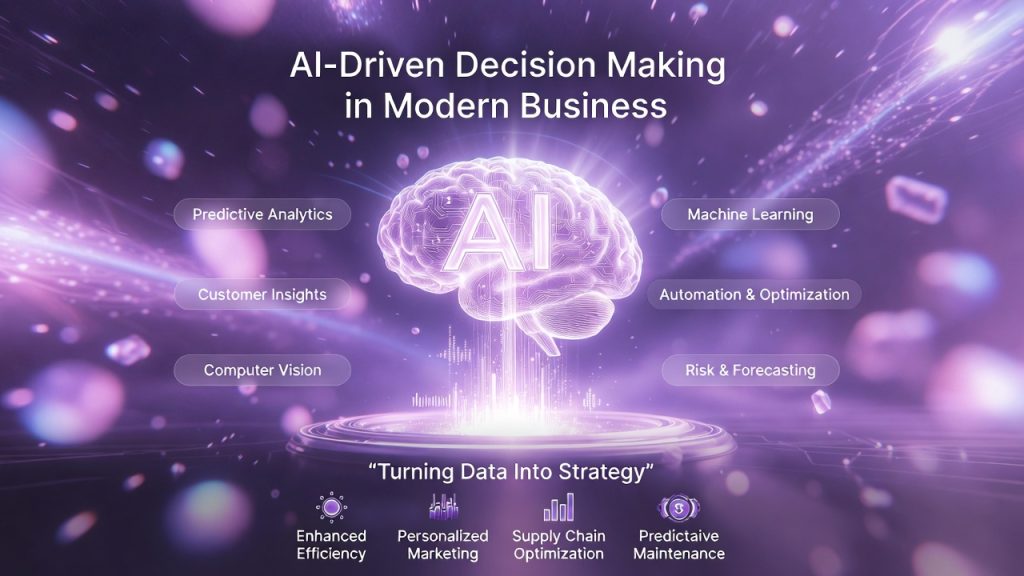
The Imperative of AI-Driven Decision Making
In today’s evolving business landscape, informed and timely decision making is no longer optional. It is essential.
As data volumes expand at an unprecedented rate, human capacity alone cannot process, analyze, and extract meaningful insights efficiently. Artificial intelligence bridges this gap by transforming raw data into actionable intelligence.
Integrating AI into operational frameworks, particularly within the Automation & AI Tools category, allows organizations to:
-
Move beyond intuition
-
Leverage predictive insights
-
Automate complex processes
-
Anticipate market shifts instead of reacting to them
This shift enables strategies that are proactive, data-backed, and future-focused.
Understanding AI-Powered Decisions: Beyond Basic Analytics
AI-powered decision making uses advanced algorithms, machine learning models, and deep learning techniques to:
-
Analyze massive datasets
-
Identify hidden patterns
-
Predict future outcomes
-
Recommend optimal actions
Traditional Business Intelligence (BI) tools focus on reporting historical performance. AI expands this capability by answering:
-
What happened?
-
Why did it happen?
-
What will happen next?
-
What should we do about it?
Core Technologies Behind AI-Driven Decisions
Machine Learning (ML)
Algorithms that learn from data without explicit programming and improve performance over time.
Predictive Analytics
Statistical and machine learning techniques used to forecast future outcomes based on historical data.
Natural Language Processing (NLP)
Enables systems to interpret and generate human language. Useful for analyzing customer feedback, chat logs, and social media data.
Computer Vision
Allows AI to extract meaning from visual inputs. Used in retail analytics, quality control, and security applications.
Together, these technologies form powerful Automation & AI tools that transform business operations.
Real-World Applications of AI-Driven Decision Making
Customer Experience Enhancement
AI analyzes customer interactions across websites, social platforms, and support channels to:
-
Predict churn risk
-
Personalize recommendations
-
Automate support workflows
For example, e-commerce platforms recommend products based on browsing behavior, purchase history, and real-time activity, significantly improving conversion rates.
Optimized Supply Chain & Logistics
AI tools:
-
Predict demand fluctuations
-
Optimize inventory levels
-
Detect supply chain disruptions
-
Suggest alternative routes
A logistics company may analyze weather data, traffic patterns, and delivery history to dynamically reroute shipments, reducing costs and delays.
Targeted Marketing & Sales
AI enables:
-
Advanced audience segmentation
-
Lead scoring
-
Message optimization
A B2B company can score leads based on engagement behavior and firmographic data, allowing sales teams to prioritize high-value prospects.
Financial Risk Assessment
AI models evaluate transaction data to:
-
Detect fraud
-
Assess creditworthiness
-
Forecast market trends
This improves financial security and strategic investment planning.
Predictive Maintenance
AI analyzes sensor data from machinery to predict failures before breakdowns occur.
For example, an energy company monitoring wind turbines can schedule maintenance only when required, reducing downtime and operational waste.
Traditional BI vs AI-Powered Strategic Insights
| Feature | Traditional BI | AI-Powered Insights |
|---|---|---|
| Primary Function | Reports past performance | Predicts future outcomes |
| Data Analysis | Structured dashboards | Structured + unstructured data analysis |
| Decision Support | Supports human decisions | Recommends and automates decisions |
| Key Questions | What happened? | What will happen? What should we do? |
| Complexity | Moderate | High complexity and real-time processing |
| Strategic Impact | Operational improvements | Innovation and competitive differentiation |
AI enables businesses to uncover correlations and trends invisible to traditional analytics systems.
Implementing AI for Smarter Decisions
1. Define Clear Business Problems
Avoid implementing AI without direction. Focus on measurable objectives such as:
-
Reduce churn by 15%
-
Lower inventory costs by 10%
2. Start Small, Then Scale
Launch pilot projects with clear success metrics. For example, deploy an AI chatbot to automate common support queries.
3. Ensure Data Quality
AI systems rely on accurate, clean data. Invest in:
-
Data governance
-
Integration
-
Centralized data infrastructure
4. Build an AI-Literate Culture
Encourage collaboration between:
-
Data scientists
-
Business analysts
-
Domain experts
Education improves adoption and ROI.
5. Choose the Right Tools
Evaluate platforms such as:
-
AWS SageMaker
-
Google AI Platform
-
Azure Machine Learning
Choose solutions aligned with infrastructure and scalability goals.
6. Monitor and Iterate
AI models require continuous monitoring and retraining to maintain accuracy.
For example, a marketing team optimizing ad spend might:
-
Feed historical campaign data into an AI model
-
Monitor KPIs such as CPA and ROAS
-
Allow the system to adjust bids and targeting in real time
Human oversight ensures alignment with business objectives.
Conceptual Example: AI Recommendation Engine
Below is a simplified illustration of collaborative filtering using Python:
from sklearn.neighbors import NearestNeighbors
# Sample purchase data
data = {
‘user_id’: [1, 1, 2, 2, 3, 3, 4, 4],
‘item_id’: [101, 102, 101, 103, 102, 104, 103, 105],
‘purchased’: [1, 1, 1, 1, 1, 1, 1, 1]
}
df = pd.DataFrame(data)
# Create user-item matrix
user_item_matrix = df.pivot_table(
index=‘user_id’,
columns=‘item_id’,
values=‘purchased’
).fillna(0)
# Train nearest neighbors model
model_knn = NearestNeighbors(metric=‘cosine’, algorithm=‘brute’)
model_knn.fit(user_item_matrix)
def get_recommendations(user_id, num_recommendations=2):
user_index = user_item_matrix.index.get_loc(user_id)
distances, indices = model_knn.kneighbors(
user_item_matrix.iloc[user_index, :].values.reshape(1, –1),
n_neighbors=3
)
recommended_items = set()
current_user_purchases = user_item_matrix.loc[user_id]
current_user_items = current_user_purchases[current_user_purchases > 0].index.tolist()
for idx in indices.flatten()[1:]:
similar_user = user_item_matrix.index[idx]
similar_user_items = user_item_matrix.loc[similar_user]
similar_items = similar_user_items[similar_user_items > 0].index.tolist()
for item in similar_items:
if item not in current_user_items:
recommended_items.add(item)
if len(recommended_items) >= num_recommendations:
return list(recommended_items)
return list(recommended_items)
recommendations = get_recommendations(1)
This simplified example demonstrates how AI can generate personalized recommendations that drive engagement and sales.
Conclusion
Boosting your business with AI-powered decisions is not about complexity alone. It is about clarity and foresight.
AI transforms strategy by:
-
Enhancing demand forecasting
-
Improving customer segmentation
-
Automating optimization processes
-
Enabling predictive planning
Start small. Identify one bottleneck. Apply AI. Measure results. Scale strategically.
Businesses that leverage AI to interpret vast datasets and extract actionable insights do not merely react to change. They shape the future.
The opportunity to make smarter, data-driven decisions is here. Organizations that embrace it will define the next era of competitive advantage.
More Articles
How AI Enhances Business Decisions for Smarter Outcomes
Unlock Growth for Your D2C Brand Using Smart Automation Software Solutions
How AI Product Description Tools Can Boost Your Sales and Save Time
Leveraging Product Page Optimization AI to Boost Your E-commerce Sales
Discover Essential AI Tools to Revolutionize Your Content Creation Process

FAQs
What does ‘AI-Powered Decisions and Strategic Insights’ actually mean for my business?
It means using artificial intelligence to assess vast amounts of your business data, identify trends, predict outcomes. recommend actions. This helps you make smarter, data-backed decisions instead of relying purely on gut feelings, leading to better strategies and outcomes.
How can AI really help me grow my business?
AI can help in many ways! It can optimize your marketing spend by identifying the most effective channels, personalize customer experiences to boost loyalty, streamline operations to cut costs, predict future demand to manage inventory better. even spot new market opportunities you might have missed.
Do I need a ton of technical knowledge to use this?
Not necessarily. While the AI itself is complex, many solutions are designed with user-friendly interfaces. The focus is often on providing clear, actionable insights rather than requiring you to be an AI expert. You’ll typically work with tools that translate AI’s findings into plain language and recommendations.
What types of business decisions can AI influence?
AI can influence a wide range of decisions, from daily operational choices like inventory management and customer service routing to high-level strategic planning, such as market entry strategies, product development, pricing optimization. even risk assessment.
Is this only for big companies, or can small businesses benefit too?
Absolutely not just for big companies! While larger enterprises might have more data, scalable AI solutions are increasingly accessible and affordable for small and medium-sized businesses (SMBs). The benefits of efficiency, insight. competitive advantage are valuable for businesses of any size.
How quickly can I expect to see results after implementing AI for insights?
The timeline can vary depending on the complexity of the AI solution and the data available. Some operational improvements might show results within weeks or a few months, while more strategic shifts based on deeper insights could take longer to fully materialize and demonstrate their impact.
What kind of data does AI typically use to provide these insights?
AI thrives on data from various sources! This includes internal data like sales records, customer interactions, website analytics, supply chain metrics. operational logs. It can also incorporate external data such as market trends, competitor analysis, social media sentiment. economic indicators to provide a comprehensive view.