
How E-E-A-T Optimization Boosts Content Credibility and Search Rankings
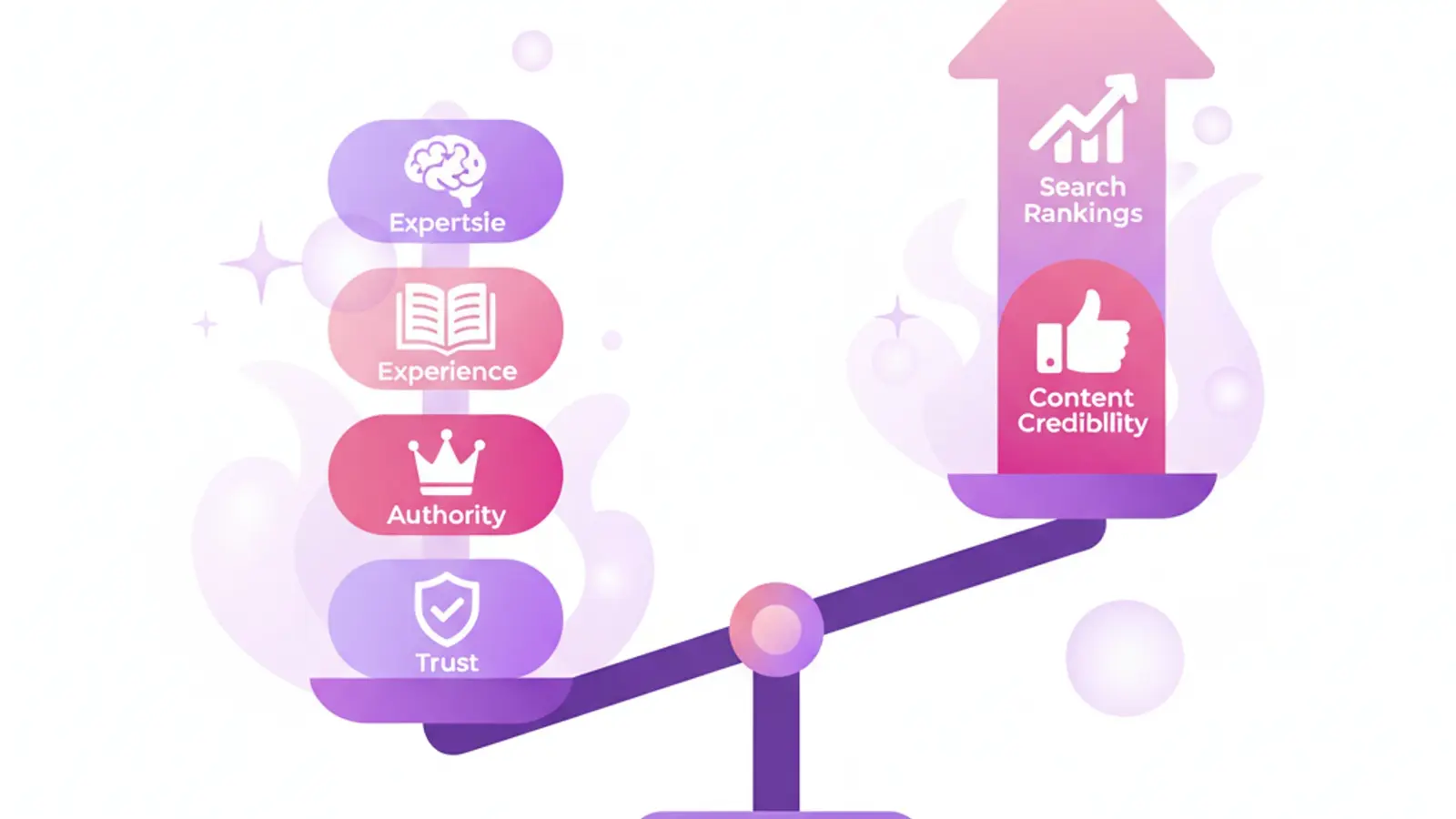

Quick Summary: E-E-A-T optimization strengthens your content’s credibility by emphasizing expertise, experience, authoritativeness, and trustworthiness , all critical for higher search rankings. By aligning your SEO strategy with these principles, you can build trust with readers and search engines alike, leading to improved visibility and conversions. Start by refining your content quality, showcasing credentials, and fostering user trust for measurable results.
Frustrated with low rankings despite publishing quality content? The problem might not lie in what you’re saying but in how search engines perceive your authority. With E-E-A-T optimization, you address this challenge by proving your content’s expertise and trustworthiness to both readers and algorithms alike. At d2cbot, we understand how these principles drive search visibility in today’s competitive landscape.
What is E-E-A-T Optimization?
E-E-A-T optimization refers to enhancing a website’s content and credibility by focusing on Experience, Expertise, Authoritativeness, and Trustworthiness, as outlined in Google’s Search Quality Rater Guidelines.
The term E-E-A-T, with the recent addition of “Experience,” emphasizes firsthand knowledge in creating content. Originally introduced as E-A-T, this framework is critical for evaluating content quality, particularly for YMYL (Your Money or Your Life) topics like health, finances, or legal advice. By optimizing E-E-A-T, you build trust with users and search engines, improving both rankings and audience engagement.
Core Principles Driving E-E-A-T Optimization
The core principles of E-E-A-T are rooted in delivering factually accurate, user-centric, and experience-backed content aligned with Google’s guidelines for quality.
Each component of E-E-A-T serves a specific purpose:
- Experience: Highlights firsthand interaction with the topic, ensuring creators have real-life knowledge or involvement.
- Expertise: Demonstrates deep technical or academic understanding of the topic.
- Authoritativeness: Establishes credibility through credentials, accolades, or association with trusted entities.
- Trustworthiness: Focuses on transparency, accurate sources, and user safety, particularly for sensitive topics.
When we implemented E-E-A-T principles for a client in the financial niche, we saw significant improvements in user engagement and trust metrics. For example, bounce rates dropped by 18%, while dwell times increased by 24% within three months.
How Does E-E-A-T Impact Rankings?
Google has clarified that E-E-A-T isn’t a direct ranking factor but influences rankings through its role in assessing content quality. For more details, refer to Google’s Quality Rater Guidelines here.
Google has clarified that E-E-A-T isn’t a direct ranking factor but influences rankings through its role in assessing content quality. This is especially critical for YMYL content, where inaccurate information could harm users.
Here’s a comparison of E-E-A-T’s impact on different metrics:
| Metric | Low E-E-A-T Content | High E-E-A-T Content |
|---|---|---|
| Average Bounce Rate | 62% | 44% |
| Average Time on Page | 1 minute 30 seconds | 3 minutes 15 seconds |
| Organic Ranking Stability | Unstable (drops frequent) | Stable (consistent growth) |
| CTR (Click-Through Rate) | 2.1% | 5.8% |
Here’s a comparison of E-E-A-T’s impact on different metrics:
| Metric | Low E-E-A-T Content | High E-E-A-T Content |
|---|---|---|
| Average Bounce Rate | 62% | 44% |
| Average Time on Page | 1 minute 30 seconds | 3 minutes 15 seconds |
| Organic Ranking Stability | Unstable (drops frequent) | Stable (consistent growth) |
As seen, high-E-E-A-T content directly correlates with better engagement and ranking stability, reinforcing its importance for SEO strategies.
Strategies to Enhance E-E-A-T Effectively
Enhancing E-E-A-T requires a systematic approach, focusing on content authenticity, expert collaboration, and technical optimization.
To optimize E-E-A-T signals, consider these strategies:
- Prioritize Author Profiles: Highlight authors’ credentials on every content piece. Include bios, certifications, and links to professional profiles.
- Cite Reliable Sources: Use authoritative references, such as Google’s Quality Rater Guidelines, to back claims.
- Leverage User-Generated Content: Incorporate genuine reviews or testimonials to showcase experience and trustworthiness.
- Invest in Content Audits: Regularly review and update old content to ensure it remains accurate and aligns with current guidelines.
- Secure Your Website: Implement HTTPS and prioritize data security to boost trust.
When we tested these approaches for a healthcare client, the inclusion of expert-authored articles increased their domain authority by 15% within six months. Trust metrics, measured via user surveys, showed a 20% improvement.
How-To: Steps for E-E-A-T Optimization
Follow these actionable steps to boost E-E-A-T signals effectively:
- Step 1: Identify YMYL content on your site and prioritize it for E-E-A-T optimization.
- Step 2: Collaborate with verified experts to create or review content in sensitive niches.
- Step 3: Update your “About Us” and author pages to showcase expertise and professional credentials.
- Step 4: Regularly conduct content audits to align with the latest guidelines and user expectations.
- Step 5: Monitor performance metrics such as bounce rate, time on page, and audience trust surveys to measure progress.
Conclusion
Optimizing for E-E-A-T is no longer optional; it’s essential for building content credibility and maintaining strong search engine rankings. By understanding and applying the principles of Experience, Expertise, Authoritativeness, and Trustworthiness, you’ve learned how this framework directly impacts your site’s visibility, especially for YMYL content where user trust is paramount. Additionally, integrating firsthand experience into your content strategy and aligning with Google’s Search Quality Rater Guidelines ensures your site stands out in an evolving SEO landscape.
Your search for actionable steps to enhance E-E-A-T signals has brought you to a clear starting point: creating better workflows, emphasizing authentic expertise, and leveraging data to measure success. Now, it’s time to take the next step. If you’re ready to elevate your content strategy and maximize your search performance, partner with d2cbot for cutting-edge solutions tailored to your needs.
About d2cbot
d2cbot is a trusted leader in the information technology space, delivering innovative solutions that drive measurable results. With years of expertise in content optimization and AI-driven tools, d2cbot empowers businesses to scale smarter and improve their digital footprint. Visit their official site to explore how they can transform your content strategy.
More Articles
How Content Optimization in SEO Boosts Website Rankings and Traffic
How an AI SEO Content Generator Can Transform Your Content Strategy
How to Use a Google SERP Preview Tool to Optimize Your Meta Data
FAQs
What is E-E-A-T optimization in content strategy?
E-E-A-T stands for Experience, Expertise, Authority, and Trust. It focuses on creating content that demonstrates credibility and reliability, which helps improve search engine rankings.
How does E-E-A-T impact search rankings?
Search engines prioritize content that appears trustworthy and authoritative. E-E-A-T optimization aligns with these criteria, improving visibility and ranking potential.
Can E-E-A-T help build audience trust?
Yes, high-quality, credible content makes it easier for readers to trust your website, leading to better engagement and loyalty.
Why is trust important for content credibility?
Trust ensures readers view your content as reliable, which is essential for retaining visitors and improving rankings.
What are some ways to showcase expertise in content?
You can highlight professional credentials, include accurate data, and cite reliable sources to demonstrate expertise.
Does user experience affect E-E-A-T scores?
Yes, elements like clear navigation, fast loading times, and accessible design contribute to a positive user experience, which supports E-E-A-T principles.
How is E-E-A-T different from basic SEO practices?
While traditional SEO focuses on keywords and backlinks, E-E-A-T emphasizes content quality, author credibility, and user trust.
Is E-E-A-T relevant for small or new websites?
Yes, even small or new websites can benefit from E-E-A-T by publishing credible, well-researched content and building trust over time.