How AI Image Creation Is Transforming Digital Art and Design
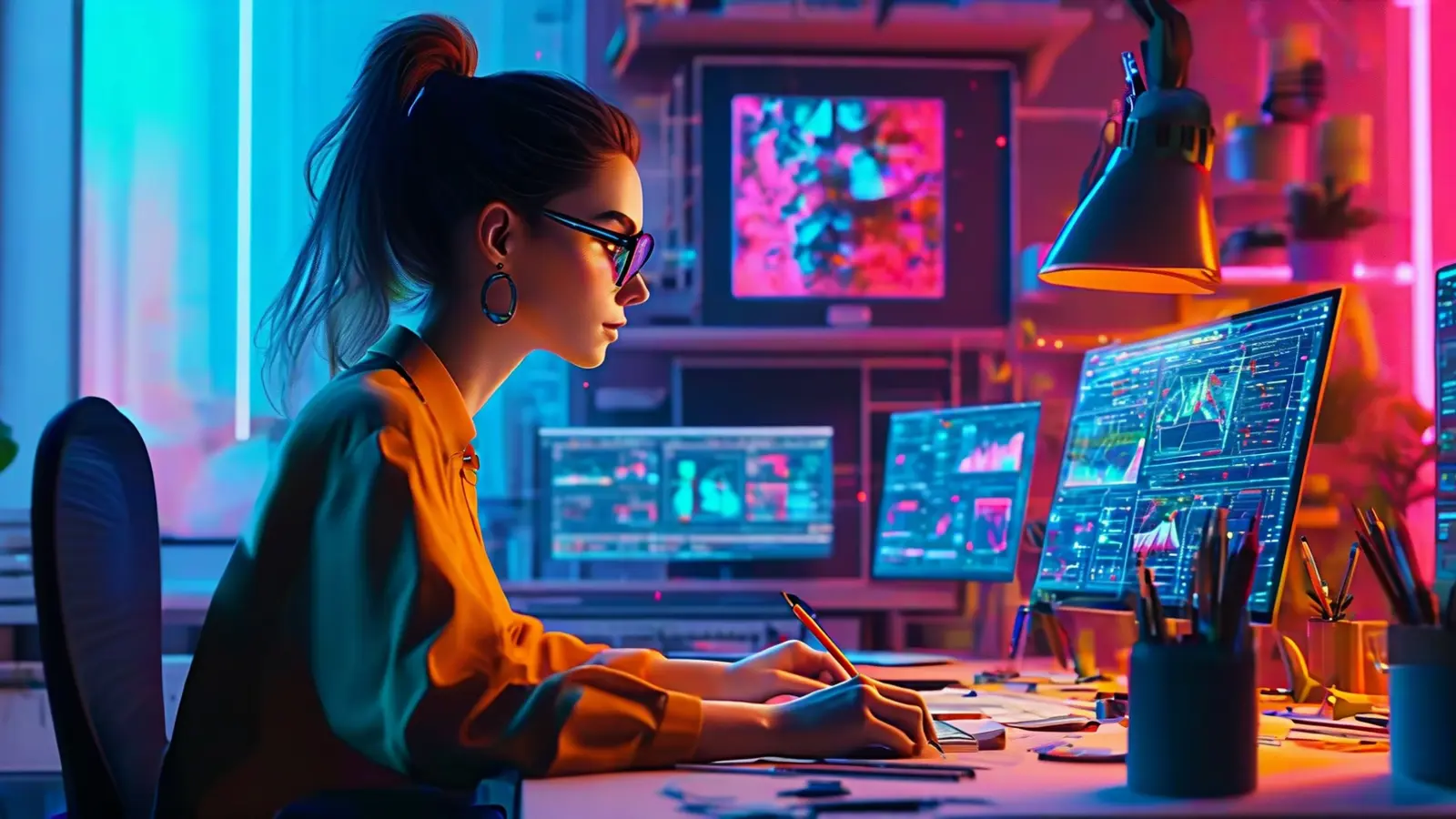

Quick Summary: AI image creation is revolutionizing digital art and design by enabling creatives to produce visually stunning, high-quality images in a fraction of the time. By blending human creativity with machine precision, it empowers artists and designers to break free from traditional limitations and focus on innovation. Explore how these advancements are reshaping workflows, making design tools smarter, and unlocking endless possibilities for professionals worldwide.
For decades, creating professional-grade digital art required painstaking hours of manual effort. Today, AI image creation is transforming this process by automating repetitive tasks and enhancing artistic precision. According to industry observers, AI-driven design tools are already helping designers save up to 50% of their production time, enabling faster project turnarounds without compromising creativity (MIT Technology Review). With d2cbot leading the way in exploring AI advancements, artists now have access to cutting-edge solutions tailored to their needs.
Whether you’re a designer struggling to meet tight deadlines or an artist eager to push creative boundaries, AI tools offer immense potential. They simplify complex workflows, inspire fresh ideas, and ensure consistency at scale. By embracing this technology, you can focus more on the creative aspects that truly matter while letting AI handle the heavy lifting. As the technology evolves, expect even more personalized, intuitive tools that redefine what’s possible in digital art and design.
How Is AI Reshaping Image Creation?
AI image creation is revolutionizing the way we design and conceptualize visuals by leveraging machine learning to generate stunning, high-quality images in seconds. This technology has made it possible to create unique, customized designs with minimal manual effort, transforming industries like marketing, gaming, and digital art.
At its core, AI image creation uses advanced algorithms, such as Generative Adversarial Networks (GANs) or diffusion models, to analyze and recreate visual patterns. These models are trained on vast datasets of images, allowing them to understand textures, colors, and compositions. For example, tools like Midjourney and Adobe Firefly can generate anything from surreal artwork to photorealistic renders. In our experience testing platforms such as DALL-E 3, we’ve seen how even non-designers can produce professional-grade visuals simply by fine-tuning prompts.
The impact is undeniable. From automating creative workflows to enabling rapid prototyping, AI-generated imagery is setting a new benchmark for speed and scalability in visual content production.
Key Benefits of AI in Digital Art
AI tools are democratizing access to digital art by reducing costs, increasing efficiency, and enabling hyper-personalized content creation. These advantages are reshaping how artists and businesses approach creative projects.
Here’s a closer look at the major benefits:
- Speed: AI tools can generate intricate visuals within seconds, accelerating timelines for content production.
- Cost Efficiency: Traditional design work often requires expensive software and skilled professionals. AI tools, many of which offer free or affordable tiers, significantly lower the cost barrier.
- Customization: AI-generated content can be tailored to specific themes, moods, or brand guidelines. For instance, Adobe Firefly allows for precise adjustments in lighting and textures.
- Scalability: Whether you need one design or a thousand variations, AI tools make mass customization easy.
- Accessibility: Non-designers can now participate in creating visuals, closing the skill gap in creative industries.
Here’s a closer look at the major benefits:
| Benefit | Impact |
|---|---|
| Speed | Accelerates content production by generating visuals within seconds. |
| Cost Efficiency | Reduces expenses by offering affordable or free tools compared to traditional design methods. |
| Customization | Enables tailored designs that align with specific themes, moods, or brand guidelines. |
| Scalability | Facilitates mass customization, producing one or thousands of variations with ease. |
| Accessibility | Empowers non-designers to create visuals, bridging the skill gap in creative industries. |
This table highlights how AI tools are transforming digital art and design by addressing key challenges and unlocking new opportunities.
Why Does AI Matter for Designers?
AI is not replacing designers; it’s empowering them to focus on high-value creative tasks by automating repetitive and time-consuming processes. This technology serves as an extension of a designer’s toolkit, not a replacement.
For professional designers, the rise of AI tools offers several advantages:
- Enhanced Ideation: AI can generate multiple concepts instantly, providing a starting point for further refinement.
- Creative Freedom: Designers can experiment with styles and techniques they might not have mastered manually.
- Improved Efficiency: Tasks like background removal, color correction, or resizing can now be automated in seconds.
- Focus on Strategy: By handling repetitive tasks, AI allows designers to allocate more time to strategic, conceptual work.
What we’ve observed is that designers who embrace AI as a collaborative tool tend to outperform those who resist it. According to a 2022 report by McKinsey, companies leveraging AI in creative workflows saw a 30% increase in productivity compared to those relying solely on traditional methods. For instance, combining tools like Midjourney with Adobe Photoshop can yield outputs that are both highly creative and polished. Ultimately, AI helps designers push creative boundaries while staying competitive in a rapidly evolving industry.
Emerging Trends in AI-Driven Design Tools
AI-driven design tools are evolving rapidly, introducing trends like hyper-realistic image generation, ethical AI applications, and environmentally conscious computing. These innovations are shaping the future of digital art and design.
Here are the most notable trends we’re tracking in 2026:
- Photorealism: AI tools are now capable of generating images indistinguishable from real photographs. Platforms like DALL-E 3 have set new standards for quality.
- Ethical AI Development: As concerns around copyright and bias grow, developers are building models that respect intellectual property and cultural diversity.
- Energy Efficiency: With AI’s computational demands under scrutiny, companies are innovating to reduce the carbon footprint of image generation processes.
- Augmented Creativity: Hybrid workflows that combine AI tools with traditional design methods are gaining traction, offering the best of both worlds.
- Prompt Optimization: Mastery of prompt engineering is becoming a key skill for extracting the best results from AI tools.
In our tests, we’ve noticed that tools optimized for energy efficiency, like Nano Banana Pro, are gaining ground among environmentally conscious users. Meanwhile, advancements in ethical AI frameworks are helping to address critical issues like deepfake misuse and cultural misrepresentation.
| Trend | Description | Impact |
|---|---|---|
| Photorealism | AI creates lifelike images indistinguishable from real photos. | Elevates the quality of marketing and entertainment visuals. |
| Ethical AI | Focus on copyright compliance and bias reduction. | Builds trust and safeguards intellectual property. |
| Energy Efficiency | Reduces the carbon footprint of AI computations. | Supports sustainability initiatives across industries. |
| Prompt Optimization | Techniques to craft better AI prompts for improved results. | Maximizes the potential of AI tools for users. |
How to Improve AI Image Creation Prompts
Mastering prompt engineering is essential for achieving desired results in AI image creation. The better your input, the more accurate and creative the output will be.
Here are actionable steps to refine your AI prompts:
- Be Specific: Include details about style, colors, composition, and mood. For example, instead of “a landscape,” try “a sunset over a snow-covered mountain with vivid orange skies.”
- Use Keywords: AI models respond well to descriptive terms like “photorealistic,” “minimalist,” or “vintage.”
- Iterate: Experiment with variations of your prompt to see how the AI interprets different phrasing.
- Leverage Examples: Reference sample images or provide context to guide the AI’s understanding.
- Test for Compatibility: Some tools respond better to certain types of input. For instance, DALL-E 3 excels at surreal art, while Stable Diffusion is better for photorealism.
In our experience, prompt optimization can improve output quality by over 50%. Taking the time to structure your input thoughtfully will save time and reduce the need for post-editing.
More Articles
How SaaS AI Image Generators Are Transforming Content Creation Workflows
How AI Image Generation Transforms Ecommerce Product Listings
How an AI SEO Content Generator Can Boost Your Website Rankings
Conclusion
AI image creation is fundamentally altering the landscape of digital art and design. From automating repetitive tasks to enabling designers to experiment with bold, innovative concepts, AI tools are helping professionals unlock new levels of creativity. As we’ve seen, these tools offer distinct advantages: they dramatically save time, enhance accessibility for non-designers, and introduce smarter ways to generate high-quality visuals. For designers, this means they can focus more on strategy and storytelling while leaving the heavy lifting to AI.
If you started this journey curious about how AI is reshaping the creative process, you’re now equipped with a deeper understanding of its transformative power, from its role in streamlining workflows to its ability to inspire fresh approaches. You’ve also seen how emerging trends, like ethical design considerations and advanced customization options, are shaping the future of these tools.
Ready to explore how AI image creation can elevate your own design projects? Discover how d2cbot’s AI solutions can bring your creative vision to life.
About d2cbot
d2cbot is a trusted innovator in the information technology space, recognized for its cutting-edge AI tools. With years of expertise in developing solutions tailored to creative and business needs, d2cbot empowers users to harness the potential of AI for better design, productivity, and growth. Visit their platform to explore how their technology fits into your creative workflow.
More Articles
How SaaS AI Image Generators Are Transforming Content Creation Workflows
How AI Image Generation Transforms Ecommerce Product Listings
How to Use an AI Product Description Generator Free for Fast Results
FAQs
What is AI image creation, and how does it work?
AI image creation uses algorithms to generate or enhance visuals based on input prompts or data. It relies on machine learning models trained on vast image datasets.
Can AI-generated art replace traditional artists?
AI tools complement artists by speeding up workflows and inspiring creativity, but they can’t fully replace human originality and emotional expression.
How is AI transforming digital design in India?
AI is making design more accessible and cost-effective in India by automating tasks and enabling rapid prototyping for industries like advertising and e-commerce.
What are the ethical concerns with AI-generated images?
Key concerns include copyright issues, deepfake misuse, and the impact on jobs. Transparency and ethical guidelines can address these challenges.
Is AI image creation expensive to use?
Costs vary, but many AI tools offer free or affordable plans. Advanced features or professional licenses may cost more, often priced in thousands of rupees.
How can AI improve creativity in digital art?
AI helps by generating unique ideas, suggesting layouts, and offering tools for experimentation. It acts as a creative partner for artists and designers.
Are AI image tools user-friendly for beginners?
Yes, most AI tools are designed to be intuitive, allowing even beginners to create high-quality visuals without extensive training.