Speak Their Language: Scale Global Sales With AI Content in 14 Languages

Expanding an online retail business into international markets is one of the most effective ways to accelerate revenue growth. However, reaching cross-border consumers requires far more than copying existing product descriptions into basic machine translation tools. Modern global shoppers expect fully localized shopping experiences that respect cultural nuances, regional search habits, and local terminology. Managing thousands of product SKUs across multiple international storefronts manually creates a severe operational bottleneck. Deploying an ai ecommerce content generator 14 languages solves this challenge by automating the creation, optimization, and management of localized product catalogs. This structured approach allows direct-to-consumer brands to launch in new global markets faster, maintain consistent messaging across regions, and capture high-intent organic search traffic without inflating content operational expenses.
Why Global Ecommerce Brands Need Multilingual Content
Cross-border e-commerce represents an unprecedented growth opportunity for digital brands, but success hinges on customer trust. International consumers are significantly more likely to complete a purchase when browsing a storefront presented in their native language.
Simply relying on automated browser translations creates conversion friction, as raw translations often misinterpret technical product specifications, sizing charts, and local idioms. Delivering native e-commerce content meets local customer expectations, reduces bounce rates, and builds immediate brand credibility.
Furthermore, search engines prioritize localized content tailored to specific regional queries. By publishing dedicated, high-quality content in local languages, cross-border e-commerce stores improve their organic visibility, rank for high-intent keywords, and deliver a seamless brand experience across every market they serve.
What Is an AI Ecommerce Content Generator in 14 Languages?
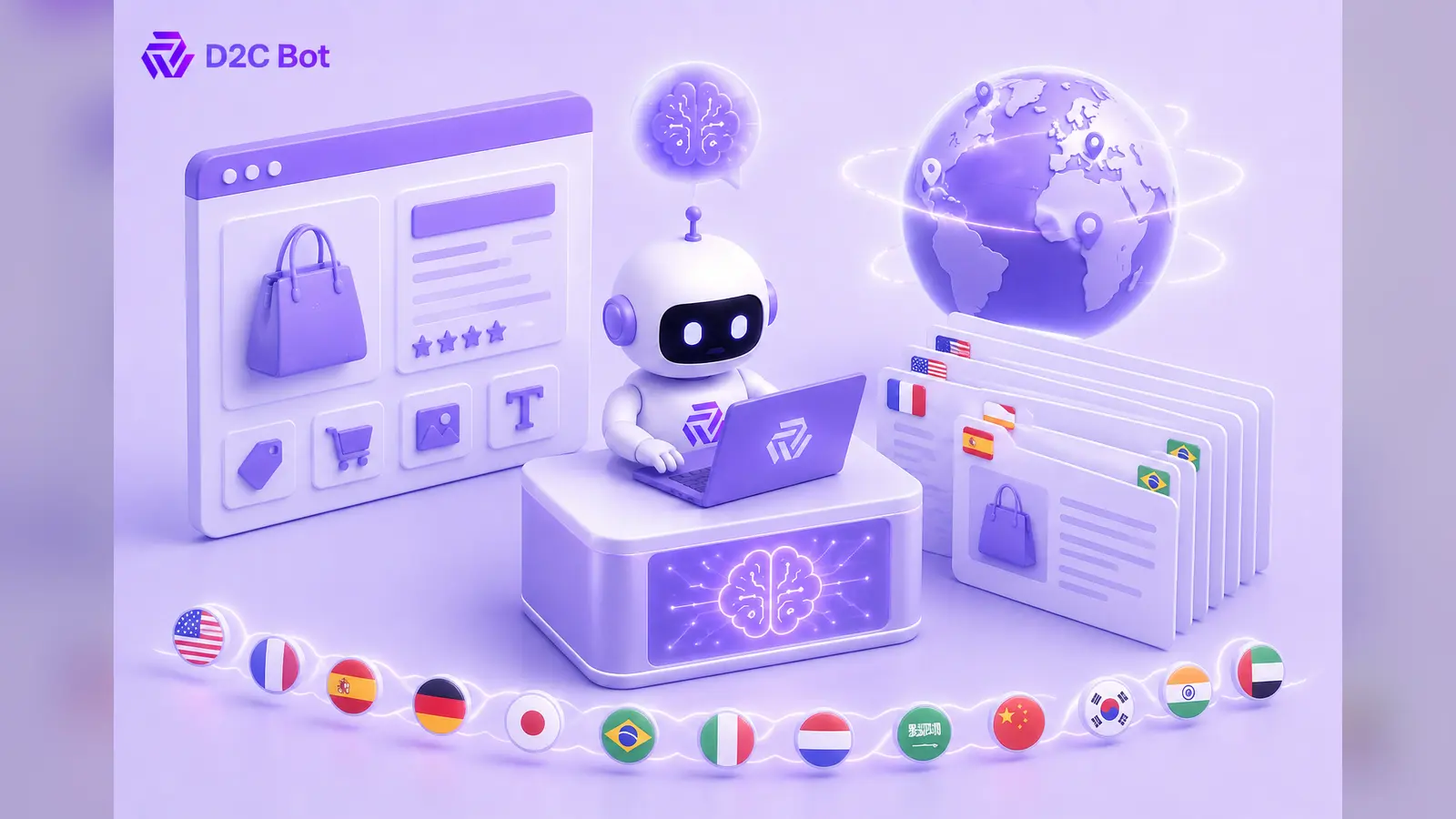
An ai ecommerce content generator 14 languages is an advanced content engine engineered specifically to produce, localize, and manage catalog copy across fourteen distinct regional markets simultaneously. Unlike basic translation software that performs rigid word-for-word substitutions, an AI-powered system analyzes product attributes, target audience demographics, and search intent to generate contextually relevant product listings.
+--------------------------------------------------------------------------+ | MULTILINGUAL CATALOG AUTOMATION PIPELINE | | | | [ Central Product Feed ] --> [ AI Localization Engine ] | | | | | v | | [ 14 Regional Storefronts ] <-- [ SEO & Context Validation ] | +--------------------------------------------------------------------------+
By leveraging advanced large language models, these platforms automate high-volume tasks including drafting product titles, writing meta descriptions, structuring bulleted features, and building category page buyer guides. The system preserves your core brand voice while adapting measurements, tone, and vocabulary to match local consumer preferences. This automated workflow enables scaling e-commerce teams to manage expansive international catalogs from a single centralized dashboard.
Key Benefits of AI-Powered Multilingual Ecommerce Content
Integrating an ai ecommerce content generator 14 languages into your international growth stack yields immediate operational and financial advantages over traditional localization agencies.
- Accelerated Time to Market: Publish complete, localized product collections across fourteen international sales channels in hours instead of waiting weeks for manual agency translation.
- Unified Brand Voice: Maintain uniform tone, structural guidelines, and messaging quality across all global storefronts automatically.
- Enhanced Multilingual SEO: Incorporate high-volume regional search queries naturally to capture organic market share in local search engine results pages.
- Substantial Cost Savings: Reduce localization expenses significantly by replacing expensive per-word human agency fees with efficient automated software workflows.
- Frictionless Market Expansion: Test new international markets rapidly with fully localized storefront content before committing heavy capital investments.
Translation vs Localization: Why the Difference Matters
Many brands mistake direct translation for true localization, leading to poor customer engagement and low conversion rates in international markets.
+------------------+ +-------------------+ +--------------------+ | Raw Source Text | --> | Direct Translation| --> | Awkward Phrasing & | | (English SKU) | | (Word-for-Word) | | Misaligned Search | +------------------+ +-------------------+ +--------------------+ | v +------------------+ +-------------------+ +--------------------+ | Localized Output | <-- | AI Context Engine | <-- | Cultural & Search | | (Native Quality) | | (14 Languages) | | Intent Adaptation | +------------------+ +-------------------+ +--------------------+
Cultural Relevance and Language Adaptation
Direct translation converts text verbatim from one language to another, often missing cultural context and regional idioms. Localization adapts the entire message to feel natural to native speakers, adjusting tone, humor, and style to match local expectations.
Regional Preferences and Search Behavior
Consumers in different countries often search for the exact same product using completely different terminology or functional descriptors. Effective AI localization analyzes local search volume to select the precise keywords target buyers use in daily life, driving higher organic traffic and store conversions.
Best Practices for Managing Multilingual Ecommerce Content
Executing a successful international content strategy requires combining software automation with disciplined operational workflows:
- Establish Centralized Workflows: Manage all global language assets from a single centralized administrative engine to maintain version control and prevent catalog discrepancies.
- Implement Human Review Protocols: Deploy native language specialists to review and validate automated drafts for high-margin hero products and sensitive brand pages.
- Perform Regional Keyword Research: Identify local search phrases rather than translating domestic seed keywords directly to maximize regional search rankings.
- Standardize Product Metadata: Ensure meta titles, image alt tags, and structured JSON-LD schema are fully translated for every supported language.
- Maintain Continuous Quality Assurance: Conduct periodic sampling audits across regional storefronts to verify formatting, currency symbols, and sizing conversions.
How D2CBot Simplifies Global Ecommerce Content Workflows
Managing high-volume international catalogs across multiple sales channels requires specialized e-commerce operations software. D2CBot offers a comprehensive platform designed specifically to streamline international e-commerce workflows and catalog administration for growing direct-to-consumer brands.
Instead of relying on disconnected translation apps or slow agency partners, D2CBot provides an integrated environment powered by an ai ecommerce content generator 14 languages. The platform allows merchants to import core product feeds, apply custom brand guidelines, and generate contextually accurate, search-optimized product descriptions across global markets automatically. By connecting catalog management with intelligent AI translation and AI image workflows, D2CBot enables international growth teams to scale global stores effortlessly while maintaining native content quality.
Traditional Translation vs AI Multilingual Workflows
Comparing traditional agency translation against an automated e-commerce content workflow highlights why scaling brands adopt software solutions.
| Operational Metric | Traditional Translation Workflow | AI-Powered Multilingual Content Workflow |
| Production Speed | Weeks or months per collection | Minutes for complete multi-language catalogs |
| Catalog Scalability | Low; restricted by agency capacity | Unlimited; effortlessly processes thousands of SKUs |
| Multilingual SEO | Often overlooked by general translators | Native keyword research integrated directly |
| Localization Quality | Variable based on individual freelancers | Consistent brand voice across all 14 languages |
| Team Collaboration | Fragmented across emails and spreadsheets | Centralized dashboard management and editing |
| Global Consistency | High risk of terminology drift | Standardized product attribute mapping |
Multilingual Ecommerce Content Checklist
Complete this 8-point checklist before publishing localized content across your international e-commerce storefronts:
- Validate that localized product titles include high-volume regional search phrases.
- Verify that sizing metrics, dimensions, and volume units match regional standards.
- Confirm that local currency symbols and pricing formats display accurately.
- Ensure all meta titles and meta descriptions are localized for search engines.
- Translate image alt tags and media metadata across all language versions.
- Conduct native-speaker spot-checks on top-selling hero product listings.
- Verify that category page intro copy and sub-headings match local search intent.
- Establish automated workflows to update regional content simultaneously when source SKUs change.
Conclusion
Succeeding in global cross-border e-commerce requires delivering authentic, localized shopping experiences that resonate with native consumers. Relying on slow manual translation or crude word-for-word tools creates awkward messaging, damages brand trust, and limits organic search visibility. Integrating a robust ai ecommerce content generator 14 languages into your growth strategy enables direct-to-consumer brands to transform raw product feeds into search-optimized, culturally accurate listings instantly. By combining intelligent AI translation workflows with structured human review, global stores can lower operational costs, accelerate market entry, and drive sustainable international sales growth.
More Articles
- https://d2cbot.com/blog/d2c/before-you-sign-10-questions-that-expose-weak-paid-media-agencies/
- https://d2cbot.com/blog/ecommerce-ai/automate-the-boring-stuff-7-e-commerce-ai-tasks-to-delegate/
- https://d2cbot.com/blog/ecommerce/how-to-create-an-amazon-storefront/
- https://d2cbot.com/blog/seo-tips/shopify-app-sprawl-problem/
FAQs
Can AI create ecommerce content in multiple languages?
Yes. Modern e-commerce AI platforms use advanced natural language processing to generate accurate, context-aware product descriptions, meta tags, and category copy across fourteen languages simultaneously.
What’s the difference between translation and localization?
Translation simply converts words from one language to another verbatim. Localization adapts tone, cultural nuances, regional measurements, and search behavior to ensure the content feels native to local shoppers.
Does multilingual content improve SEO?
Yes. Publishing dedicated, localized content allows search engines to index your store for regional search queries, driving targeted organic traffic and improving international search engine visibility significantly.
Should AI-generated translations be reviewed?
Yes. While AI generates high-quality drafts rapidly, having native language editors review high-converting hero products ensures complete cultural accuracy, correct technical terminology, and perfect brand voice alignment.
How can global ecommerce brands manage multilingual content efficiently?
Global brands manage multilingual content efficiently by centralizing catalog feeds within an AI platform like D2CBot, automating initial draft generation, and applying structured workflows for regional publishing.